Menu
Search results for “apachesolr_search/immigration”
-

Fires and farmworkers: Climate justice means improving protections for migrant farmworkers
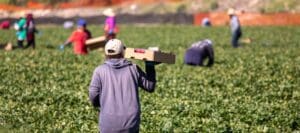
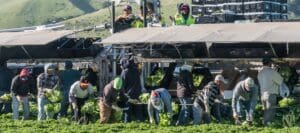
The impacts of the climate crisis are socially and geographically uneven: the wealthiest regions contribute disproportionately to the destruction of the planet while the poorest regions suffer the heaviest consequences. In this context, migrant farmworkers find themselves doubly displaced, facing droughts and inundations in their home countries, then heatwaves, fires…
-

Tackling racial inequality in Vancouver’s housing crisis: a new community research initiative
This initiative seeks to shed light on the racialized dimensions of Vancouver’s housing crisis and to develop data-driven housing policies that prioritize both racial equity and decolonization.
-

Canada’s international student program engineers inequality
Policy at all levels treats international students as resources to extract from, not humans deserving of equity
The International Student Program in Canada has long created challenging conditions for international students—they pay higher tuition fees than domestic students, have restricted access to institutional financial support, are not allowed to work full-time off campus, face discrimination related to race and additional aspects when looking for jobs, and have…
-

New survey data shines light on the extent and impacts of precarious employment in BC
The rise of the “gig economy” and on-demand work through online platforms like Uber and Skip the Dishes has ignited public debate about precarious work and what makes a “good job.” We all know that precarious work existed long before Uber and is not limited to the gig economy. But…
-

Canada Post is already one of the world’s most cost-effective postal systems
When we crunch the numbers, we don’t see a system bloated by high costs. And when we look at comparison countries, we see that budget cuts and falling revenue go hand-in-hand
There’s a common narrative about why Canada Post is in such bad shape—the company’s financial difficulties lie in excessive spending, and that the decline of letter-mail has made Canada Post too costly and wasteful to operate in the digital age. Looking at the plans put forward by the federal government…
-
Will 2023 be the year BC farmworkers finally receive basic minimum wage protections?
The majority of BC households are stressed because of debt and inflation. It’s even worse for one group of farmworkers who, legally, may earn less than minimum wage. While British Columbians rang in the New Year, the provincial government quietly increased the minimum piece rate wage for farmworkers by a…
-

Paul Gingrich
Research Interests: Income inequality, Poverty, Post-secondary education, Immigration and integration
-
Canada’s gender and immigration pay gap narrowing in the public sector
Public sector pay compensates women, new Canadians more fairly; private sector pay privileges men, top execs
OTTAWA—Pay practices in the public sector are helping to narrow Canada’s gender and immigration pay gap, which is key to reducing income inequality, says a new report by the Canadian Centre for Policy Alternatives.
-
Federal cuts put refugee health care in danger
On April 25th, 2012 the Federal government announced cuts to most healthcare benefits for refugees that are currently provided by Canada’s Interim Federal Health (IFH) program, effective on June 30, 2012. Across Canada, healthcare providers, people who work with refugees and ordinary citizens are rallying against this decision, concerned that…
-
Protecting the health and rights of migrant agricultural workers during the COVID-19 outbreak should be a priority
Manually skilled migrant workers contribute vitally to the Canadian food chain, including to agricultural and seafood industries. But food security cannot be achieved on the backs of workers who are denied equal access to social protections and benefits, and made uniquely vulnerable to coronavirus transmission. With news about this week’s community…
-
Digital equity and community solidarity during and after COVID-19
As many have noted, COVID-19 is an efficient illuminator of our society’s strengths and weaknesses; its progress accelerates in spaces of inequality and injustice. There is a race among public health agencies at all levels to provide timely, accurate information about COVID-19 that is essential to support physical distancing policies…
-
Canada’s new immigration policy leaves unanswered questions
Changes are a step in the right direction, but don’t go far enough in important regards
Changes are a step in the right direction, but don’t go far enough in important regards