As the Trumpocalypse lays waste to what was left of the rules-based international trading order, countries are under pressure to diversify their trade relationships. In that sense alone, the Canada-Indonesia Comprehensive Economic Partnership Agreement (CEPA), signed in Ottawa this week, could reasonably be called a win for both sides. Prime Minister Mark Carney referred to the deal as “game changing” during the signing ceremony.
In reality, this very old-school free trade deal is unlikely to result in much additional two-way trade and could easily get in the way of positive, job-boosting industrial strategies in both countries. The CEPA establishes rock-solid investment protections for mining, energy and forestry firms while backtracking on human rights, labour rights and environmental protection.
One of the most concerning aspects of the CEPA is that it provides a powerful mechanism for corporations to challenge public policies and court rulings designed to protect health, the environment, and human rights. Chapter 13 of the agreement includes a controversial investor-state dispute settlement (ISDS) system of the kind recently denounced by two UN Rapporteurs for interfering in the achievement of human rights and international climate objectives.
Over 1,400 ISDS cases have been brought against countries around the world, including 36 against Canada, many of which have challenged totally legitimate, non-discriminatory environmental or resource management decisions. Investors have claimed hundreds of millions and even billions of dollars in lost profits in these cases, to be paid out of public funds.
Despite international investment arbitration’s poor track record, most Canadians are unaware that the system even exists. ISDS is deliberately opaque. Even when disputes arise under “modern” agreements, with clauses meant to guarantee transparency, it can be difficult to access information.
For example, Canada is currently being sued by the Australian mining firm behind the controversial Grassy Mountain open-pit coal mine, under an ISDS process in the Comprehensive and Progressive Agreement for a Trans Pacific Partnership (CPTPP). The dispute is nine months old, but there is still no public information about the basis for the claim.
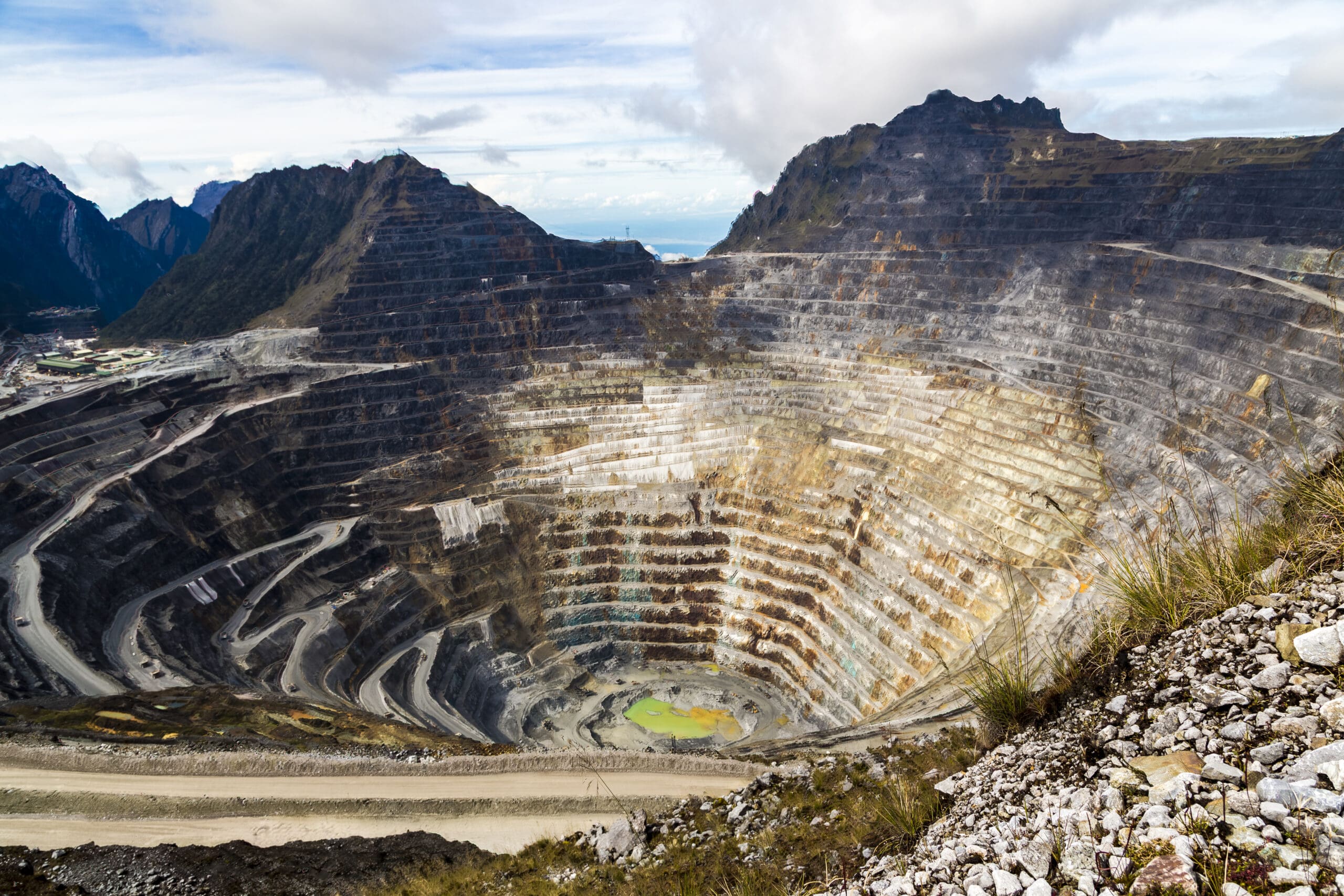
The extractive industries—mining, oil and gas—have initiated more than a quarter of all ISDS cases. Canadian mining companies are some of the worst offenders. And there is no doubt that, as with Canada’s trade deal with Ecuador, the inclusion of ISDS in the Indonesia trade deal has been driven by the mining sector.
According to a government summary of consultations on the CEPA, Canadian mining and energy firms “suggested ways to benefit the mining sector further through an agreement that establishes provisions for the promotion and protection of investment (including access to investor-state dispute settlement).”
In that same consultation, labour and human rights groups pointed out the prevalence of forced labour and human rights violations in Indonesian supply chains, and encouraged the government to include strong protections for workers, Indigenous communities, and the environment in any CEPA.
Sadly, nothing in the agreement provides these groups nearly as much enforceable protection as Canadian mining companies won in the investment chapter. In fact, the agreement significantly walks back advances on labour protections won by workers in more recent Canadian trade deals.
Disputes between mining investors and governments often begin as conflicts between the investors and local communities that have been displaced from their land or are suffering from environmental degradation such as drinking water contamination. Often these conflicts are caused or worsened by a government’s or company’s failure to adequately consult on the project.
One example in Indonesia is the community on the small Island of Sangihe, which has been engaged in a long struggle to prevent Canadian firm Baru Gold from commencing industrial gold mining operations. If the community is successful in its efforts to halt the project, and the CEPA is ratified in Canada and Indonesia, the company would have the option to sue Indonesia for untold “lost profits” even if it hasn’t yet broken ground.
There are also risks for Canada. Indonesian direct investment in Canada was actually higher ($5.9B) in 2024 than Canadian direct investment in Indonesia ($5.1B). One Indonesian-owned firm, Domtar, currently owns a significant share of Canada’s forestry and paper industry—another environmentally sensitive sector prone to disputes between investors and governments and where Canada has faced multiple ISDS claims under NAFTA.
One area where ISDS risk is particularly high is liquified natural gas (LNG), as current and proposed projects in Canada are mostly owned by foreign investors. This includes the controversial Woodfibre LNG export facility under construction near Squamish, B.C. The project is majority owned by Pacific Energy Corp., which is headquartered in Singapore but was founded by an Indonesian billionaire and has offices in Jakarta. Canada is already embroiled in an ISDS claim from an American firm that had its proposed LNG terminal in Québec rejected on climate grounds.
The desire to protect climate policy space is one of the key reasons why many governments are now moving away from ISDS. European countries and the United Kingdom have withdrawn from the Energy Charter Treaty—the most litigated investment protection treaty containing ISDS—because it is incompatible with the Paris Climate Agreement. The European Union also just completed a trade deal with Indonesia, but ISDS is, at least for the moment, absent.
The Canada-Indonesia CEPA threatens other areas of public policy besides environmental and climate measures. In Indonesia, civil society groups have drawn attention to the contradictions between the government’s industrial strategies—for scaling up investment in critical minerals to higher value-added manufacturing—and the new trade treaties it is signing with Canada, the European Union and the Trump administration.
“The effectiveness of Indonesia’s mineral downstreaming negotiations is threatened by Trump’s policies,” said Transnational Institute researcher Rachmi Hertanti in July. “Including minerals in negotiations becomes irrelevant, and Indonesia ends up compromising for tariff reductions, sacrificing copper downstreaming and locking the country back into raw exports at the bottom of the global value chain.”
The Canada-Indonesia CEPA could similarly result in de-industrialization pressures, even as the Indonesian government has modestly preserved existing resource development measures in annexes to the agreement’s trade and investment rules. The agreement’s ISDS provisions will give Canadian mining companies and firms servicing the industry a cudgel for warding off economic development measures benefiting local firms and workers.
At one point, Canada seemed to be moving away from ISDS, as many European countries have. The federal government of Prime Minister Trudeau proudly agreed to remove ISDS from the new NAFTA (now called the Canada-U.S.-Mexico Agreement) because of the threat it posed to environmental and public health policy.
It was a short-lived moment of common sense. Despite scant evidence that investment treaties really encourage investments that might not have otherwise happened, Canadian officials are back to promoting ISDS as a necessary part of any future rules-based trading order.
Unfortunately, the presence of ISDS in CEPA—and absence of strong protections for workers, Indigenous groups in Indonesia, and the planet—make it a decidedly last-generation trade deal. By the government’s own numbers, the CEPA is expected to add a mere 0.012 per cent to Canadian GDP by the year 2040. Hardly a “game changer,” as Prime Minister Carney put it.
This deal is a box ticking exercise more than anything, but one with real potential to undermine forward-looking climate and industrial policies in both countries.