



No sovereignty without digital sovereignty
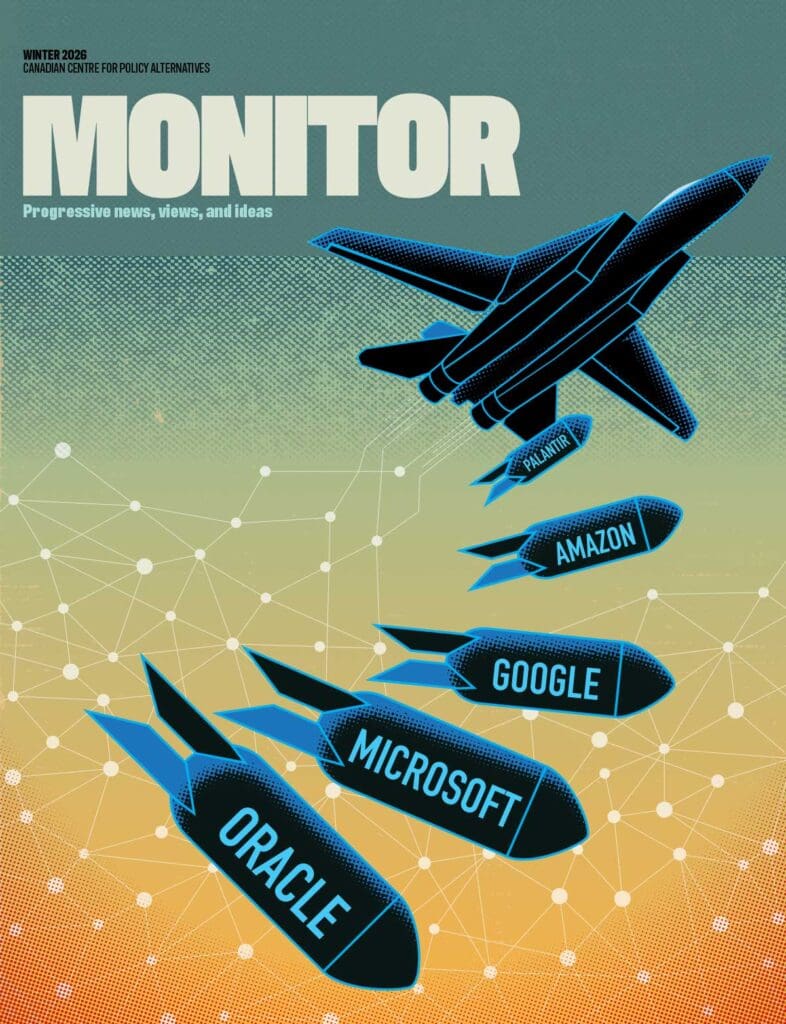
What authority do governments have to actually govern if the majority of their infrastructure is owned by a foreign power? In the past, governments have considered this question as it relates to natural resources, transport, and real-world infrastructure. In the 21st century, governments have a more complicated task—imagining how to assert sovereignty in the vitally important digital sphere, which is overwhelmingly dominated by the United States.
Check out some of the articles in this edition of the Monitor:
Editorial: No sovereignty without digital sovereignty by Jon Milton
Every data centre is a U.S. military base by Paris Marx
Whose (artificial) intelligence? by Hadrian Mertins-Kirkwood and Rachel Pettigrew
Reviving Ned Ludd by Jon Milton
On airwaves and algorithms by Christine Cooling
Get The Monitor delivered to your inbox:
Subscribe-

No sovereignty without digital sovereignty
The digital sphere is one of the most key components of sovereignty in the 21st century.

-

Every data centre is a U.S. military base
Understanding how the United States uses its tech companies to serve empire
-
-

-
On airwaves and algorithms
Canada asserted cultural sovereignty with strong broadcasting policy. What does that mean in the digital age?
-
A digital infrastructure plan
Asserting digital sovereignty means mapping out the real world of digital infrastructure and understanding which parts are for public intervention
-
The trade war goes digital
Notes on how trade agreements prevent Canada from exercising digital sovereignty.
-
The backup plan
As we reimagine the boundaries of platform responsibility, the tools we forge become the architecture of a more resilient online world.
-
Delusion factories
Canada’s policy response to the spread of disinformation remains limited. It’s time to take this issue seriously.





About the author

Jon Milton
Jon Milton is a writer and editor on the Canadian Centre for Policy Alternatives' communications team. His work focuses on social movements and social change.