
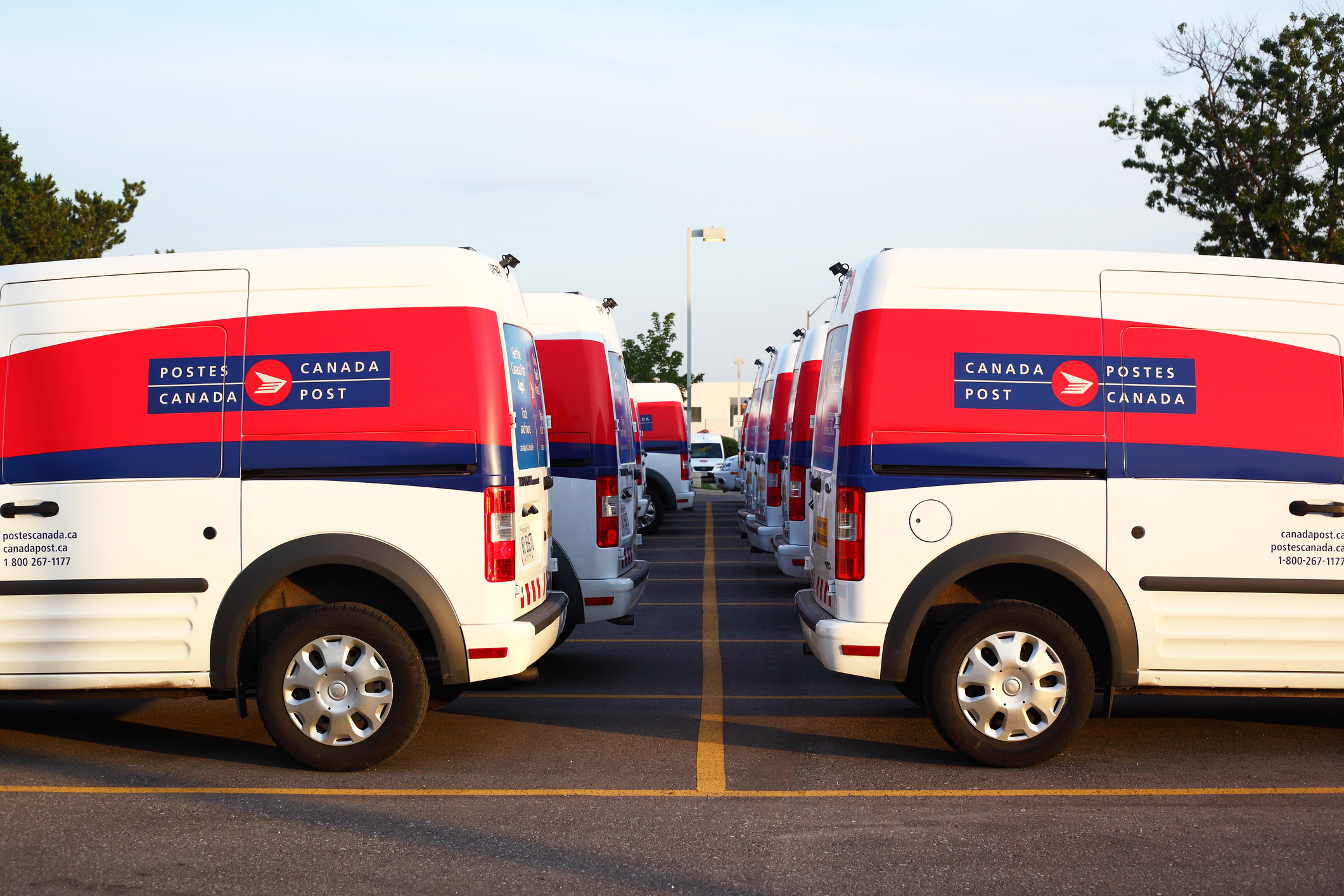
When Stephen Harper’s government announced the end of door-to-door mail delivery in favour of community “super-boxes” in 2014, then Canada Post CEO Deepak Chopra was asked about the difficulty this would pose for elderly and disabled Canadians. Chopra responded that they would “appreciate the exercise.” Canada Post management’s seeming disdain for their own customers enraged Canadians as well as the federal Liberals. Liberal MP David McGuinty mockingly called Mr. Chopra’s postal plan “Mail Participaction” – a reference to the government’s national fitness program. Then-Liberal leader Justin Trudeau campaigned on restoring door-to-door delivery, chastising Prime Minister Harper for “asking Canadians to pay more for less service. That is unacceptable.”
It appears what was once unacceptable to the Liberal party has now become acceptable. Prime Minister Carney’s announcement to “free” Canada Post of the obligation of door-to-door delivery and restrictions on rural post office closures may sound like he is leaving the decision in the hands of Canada Post’s management, but without any other alternative plan, it is a virtual certainty that this decision will end door-to-door delivery for millions of Canadians. And while Carney wants to create as much distance as he can from this decision, the Liberals will wear this. The Harper government found much to its regret that ending door-to-door delivery was one of the more unpopular decisions it made during government, with Canadians ejecting them from power a year later.
Carney will no doubt face many of the same questions that the Harper government did. How will the use of community mailboxes affect Canada Post’s ability to deliver packages in urban centres – the one aspect of mail delivery that is on the increase but competition is fierce? How can Canada Post hope to compete with private couriers that continue to deliver door-to-door? How will those with mobility issues access their mail? Who will be responsible for ensuring that community mailboxes are cleared of snow and ice and accessible in the winter? What about security of the mailboxes and concerns about rampant identity theft? Breaking into one super-box could afford identity thieves a treasure trove of information. Is Canada Post factoring in the costs for monitoring the security and accessibility of these boxes?
The same questions accompany the decision to allow for the closure of rural post offices. What will be the criteria for closure? The government seems to believe that any formerly designated rural area that is now suburban doesn’t require their own post office – despite the size of many suburbs. Given that larger packages that cannot be delivered to community boxes or packages that are not retrieved from community boxes are often sent to the nearest post office – what will be considered a reasonable distance for folks to travel? For rural and remote communities that remain rural, post offices often represent the sole outpost of the federal government, providing vital goods and services that cannot be accessed elsewhere. Closing these offices is to effectively sever these communities from the wider country. Once again accessibility is a real concern.
This massive change is all justified using the long-running argument that Canada Post is bankrupt—that declining letter mail has made the crown corporation insolvent and unable to maintain its operational status quo. And when we look at the numbers, they do indeed seem dire at first glance. From 2018 to 2025, the crown corporation posted total losses of around $5 billion. While the independent crown corporation does not typically receive taxpayer funding from the federal government, the feds stepped in last year with a $1 billion cash injection to keep the lights on.
But those numbers only tell part of the story. Between 2018 and 2023, Canada’s stamps only increased in price by seven per cent—compared to 26 per cent in the United States, 32 per cent in Brazil, and 70 per cent in New Zealand. Estonia made the largest price increase during that period—at 254 per cent—and only Japan and Italy had smaller price increases than Canada.
This year, partially in response to Canada Post’s ongoing financial crisis, the organization increased stamp prices from 99 cents to $1.24. This brought in a whopping $376 million in additional revenue to the post office in the first six months of 2025. Parcel delivery during this period took a significant hit due to the uncertainty of ongoing negotiations with the union—which should recover once those negotiations come to an end—but if parcel revenue had remained constant from the previous year, then Canada Post’s total loss in the first half of this year would have only been $25 million. While that number is still significant, it is far from the apocalyptic scenario we were hearing about in the previous years—which is now being mobilized to dismantle the post office.
Cutting back on Canada Post’s rural presence is actually a direct attack on the long-term viability of the organization, because it reduces that principal advantage that the crown corporation has over its competitors—its ability to reach every corner of the country. Unlike the increasing numbers of gig economy contractor operations in Canada, the post office is a truly national network which, by law, has the ability to serve every address in the country. No other competitor in the logistics market has such deep reach across the country. Making Canada Post viable in the long term needs to be about playing into that strength—not reducing it.
In many ways, the post office was Canada’s original “nation-building” project, a term which has come back into vogue recently in response to threats from the United States. From the time that the first postal route was established between Montreal and Quebec City in 1734, the post office has been a key piece of infrastructure that brings the country together. That continues to be true today, as Canada Post serves as the only network covering every address in the country.
Too often when public services are cut, the burden is shifted onto the individual or the community. Cuts to Canada Post will be borne by those least able to carry them and by rural communities that have been all but abandoned. In an era of increasing social isolation and lack of community connection, perhaps cutting the one national public service that ties the country together isn’t the best idea. Canadians knew this instinctively ten years ago. Prime Minister Carney may find to his chagrin that Canadians have long memories.