
- Home
- Topics
- Regions
- Magazines
-
-
-
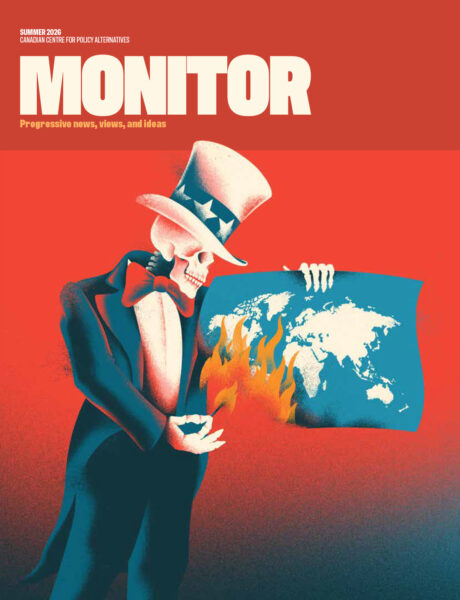
The Monitor
While world leaders are increasingly saying out loud that the postwar liberal world order is dead, the ruling classes in the Global North have an answer for what will come to replace it: fascism. Will they be able to implement their vision?
-
-
-
-
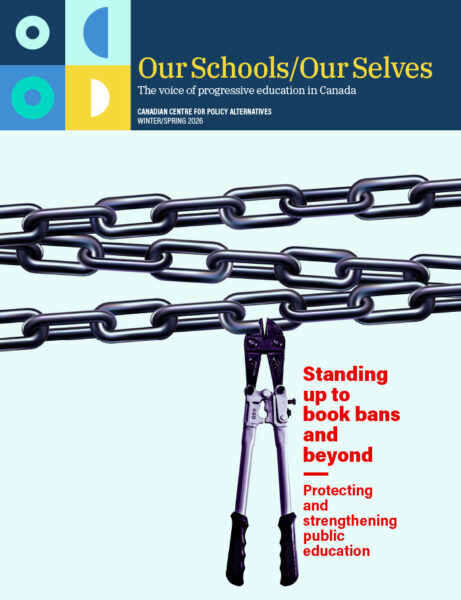
Our Schools/Our Selves
A guide to standing up to book bans and beyond, and how to protect and strengthen public education in Canada
-
-
-
-
- Media Inquiries
- Subscribe
- Legacy Gifts
- About
- Contact
- Donate Now
- Donate Now
Search results for “node/poverty”
-

2020 Report Card on Child and Family Poverty in Nova Scotia: Willful Neglect?
Click here to download the pdf version of this file.
-
Inequality At Its Worst
The Scrooges in Canada are stealing our kids’ Christmas On Christmas morning this year, how many children in Canada will wake to find no toys from Santa, no new clothes or shoes to replace their threadbare garb, no turkey dinner cooking in the oven, no joyful celebration of the annual…
-
Poverty costs New Brunswickers $2 billion dollars per year
READ THE FULL REPORT HERE. Halifax/Moncton–A new study released today, entitled Cost of Poverty in New Brunswick, co-authored by economist Angella MacEwen and Christine Saulnier, reveals that: ➢ Poverty costs the New Brunswick government a half a billion dollars per year. ➢ These costs accounted for 6.5% of the 2009/10…
-
Poverty costs PEI over $240 million a year
READ THE FULL REPORT HERE. CHARLOTTETOWN/HALIFAX–It is estimated that the total cost of poverty in Prince Edward Island is at minimum between $240 and $320 million per year, which corresponds to about $1,720 and $2,265 per person, per year. These costs are calculated in The Cost of Poverty in PEI,…
-

Over 125 organizations and advocates demand BC enact pay equity legislation
READ THE OPEN LETTER. VANCOUVER, UNCEDED XʷMƏΘKʷƏY̓ƏM (MUSQUEAM), SḴWX̱WÚ7MESH (SQUAMISH) AND SƏLILWƏTAɬ (TSLEIL-WAUTUTH) HOMELANDS – A coalition of more than 125 leading BC organizations, academics, and advocates are calling on the BC government to urgently enact pay equity legislation. In an open letter addressed to Premier David Eby and key cabinet…
-
The politics of anti-poverty policies in Nova Scotia
The upcoming provincial election has thrust into the spotlight various debates about how to best address poverty in Nova Scotia: wage increases, social programs, tax-based incentives, or a job. Recently, the Nova Scotia New Democratic Party announced that, if elected, it would raise the minimum wage to $15 by 2020.…
-
Income Security to End Poverty in Manitoba
Download 785.91 KB32 pages According to the Low-Income Cut Off-After Tax (LICO-AT) measure, there were 105,000 Manitobans (approximately 8.9%) living in poverty in 2011. As a percentage, the number of Manitobans living in poverty hasgone down since the 1990s when it averaged 15%. However, the depth of poverty in Manitoba…
-
Reduction in Child Poverty Stalled in Nova Scotia
READ THE FULL REPORT HERE. HALIFAX, NS – Twenty-two years ago (in 1989), the government of Canada promised to end child poverty by the year 2000. However, as Lesley Frank, author of a report released today by the Canadian Centre for Policy Alternatives –Nova Scotia, says, “analysis of the latest available…
-
Poverty Reduction in Alberta
Here are 10 things to know: Since taking office in 2015, the NDP government of Premier Notley has undertaken important steps that will almost certainly reduce poverty. These include the implementation of the Alberta Child Benefit (which will lift approximately 19,000 households out of poverty), substantial increases in funding for…
-

Status First Nations child poverty rates deplorably high
Almost half of status First Nations children live in poverty—by far the highest rate of child poverty of any other group examined, says a new report published by Upstream Institute.
Towards Justice: Tackling Indigenous Child Poverty in Canada—released in partnership with the Assembly of First Nations (AFN) and the Canadian Centre for Policy Alternatives (CCPA)—tracks child poverty rates using Census 2006, the 2011 National Household Survey and Census 2016.
-
Make poverty reduction the focus of economic stimulus plans
A growing chorus of voices from across BC is calling on all political parties to commit to a provincial poverty reduction plan with legislated targets and timelines. Some wonder, however, whether such a plan is affordable, particularly in a recession. The answer is yes. In a recession, poverty risks getting…
-
Wishing away child poverty
This past week, local CTV news ran a series on child poverty called “BC’s Shame”. They’ve posted the series on their website, along with the full interview reporter Mi-Jung Lee had with Premier Campbell about child poverty. The series was very good, but the premier’s comments were disappointing. Premier Campbell…