
- Home
- Topics
- Regions
- Magazines
-
-
-
The Monitor
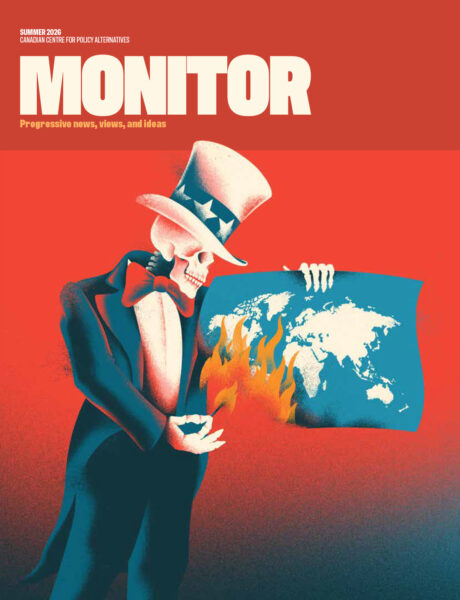
While world leaders are increasingly saying out loud that the postwar liberal world order is dead, the ruling classes in the Global North have an answer for what will come to replace it: fascism. Will they be able to implement their vision?
-
-
-
-
Our Schools/Our Selves
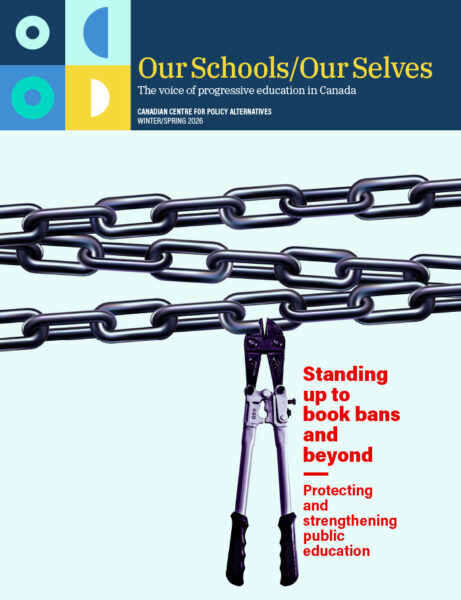
A guide to standing up to book bans and beyond, and how to protect and strengthen public education in Canada
-
-
-
-
- Media Inquiries
- Subscribe
- Legacy Gifts
- About
- Contact
- Donate Now
- Donate Now
Search results for “node/poverty”
-

Child and Family Poverty Still on Rise in Nova Scotia
HALIFAX— Child and family poverty in Nova Scotia has increased. The most recent data reveal that 37,650 children, more than 1 in 5, were living in poverty in 2013. According to the 2015 Report Card on Child and Family Poverty in Nova Scotia, 22.5% of Nova Scotian children were living…
-
UNSPUN: Poverty Policy Choices and Winnipeg’s Inner City
Provincial government policy can be designed to punish those in poverty, or to reduce poverty. Both approaches have been tried in Manitoba, the first in the 1990s and the other more recently. We can compare these approaches by examining Winnipeg’s inner city. Over the past 15 years, and especially the…
-
Budget 2017/18 No Strategy No Change to Poverty
Low income Manitobans were hoping that this year’s budget would offer a plan to help lift them out of poverty. A well-funded strategy with targets and timelines for its implementation and for reducing poverty would give Manitobans confidence that their government is making poverty reduction a top priority. However, despite…
-
And then there was one: BC is now last province without a plan to tackle poverty
On October 22, the Government of Saskatchewan announced in their Throne Speech that it would commit to the development of a poverty reduction strategy, making British Columbia the very last province in Canada without a plan to tackle poverty. This despite the fact BC has the highest or second-highest poverty…
-
Fast Facts: Proposed legislation a sentence of poverty for low income workers
Working should be a route out of poverty, but for some, low wages are a poverty trap. The current minimum wage is inadequate as at $11/ hour, it places workers as far as $8,000 below the poverty line. Minimum wage should be increased through pre-announced steps to $15.53/ hour and…
-
An effective poverty reduction plan is not just a piece of paper
Last week, First Call: BC Child and Youth Advocacy Coalition published its annual report card on child poverty in BC. As in past years, the results were sobering. Based on 2012 data, 20.6% of children, or one of five, live in poverty in BC. Nearly half of children living in…
-
 arindambanerjee / Shutterstock.com” style=”border-radius:0px;–objectFit:cover;–imagePosX:50%;–imagePosY:50%” decoding=”async” srcset=”https://www.policyalternatives.ca/wp-content/uploads/2025/04/pn_feb2018_RaisingTheMinimumWage-300×133.jpg 300w, https://www.policyalternatives.ca/wp-content/uploads/2025/04/pn_feb2018_RaisingTheMinimumWage-768×341.jpg 768w, https://www.policyalternatives.ca/wp-content/uploads/2025/04/pn_feb2018_RaisingTheMinimumWage.jpg 900w” sizes=”(max-width: 300px) 100vw, 300px” />
Raising the minimum wage is good for public health
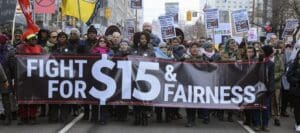
Soon we expect the Fair Wages Commission to advise the BC government on a path towards a $15 minimum wage and a plan for regular increases. This will be very good news for our province. Increasing the minimum wage is an important step in reducing poverty and income inequalities that…
-
BC budget moves in the right direction but too slowly to address pressing challenges like housing, climate, toxic drug supply and poverty
With COVID centre stage for the past two years, Budget 2022 marked a shift back to normal. Yes, the budget earmarks $2 billion in contingencies for potential COVID needs, but this took up a mere half page of the main budget document. The budget narrative instead is framed around child…
-
Fast Facts: Manitoba Ranked Highest for Indigenous Child Poverty
Children need to feel and see they are important members of their communities and treated as such. A new study out Tuesday finds that Manitoba has the highest number of on-reserve First Nations children in poverty in the country at 76 per cent and the highest indigenous children in poverty…
-
Three decades lost
Less than 1% reduction in child poverty in Nova Scotia since 1989 CLICK HERE TO VIEW THE FULL REPORT Halifax – In Nova Scotia there are 40,710 children or close to 1 in 4 children (24.2%) who live in poverty based on the most recent data. The 2019 Report Card…
-
The Cost of Poverty in the Atlantic Provinces
Download 459.08 KB23 pages The purpose of this report is to underline the cost to the provincial governments of not addressing the needs of the population. The Atlantic region has had to invest to deal with the pandemic, first in terms of health care resources, and second, in terms of…
-
14,000 children in Nova Scotia still living in poverty is 14,000 too many
READ THE FULL REPORT HERE. HALIFAX, NS –Twenty-one years ago (in 1989), the government of Canada promised to end child poverty by the year 2000. In 2000, not only had they not kept the promise, but the child poverty rate was even higher. Today, 10 years after the goal date,…

 arindambanerjee