
- Home
- Topics
- Regions
- Magazines
-
-
-
The Monitor
While world leaders are increasingly saying out loud that the postwar liberal world order is dead, the ruling classes in the Global North have an answer for what will come to replace it: fascism. Will they be able to implement their vision?
-
-
-
-
Our Schools/Our Selves
A guide to standing up to book bans and beyond, and how to protect and strengthen public education in Canada
-
-
-
-
- Media Inquiries
- Subscribe
- Legacy Gifts
- About
- Contact
- Donate Now
- Donate Now
Search results for “site/Pat Armstrong”
-

CCPA Manitoba Presentation to Standing Policy Committee on Protection, Community Services and Parks in support of the tabling of the Supervised Consumption Site in Winnipeg report June 7, 2021
Since 2005, we have led the annual State of the Inner City research project, which has collaborated with Winnipeg over forty community-based organizations (CBOs) working in the inner city. The project researches issues that matter to CBOs and the communities they serve. It connects the personal struggles of the people…
-

Would pharmacare spell trouble for drug companies?
The ongoing COVID-19 pandemic has brought the issue of prescription drug access back to the fore as questions of affordable access became international news in March. However, the question of how to guarantee access to necessary medications for Canadians is not new. During the last federal election, calls for a…
-
Eminent policy experts draw roadmap to end for-profit long-term care in Ontario
CLICK HERE TO VIEW THE FULL REPORT TORONTO – With licenses for more than 30,000 long-term care beds set to expire in 2025 and 15,000 new beds in the works, a group of eminent public policy experts is calling on Queen’s Park to develop them all as public non-profit beds…
-

Investing in Care, Not Profit
Recommendations to transform long-term care in Ontario Download 362.38 KB20 pages The evidence is clear, overwhelming and tragic: Canada has a fundamental problem providing quality long-term residential care (LTC) to those whose lives and well-being depend upon it. Although many LTC homes did not experience high COVID-19 death rates, over…
-
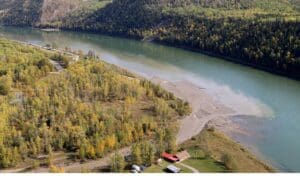
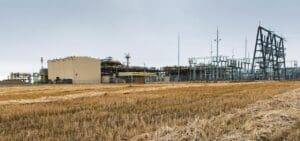
 Province of BC/ Flickr” style=”border-radius:0px;–objectFit:cover;–imagePosX:50%;–imagePosY:50%” decoding=”async” srcset=”https://www.policyalternatives.ca/wp-content/uploads/2025/04/site-cs-biggest-beneficiary-policynote-feb16-300×141.jpg 300w, https://www.policyalternatives.ca/wp-content/uploads/2025/04/site-cs-biggest-beneficiary-policynote-feb16-1024×480.jpg 1024w, https://www.policyalternatives.ca/wp-content/uploads/2025/04/site-cs-biggest-beneficiary-policynote-feb16-768×360.jpg 768w, https://www.policyalternatives.ca/wp-content/uploads/2025/04/site-cs-biggest-beneficiary-policynote-feb16.jpg 1280w” sizes=”(max-width: 300px) 100vw, 300px” />
Site C’s biggest beneficiary? Natural gas companies, not us.
This post originally appeared on DeSmog Canada. On January 20, BC Hydro issued a press release singing the praises of a new hydro transmission line not far from where preliminary work has begun to build the $9-billion Site C dam. The release, headlined “New transmission line to power development in…
-
Model Sites for Rural Midwifery in Nova Scotia: Built to Fail?
On Monday morning, there is a rally planned to try and save the South Shore Community Midwives, one of Nova Scotia’s rural midwifery programs. The program has been suspended for three weeks and its long term survival is in question. The current crisis presents an opportunity to rethink the program’s…
-
Site C: Too risky to rely on one river system for BC’s hydro needs
In the face of a prolonged drought, water levels at Lake Mead, the giant hydroelectric reservoir that straddles the Nevada and Arizona borders, are lower than at any point since the iconic Hoover Dam was built in the 1930s. For residents in California, Nevada, Arizona and northern Mexico a crisis…
-
Burning issues for Metro Vancouver
The front page story of today’s Vancouver Sun takes on Metro Vancouver’s waste incineration facility in Burnaby. The Fraser Valley Regional District has been strongly opposed to a new proposed incinerator planned by Metro, and likewise has expressed its concerns about air quality in regards to the Burnaby facility. Its…
-

Toxic landslides into the Peace River continue, add to fears about impacts of Site C and fracking
Toxic heavy metals, including arsenic, barium, cadmium, lithium and lead, are flowing unchecked into the Peace River following a series of unusual landslides that may be linked to natural gas industry fracking operations. The landslides began nearly two years ago and show no sign of stopping. So far, they have…
-

A dangerous path: Police use of DNA phenotyping raises ethical red flags
What happened is a symptom of a much larger problem. In an attempt to keep up with high-tech innovation, police worldwide are increasingly buying, with little oversight, controversial technologies that they are ill-equipped to evaluate.
-
How clean is a BC that subsidizes accelerated fossil fuel extraction?
When the provincial government unveiled its new climate plan late last year, Environment Minister George Heyman, Green Party leader Andrew Weaver and Premier John Horgan presented a happy, united front as ceremonies got underway at Vancouver’s main library. But the biggest smiles of the day may have been on the…
-
L’insolvabilité de l’Université Laurentienne reflète une crise structurelle du système universitaire néolibéral en Ontario
Les gouvernements ontariens ont successivement réduit leurs subventions publiques envers les revenus d’exploitation des universités d’environ 80 % en 1980 à environ 50 % en 2004, et à seulement 38 % en 2017.
Les gouvernements ontariens ont successivement réduit leurs subventions publiques envers les revenus d’exploitation des universités d’environ 80 % en 1980 à environ 50 % en 2004, et à seulement 38 % en 2017.



 Province of BC