
- Home
- Topics
- Regions
- Magazines
-
-
-
The Monitor
While world leaders are increasingly saying out loud that the postwar liberal world order is dead, the ruling classes in the Global North have an answer for what will come to replace it: fascism. Will they be able to implement their vision?
-
-
-
-
Our Schools/Our Selves
A guide to standing up to book bans and beyond, and how to protect and strengthen public education in Canada
-
-
-
-
- Media Inquiries
- Subscribe
- Legacy Gifts
- About
- Contact
- Donate Now
- Donate Now


Search results for “site/human rights”
-

December 2004: Waste Not, Want Not
One of our most precious resources flushed down the drain Nearly a century ago, when Dr. F. H. King visited China, Japan and Korea, he found that the “fertilizer” used by their farmers to produce bountiful crops was human excrement. In his 1911 book about Asian agriculture, Farmers of Forty…
-

Exploitable and deportable by design: Why migrant workers’ housing is harmful to their health
Canada’s treatment of migrant workers is drawing international scrutiny after UN investigator Tomoya Obokata warned that its Temporary Foreign Worker Program “serves as a breeding ground for contemporary forms of slavery, as it institutionalizes asymmetries of power that favour employers and prevent workers from exercising their rights.” Migrants, activists, and…
-
October 2004: Nortel Implicated in Disastrous Liquidation of Columbia’s Telecom
Nortel Networks, Canada’s largest high-tech corporation, has helped bring about the liquidation of TELECOM, Colombia’s biggest telecommunications company, and the likely privatization of its successor. Brampton-based Nortel has assets of U.S.$15.8 billion, 37,000 employees and a presence in 150 countries. Plummeting global demand for telecommunications equipment and poor management have…
-
A little-known election is limiting your free expression rights
You might not have noticed it, but since June 4th there has been an election going on in British Columbia – and legislation that governs that election severely limits what people can say about the issues relating to that election (and how they can say it) until the election is completed…
-
Steve Estvanik / Shutterstock” style=”border-radius:0px;–objectFit:cover;–imagePosX:50%;–imagePosY:50%” decoding=”async” srcset=”https://www.policyalternatives.ca/wp-content/uploads/2025/04/pn_mar2023_logging-trucks-300×133.jpg 300w, https://www.policyalternatives.ca/wp-content/uploads/2025/04/pn_mar2023_logging-trucks-768×341.jpg 768w, https://www.policyalternatives.ca/wp-content/uploads/2025/04/pn_mar2023_logging-trucks.jpg 900w” sizes=”(max-width: 300px) 100vw, 300px” />
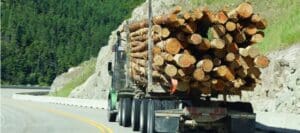
The extra-long logging haul
As forests shrink, drivers work 16-hour days to deliver single loads of logs to BC sawmills When Eugene Wilson started driving a logging truck 24 years ago, he worked out of the Bulkley valley community of Houston three hours west of Prince George. He recalls the trips as if they…
-
BC forest bill urgently in need of a rewrite
It wasn’t so long ago that the British Columbia government was investing lots of political capital in striking a more productive “new relationship” with First Nations. Which makes it all the more disturbing that in the midst of the very short upcoming legislative session the provincial government intends to introduce…
-
Is another Charter challenge on BC labour rights waiting in the wings?
While the BC government mulls over the Supreme Court’s recent landmark decision that Bill 29 is unconstitutional (because it infringes on health care workers’ right to collective bargaining), it should also consider the constitutionality of another piece of labour legislation passed in 2002. Although not yet challenged before the courts,…
-
June 2004: The Indymedia Phenomenon
The revolution won’t be televised, but it might be uploaded Wih the rise of “networked” society, we have seen the emergence of democratic social movements with a distinctly global orientation. Such movements are increasingly informed by, and dependent upon, information technologies and computer-mediated communication for their organizational activities, their ability…
-

A Dam Troublesome Exception: Progress Energy’s dams should not be exempted from environmental review
I sent the following letter to BC’s Environmental Assessment Office (EAO) in response to Progress Energy’s extraordinary request to retroactively exempt the Lily and Town dams from environmental reviews. Such reviews should have been conducted before the dams were built. Not only did those reviews not happen, but the company…
-
Federal government moving backwards in workplace safety
On April 28, the National Day of Mourning for workers killed on the job, we are reminded that although workplace injuries and fatalities may be accidents, they are preventable. While preventing injuries and deaths benefits both employer and employee, it is always left to government to create and enforce regulatory…
-
Imbalance in residential tenancy rights enforcement in BC
Yesterday some media outlets reported that the Residential Tenancy Branch has conditionally waived the first (and to my knowledge only) administrative penalty it has issued. BC’s Residential Tenancy Act was amended in 2006 to allow the Branch to issue administrative penalties, essentially monetary fines, against landlords or tenants that contravene…
-
BC Budget 2021: Stay-the-course budget misses the mark on key areas of urgency outside health
The BC government tabled a surprisingly stay-the-course budget today, making some improvements on the margins but missing the opportunity to shift BC towards a more inclusive and sustainable economy. While it appropriately includes large sums of time-limited spending relating to the pandemic (and indeed BC has led other provinces on…



 Steve Estvanik