

“Build big things” has become a mantra of the current federal government. Partly in an effort to lessen our economic vulnerability to U.S. shocks, Prime Minister Mark Carney has been out luring foreign capital to Canada. Like his recent predecessors, the prime minister is pitching Canada as an “energy superpower” open to investment in new oil, gas and mining projects, and the infrastructure needed to get these goods to international markets.
It is debatable whether there is a responsible or sustainable way to grow these extractive sectors, given their significant ecological footprint. Fossil fuel production still generates significant carbon emissions at site and in transit, in the case of natural gas. There is no such thing as “decarbonized oil.” Mining and processing minerals generates vast amounts of toxic waste and, as MiningWatch Canada has pointed out, Canada is “neither a global leader…nor meeting global best practices” in tailings management.
The fact that a large amount of resource extraction—in Canada and globally—takes place on Indigenous lands adds to the political complexity behind the government’s “Building Canada” slogans. Decisions about further resource development must be taken democratically, involve meaningful consultation and consent, consistent with the United Nations Declaration on the Rights of Indigenous Peoples (UNDRIP), and come with strict regulatory oversight.
Unfortunately, when we add Canada’s trade and investment treaty obligations into the mix, things get even messier. Canada’s ability to responsibly develop new projects and regulate extraction and trade is weakened by these treaties.
Delays to projects designated for rapid development, or future decisions to strengthen environmental protections, will make easy targets for costly investor-state dispute settlement (ISDS) challenges from investors and companies in countries with which Canada has an investment protection treaty in place. The Comprehensive and Progressive Agreement for Trans-Pacific Partnership (CPTPP) is one of those treaties covering a number of investors in Canadian fossil fuel, forestry and mineral projects.
Recently tabled legislation to ratify the United Kingdom’s accession to the CPTPP, instead of advancing critical minerals development in Canada with U.K. funding, may unnecessarily complicate future investments in these same sectors and others, and threaten the rights of Indigenous Peoples in this country.
Investor rights versus human rights
Canada already has a free trade agreement with the U.K. called the Trade Continuity Agreement, which reproduced most of the rules in the Canada-EU Comprehensive Economic and Trade Agreement (CETA). Ratifying the U.K.’s accession to the CPTPP will therefore have little effect on two-way trade flows, as tariffs on virtually all goods are either zero or very low.
The investor-state dispute settlement provisions in CETA are not yet in force, as several EU countries have not yet ratified the treaty in national legislation, and there is no ISDS process in Canada’s current bilateral deal with the U.K. However, once Canada ratifies the U.K.’s accession to the CPTPP in law, British firms will gain access to the regional free trade treaty’s ISDS provisions and be able to launch costly claims against federal and provincial measures.
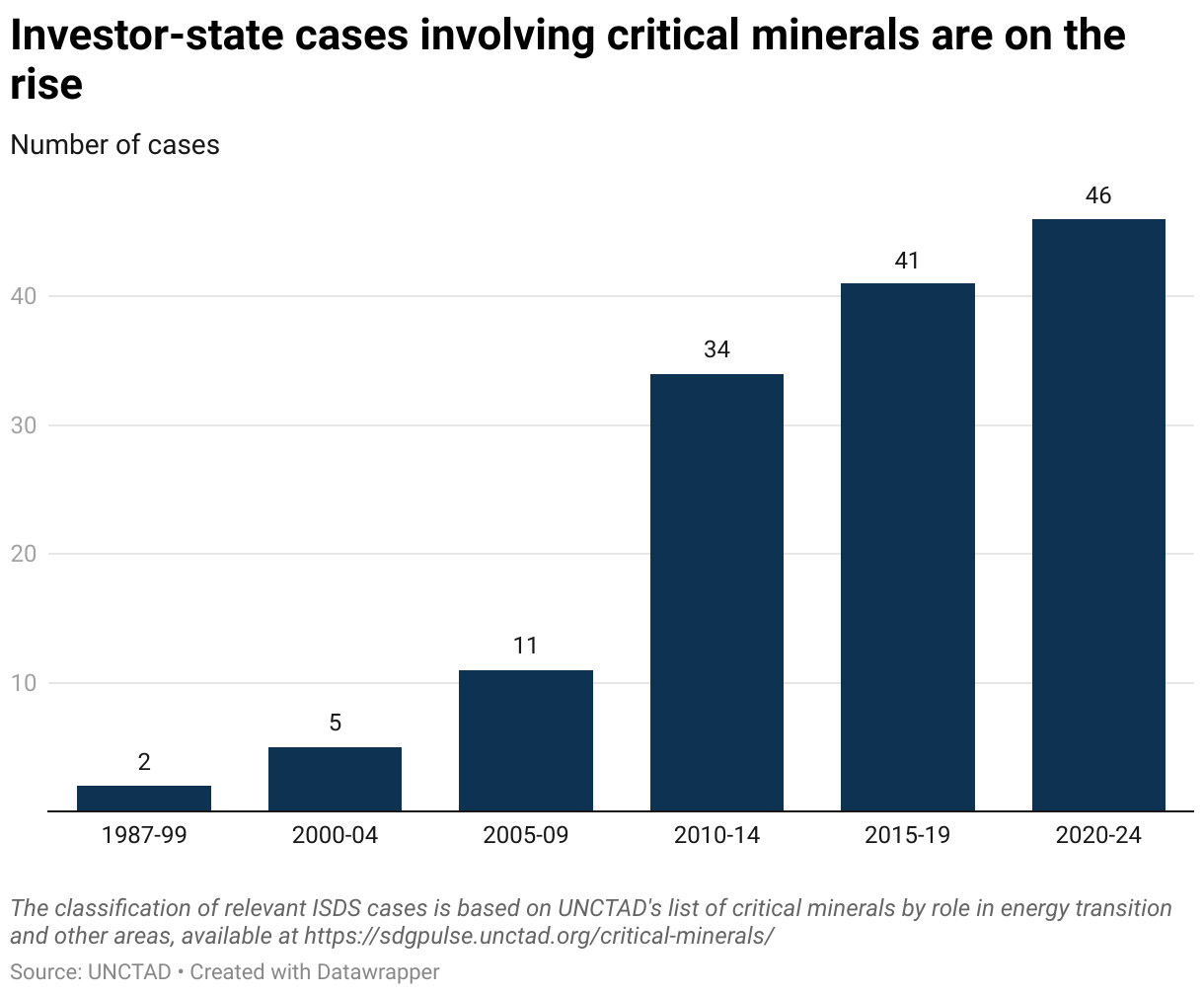
ISDS is a means for investors to resolve disputes with host states through private arbitration rather than going through the courts. The system allows foreign investors to launch claims for compensation when they feel an action or a decision of a government, court or other public body has negatively impacted their investment or harmed their future profits.
Canada’s former deputy prime minister, Chrystia Freeland, described ISDS as elevating “the rights of corporations over sovereign governments.” It was her justification for removing ISDS from the renegotiated NAFTA, now the Canada-U.S.-Mexico Agreement (CUSMA). It is confusing to many observers, including us, why the federal government continues to negotiate new treaties containing ISDS, for example, with Ukraine, Ecuador and Indonesia.
When the U.K. joins the CPTPP, London-based oil and gas companies like Shell and BP, and major global mining firms like BHP, Rio Tinto and Anglo American, will be able to access the ISDS provisions within the agreement to protect any present or future investments in Canada.
Energy and Natural Resources Minister Tim Hodgson met some of these companies during last month’s London Metal Exchange Week to highlight “the opportunities of expanding mining operations in Canada and investing in Canadian critical minerals.”
BHP recently complained about Canada’s relatively slow approval process for new mining projects. Anglo-Swiss multinational Glencore may shut down Canada’s largest copper smelter due to the costs of upgrading environmental standards. It does not benefit the public to give such firms the extrajudicial means to gain outcomes in their favour.
U.K. investors have already demonstrated their comfort with using ISDS in other agreements to protect their interests—launching at least 120 known claims to date internationally. ISDS cases have been tied to regulatory chill, where foreign investors trying to influence Canada or the provinces/territories threaten expensive arbitration when a government decision on a permit, or a new law or policy, could impact their investment.
With a greater push towards fast tracking major projects, including energy projects, these threats to responsible resource development from ISDS are even more profound in 2025.
The CPTPP provides U.K. extractive companies with a powerful tool to pressure governments to keep laws and policies favourable to their interests, at the expense of the climate, health and the rights of Indigenous Peoples. There is little space in ISDS cases for voices of affected Indigenous Peoples to be heard, and no obligation on arbitrators to take account of a state’s international environmental or human rights obligations.
The former Special Rapporteur on the Rights of Indigenous Peoples, Victoria Tauli-Corpuz, undertook two extensive studies on international investment agreements. She found that the ISDS provisions, especially the non-discrimination and expropriation clauses, have “significant potential to undermine the protection of indigenous peoples’ land rights and the strongly associated cultural rights.”
We have an example of the threat of ISDS to Indigenous rights under a NAFTA investor-state arbitration brought under the three-year legacy annex of the new CUSMA. A U.S. company, Ruby River Capital, launched a claim against Canada for $20 billion USD (later reduced to a minimum of $1 billion USD) in compensation for the refusal, at the environmental assessment stage, of a gas pipeline and LNG terminal.
The increase to greenhouse gases was one of the reasons provided for the refusal, along with the significant effects on the cultural heritage of the Innu First Nation, given the disturbance to marine mammals, such as the Beluga whale and fishing and hunting rights. Again, there is no obligation under ISDS for the tribunal to take account of Canada’s obligations with respect to these rights.
CUSMA was the first international trade and investment agreement to include a new clause aimed at comprehensively protecting the rights of Indigenous Peoples in North America: Article 32.5, the Indigenous Peoples’ rights general exception. This clause was modelled on, and arguably improves upon, the general exception for the Treaty of Waitangi developed by New Zealand to protect the rights of Māori.
However, the promise of protection was not realized in a CUSMA trade dispute that the United States, with Canada’s backing, launched against Mexico related to food measures restricting genetically modified corn, a major U.S. export. Mexico attempted to use Article 32.5 of CUSMA as a defence, as Mexico claimed that the GM corn measures were necessary to fulfill the government’s legal obligations to Indigenous Peoples.
Although the three-person dispute resolution panel was respectful of Mexico’s dedication to its constitutional and other international legal obligations with respect to Indigenous Peoples, arbitrators nonetheless concluded that the ban was “a disguised restriction on trade” and, therefore, “not justified” under the exception in Article 32.5.
The CPTPP was negotiated prior to CUSMA and has less to say about the rights of Indigenous Peoples. Although the CPTTP includes the Treaty of Waitangi exception, there is no general exception applicable to protect the rights of all Indigenous Peoples in CPTPP member states, despite advocacy for one from Indigenous Peoples in Canada and from other CPTPP member states.
The exception in CUSMA was developed to apply to both trade and investment disputes, but the eventual by Canada and the U.S. to phase out ISDS following a three-year period for legacy NAFTA cases was considered an even better result for the protection of Indigenous rights, not to mention the ability of Canada to regulate to protect the public interest.
ISDS must be removed from the CPTPP
New Zealand and Australia have recognized that ISDS is a threat to their sovereignty and have proactively agreed to enter into side letters with the U.K. that will disapply the ISDS procedure as between their countries. Canada has not negotiated this type of arrangement, as requested by the CCPA and others during a 2024 consultation on the CPTPP.
In late 2022, Australia’s minister of trade confirmed that in order to protect their ability to govern in the public interest, Australia will no longer include investor-state dispute settlement in any new trade agreements. At a time when Canada’s trading partners are rethinking ISDS or abandoning it altogether, why is Canada continuing with the outdated ISDS provisions in the CPTTP when new countries join the trade pact?
If the federal legislation ratifying the U.K. accession to the CPTPP receives royal assent, U.K. investors will be able to sue Canada for potentially tens of billions of dollars for any delay to resource megaprojects in which they have a stake. Canadian investors in the U.K., including pension fund owners of essential water infrastructure, will gain the same rights there.
Delays or cancellations of LNG or critical minerals projects, or changes to environmental policies or royalty regimes in future, would be fair game for massive investor-state lawsuits—even if these delays or regulatory changes are the result of due diligence consultation with Indigenous Peoples.
In this way, U.K. accession to the CPTPP threatens the rights of Indigenous Peoples and should not be allowed to proceed unless the ISDS process in the treaty can be disapplied, at least, for Canadian and U.K. fossil fuel and resource firms. A side-letter disapplying ISDS for any Canadian or British investor would be preferable and very easy to incorporate into Canada’s implementing legislation, especially as there are precedent letters from Australia and New Zealand.
Like most countries, according to a new United Nations study, Canada will not meet its Paris Agreement commitments under current policies. And while G7 countries scramble to diversify their global sources of critical minerals, including rare earth elements essential to many renewable energy and military technologies, the ecological and social costs of a new extractive boom would be significant.
The government may want to speed up approvals of new projects. But Budget 2025 recognizes that the government must “uphold Section 35 of our Constitution and the duty to consult, and the government’s commitment to implementing the United Nations Declaration on the Rights of Indigenous Peoples, including free, prior, and informed consent” with respect to economic activities affecting First Nations, Inuit and Métis peoples. According to the recent advisory opinion of the International Court of Justice, Canada also has a duty to prevent significant harm to the environment and global climate system.
Seeking the consent of Indigenous Peoples for energy and resource major project makes good business sense as it creates certainty for investors, both foreign and domestic, that their project will succeed. A side-letter a with the U.K. disapplying ISDS provisions in the CPTPP would provide further certainty to the government and investors that disputes arising from these projects will be handled by competent Canadian courts, not arbitrary private bodies with no expertise in Indigenous rights.