
On September 19, amidst a flurry of other new federal legislation, Justice Minister Sean Fraser introduced Bill C-9, the Combatting Hate Act. The act, according to the press release announcing its introduction, is meant to provide police and prosecutors new tools to counter “rising antisemitism, Islamophobia, homophobia and transphobia.”
While those may seem like noble goals, Bill C-9 has received widespread and sharp criticism from civil-liberties groups, community advocates and activists who warn it risks failing in its stated goals while providing police with the power to engage in increased repression of dissent and speech..
The Canadian Constitution Foundation called Bill C-9 “an urgent threat to free expression in Canada” and urged Canadians to contact their MPs and oppose it. The International Civil Liberties Monitoring Group says the bill risks weakening Charter rights for everyone, including the communities the government claims it wants to protect.
The Black Legal Action Centre also raised concerns, noting that while marginalised groups need protection from hate, the bill undermines “the critical ability of these groups to advocate for their rights and challenge systemic injustice.”
Egale, an organization which fights against homophobia and transphobia, says that the bill “appears less as a tool for protecting marginalized groups and more as a broad expansion of police power with a high risk of misuse.”
Expanding the definition of hate
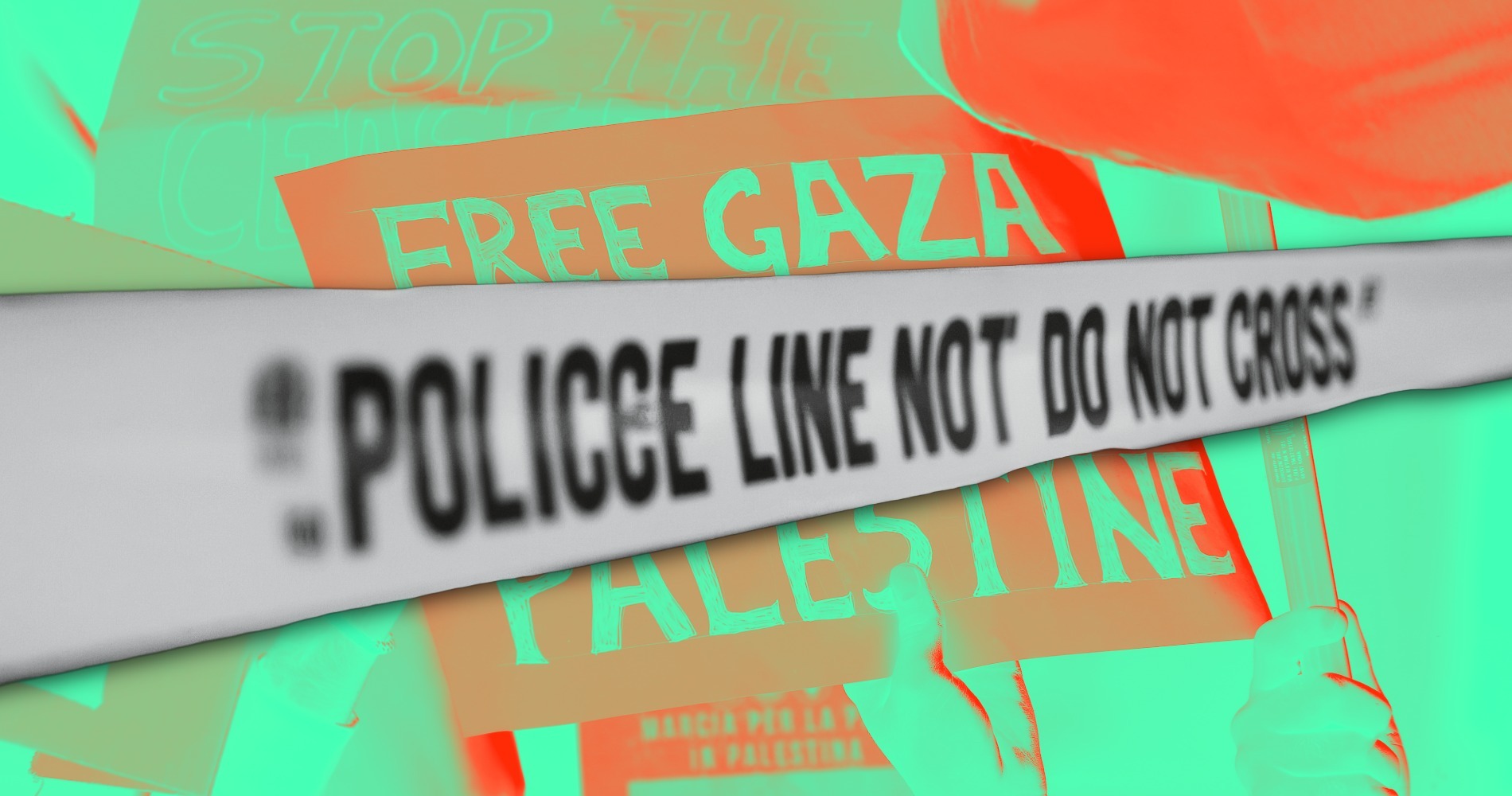
Bill C-9, officially titled An Act to amend the Criminal Code (hate propaganda, hate crime and access to religious or cultural places), or the Combatting Hate Act for short, introduces several new restrictions on protesters, including penalties for displaying “hate symbols.”
The bill also expands limits on demonstrations by banning protests around community, cultural, and religious centres, regardless of the activities taking place inside. Critics warn that creating “bubble zones” around such places restricts freedom of speech and peaceful assembly, and could effectively criminalize lawful protest that is not hate-motivated—for example, when Palestine solidarity protesters (many of them Jewish) protested outside synagogues hosting non-religious events promoting the illegal sale of Palestinian land in the West Bank.
Anaïs Bussières McNicoll, Director of the Fundamental Freedoms Program at the Canadian Civil Liberties Association (CCLA), argues that the measure would ban protests at thousands of locations across the country. She adds that if the bill becomes law, demonstrators might not even realize they are in a restricted area until they find themselves subject to criminal penalties.
The bill also removes the requirement for prosecutors to obtain the Attorney General’s consent before laying hate-propaganda charges. Richard Moon, a law professor at the University of Windsor and author of The Life and Death of Freedom of Expression, explains that the Attorney General’s consent requirement for hate-speech prosecutions was originally added as a safeguard to prevent misuse of the law.
Moon said he understands the reasoning for removing the requirement, since the consent rule often caused delays and created an unnecessary hurdle for prosecutors. But he warned that the change carries risks in the current political climate.
“Right now, a lot of people throw around the term ‘hate speech’ and assume anything they find offensive qualifies,” he said. “That’s where abuse becomes a concern, because under the Criminal Code an individual can launch a private prosecution—difficult and costly, but still possible.”
The federal government says these new restrictions aim to make Canada safer and better able to fight hate crimes. But, in a joint letter, 37 diverse civil society organisations stressed their opposition to the bill. The signatories demanded that Parliament withdraw the bill, saying it would worsen systemic inequities and undermine Canada’s commitments to freedom of expression.
McNicoll says Bill C-9 risks “criminalising peaceful protesters” if passed in its current form.She emphasised the importance of combating hatred and building a more equal society, and noted that police already have grounds to intervene when demonstrations become violent or incite violence. But she argues that Bill C-9 goes much further, including in its approach to “hate symbols.”
“The bill is inviting the police to pay particular attention to specific symbols and see these signs as evidence of an intent to promote hatred willfully,” she says. “There’s this risk that a lot of protesters will be arrested based on this new provision.”
The risk is heightened by how broadly “symbols” could be interpreted. Critics warned a keffiyeh, or even a small pin expressing opposition to genocide, could be read as a political message. Under the bill, such items might be treated as signs of hateful intent, exposing demonstrators to arrest. Such events are already occurring elsewhere in the world, in countries like Germany and the United Kingdom, where crackdowns on Palestine solidarity activists are occurring under the legal logic of anti-hate legislation.
Some legal infrastructure defining criticisms of Israel as hate speech is already in place. In 2019, the federal government adopted the International Holocaust Remembrance Alliance (IHRA) definition of antisemitism, which broadens the definition of antisemitism to include some criticisms of Israel. According to the federal government’s document on the subject, referring to “the existence of the state of Israel is a racist endeavor” is anti-semitism. The document’s list of examples of hate-speech includes phrases such as “you can’t be antiracist and Zionist” and that “Zionism is a racist & violent settler-colonial project.” Independent Jewish Voices (IJV) criticized the definition, saying it was being used to “suppress and even criminalize pro-Palestine speech and activism.”
The bill takes place in a context of a broader legislative crackdown on protest, arriving as Mi’kmaw activists in Nova Scotia face new restrictions and land defenders in British Columbia receive prison sentences. It also comes amid nationwide pro-Palestine demonstrations calling for a full arms embargo and sanctions on Israel in response to the ongoing genocide in Gaza.
From September 11 to October 7
Lawyer Dania Majid, founder and president of the Arab Canadian Lawyers Association, believes the timing of Bill C-9 is not coincidental.
Like many other signatories of the joint letter, she sees the bill as an effort to limit pro-Palestinian demonstrations across Canada since October 2023. Majid argues that the bill, along with recent measures affecting Indigenous activists, reflects that “Canada is a settler colonial state,” and warns that all activists could soon feel the impact.
“Some might think this is just against Arabs, Palestinians and Muslims, and not affecting them,” she adds. “But, over time, these types of laws become normalised and applied to other movements, other populations.”
Majid points to earlier patterns, saying the same approach was taken after the September 11 attacks, when Muslim communities were targeted first, and then other dissidents were silenced.
“In the [post] 9/11 era, everyone who opposed the government or the war in Iraq or Afghanistan was labelled a terrorist or a terrorist sympathiser. Then it expanded to Indigenous communities defending their territories and the environmental movements,” she explains.
Environmental activists have echoed this warning. Alan Silverman of Seniors for Climate Action Now (SCAN) agrees with Majid and argues that, instead of curbing hate, the bill could be used to target people who speak out on environmental issues.
“While the main source of this bill is the Palestinian question, it can be used to target all forms of protest, including climate activism,” he says.
Education and community-based consultation
Experts highlight two major flaws in the proposed legislation: the bill’s vague definition of hate offences and the broad powers it gives police. They note that existing laws already give authorities the tools to keep people safe during demonstrations and to address hate speech.
For these reasons, they are urging lawmakers not to pass the bill and instead to rely on the existing legal framework.
Silverman also stresses the role of education in confronting hate speech, arguing that rather than expanding police powers or creating new offences, the government should invest in anti–hate speech education to address the issue at its roots.
“If people are being educated that they all deserve the same rights, then you will move away from a society that promotes hatred,” he says.
McNicoll warns that Bill C-9 will further silence marginalized communities by restricting where they can protest and limiting the public expression of their concerns. She says these new barriers risk closing off important avenues for their voices, particularly on issues affecting their communities. To address hate crimes effectively, McNicoll emphasizes the importance of community-based initiatives.
“Communities that are disproportionately targeted by hatred should be consulted. They should also be given tools and platforms to talk about their lived experiences and share what they believe the solutions could be,” she says.
“Criminal law is not the solution to every societal problem.”