
Share
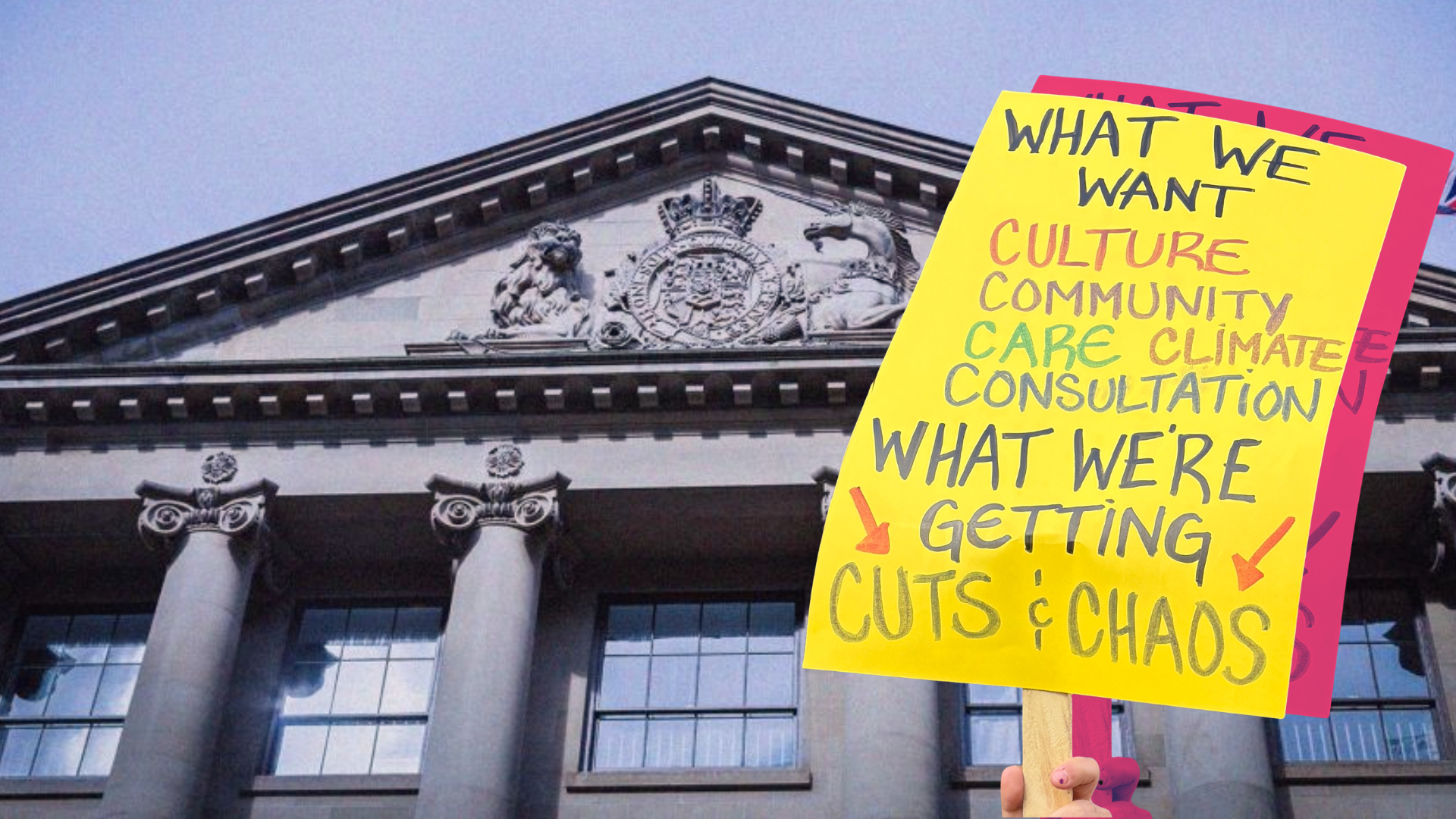
Undervalued and underestimated, the arts and culture sector continually finds itself on the defensive in the political sphere – when it makes it into that sphere at all. Rarely the topic of political debate, the Nova Scotian arts and culture sector has suddenly skyrocketed to a top position among issues garnering public attention following the Nova Scotia government’s recently proposed budget.
On February 23rd 2026, the Nova Scotia government announced a provincial budget that saw the elimination of $130 Million in grant programs. The bulk of those cuts target programs in the department of Communities, Culture, Tourism and Heritage from where artists and arts organizations draw their government grants. Cuts to 72 programs ranged from 20% all the way to 100%. On March 10th, the Nova Scotia government did announce a reversal on some of those cuts, worth $53.6 million, but the arts and culture cuts will remain.
All this happened while the Halifax arts and culture sector was already on the defensive and campaigning against a proposed 10% cut to arts funding at the municipal level.
At either level of government, the proposed cuts are proportionally quite small in the scope of the whole budget. However, given how small the investments in the arts are in Nova Scotia, cuts of any scale will have hard, rippling impacts on artists, arts organizations, and community programs throughout the sector. Cuts will result in limiting opportunities for both emerging and established artists, preventing them from finding financial security in their career paths, limiting the creative and outreach risks they are willing to take, and preventing them from doing what they love doing: making their communities exciting places to live in.
The arts sector continues to be perceived as something nice to put money into, if we can afford it. But the arts are not a luxury good. They are a fundamental asset to any city or community. And to amplify the return from the arts, we first need investment. It’s been demonstrated time and again that the arts contribute to community well-being, education, tourism, and economic development. Every dollar invested in the arts returns value to a city or province, supporting jobs, local businesses, and cultural vibrancy.
Last year’s Artworks national study on the economic and social dividends from Canada’s arts and culture sector demonstrated very clearly that the arts and culture sector is one of the most important economic drivers in Canada. The arts and culture sector contributed $65 Billion to Canada’s direct GDP in 2024 ($131 Billion if adding indirect and induced dividends) outpacing the overall growth in the economy. According to Statistics Canada, in 2023, the Nova Scotia arts sector brought in over $2 Billion in GDP and was responsible for gross economic output of over $3.5 billion. The sector accounts for more than 16,000 jobs–employing more people than farming, fishing, and forestry combined. Exceptionally in Nova Scotia, the majority of those jobs are located in rural areas.
Halifax is a powerhouse of economic growth when it comes to the arts and culture sector. In the most recent Arts Vibrancy Index, Halifax ranked fourth out of 22 metropolitan areas in the census, indicating the impact of the arts sector on a place’s economic growth. According to Statistics Canada, culture contributed 2.0 per cent of Nova Scotia’s GDP in 2023. This is up 9.2 per cent from the previous year–a bigger increase than any other province. Meanwhile, in 2025 workers in culture-related occupations earned an average employment income of $58,972 in Nova Scotia and $60,515 in Canada. Halifax is trailing behind with respect to investment in arts funding, and HRM Council has yet to achieve its own funding goals set in 2017. Artists in Halifax produce much more for less than the national average and punch well above our weight. Sadly, we are only left to imagine what the Halifax arts sector could achieve with adequate investment.
Those are the economic impacts alone. More and more attention is being brought to the qualitative impacts of the arts in a community. Bringing people together into public spaces; fostering social engagement; training our capacity to reflect on meaning (asking “what does this mean?”). The arts exercise our capacity to understand others, ourselves, and our relationships between each other and the world at large. In a world of deepening division and entrenched ideologies – both fuelled by social isolation – the arts are an essential antidote. The arts create social cohesion by allowing us to recognize what makes us, us. And the larger and more diverse the arts sector, the broader and more diverse becomes this understanding of what is us – and not them.
The arts should not be treated as just an expense, but rather as an investment that yields strong returns, and can actually help fight a budgetary deficit. It has been well demonstrated that art spaces increase the commercial value of areas and increase potential for property and sales tax revenue. Budgetary calculations also need to include expense reductions like the reduced pressure on healthcare and policing services as a result of increased physical and mental health, social cohesion and community well-being.
Artists, being creative, are known for their ability to stretch a dollar – and the statistics shared above show that we are really good at that here in Nova Scotia. But a dollar can only stretch so far. At a certain point, we do need investment to make things happen.
A flourishing arts sector means a flourishing province. The arts are not a burden; we are part of the solution. Let’s work together on that solution.
Sébastien Labelle is an accomplished actor and dancer who serves as the artistic director of Mayworks Festival of Working People & the Arts in Kjipuktuk/Halifax. He is also a member of the Nova Scotia Arts Coalition.
About the author
Sébastien Labelle
Sébastien Labelle is an accomplished actor and dancer who serves as the artistic director of Mayworks Festival of Working People & the Arts in Kjipuktuk/Halifax. He is also a member of the Nova Scotia Arts Coalition.

