
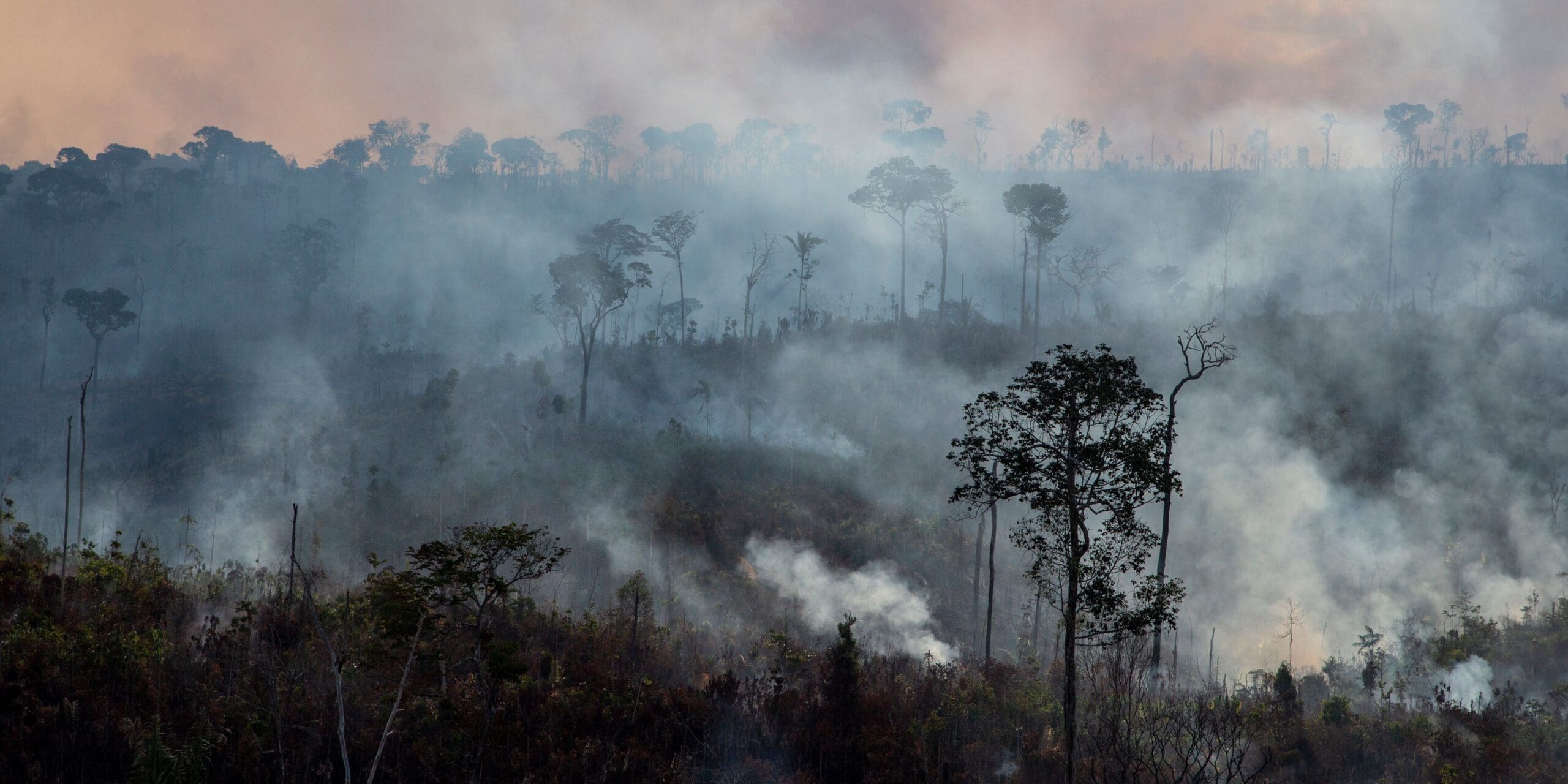
The COP30 Global Climate Summit in Belém, Brazil marked the 10th anniversary of the landmark Paris Accord, where countries agreed to limit global warming to 1.5 C above pre-industrial levels by 2050. The world is now anticipated to heat up by 2.6 C above preindustrial levels by the end of the century.
Simon Stiell, the executive secretary of the UN Framework Convention on Climate Change (UNFCCC) told the opening meeting of the COP30 that “when climate disasters decimate the lives of millions, when we already have the solutions, this will never, ever be forgiven.”
Planetary scientists at COP30 warned the Brazilian president Lula that the world is at a crossroads. The choice is, protect people and life or the fossil fuel industry. Emissions must start falling next year, “in order to have a chance to avoid unmanageable and extremely costly climate impacts affecting all people in the world.”
Canada’s role at the climate summit
Several Canadian ministers, led by Environment Minister Julie Dabrusin, have been in attendance at least for part of the summit. In a press release she stated: “Together with global partners, Canada is ensuring continued climate action with tangible outcomes toward a clean, sustainable, and equitable future for our communities”.
Canada is the world’s fourth largest fossil fuel producer, with production continuing to increase. Alberta, the epicentre of bitumen production, is aiming to double its production by 2035. Canada is a laggard in meeting its emissions reduction commitments under the Paris Accord. It has not achieved any emission reductions since 1990. Canadian banks are among the largest global fossil fuels financers.
The fossil fuel industry at COP30
One in 25 delegates at COP30 are fossil fuel lobbyists, with the total number of COP fossil fuel lobbyists attending COP summits over the last five years reaching 7,000. A dozen individuals representing fossil fuel interests are part of the 240-person Canadian delegation to COP30. It’s like letting the fox into the henhouse in terms of their ability to block or weaken climate actions.
Aggressive industry greenwashing—the dissemination of false or deceptive information regarding companies’ environmental strategies, goals, motivations, and actions—has been successful in blocking or weakening climate actions in previous international climate summits.
The corporate-government power relationship, (corporate capture) also explains the Canadian government’s failure to effectively regulate petroleum corporations and their financial institution enablers driving fossil fuels expansion.
The Carney government’s continued climate backpedalling
Canada’s record in the decade following the Paris Accord was brilliantly described by CCPA researchers as “grim.” The county has (with some notable exceptions like the coal phaseout) largely failed to lower emissions or rein in the political power of the fossil fuel industry.
Prime Minister Carney continues to focus on narrowly defined economic priorities—particularly focused on resource extraction—with climate taking a backseat despite the fact they are interdependent. In advance of COP30 the government brought in a budget which
- will likely remove the 2035 oil and gas sector emissions cap, and enhanced methane regulations.
- contains no funding for emissions reductions.
- increases fossil fuel subsidies despite the Environmental Commissioner in the Auditor General’s Office most recent report concluding that “federal investments supporting projects in the oil and gas sector also faced significant risks in a transition to net-zero emissions by 2050.”
- Cuts existing climate programs including home energy efficiency and public transit.
- weakens Canada’s competition laws that crack down on false environmental claims by corporations, enabling them to make more false claims and disinformation.
It also announced a second set of priority projects referred to the Major Projects Office including the Ksi Lisims LNG platform, a liquified natural gas facility in Northwest BC. This facility along with previously approved LNG Canada phase 2 expansion in Kitimat, B.C., are central pillars of the federal government’s LNG export strategy.
An oil pipeline from Alberta to the BC coast was not on the second-round list of major projects. However, negotiations have been underway between the federal government and Alberta, and a memorandum of understanding will be announced on Thursday allegedly giving Alberta exemptions from federal environmental laws and federal support for a new oil pipeline to the B.C. coast.
COP30 outcome regarding transitioning off fossil fuels
More than 80 nations called for a roadmap to transition away from fossil fuels. There’s no indication that Canada was among them. It was blocked a number of states—a so-called axis of obstruction— led by Saudi Arabia.
According to David Tindall, who attended the summit, a briefing by Michael Bonser, Environment and Climate Change Canada Assistant Deputy Minister, who is leading Canada’s COP30 delegation, indicated Canada has not made a firm commitment on whether to support a roadmap. Though Canada’s government supports the idea in principle, he said, it wants to hear more details.
Canada’s role regarding climate action during the conference’s final days was captured by its receipt of the Fossil of the Day award from the Climate Action Network International for being “completely Missing in Action at a COP where multilateralism needs to be saved.”
At the summit’s final day, Brazil’s COP30 presidency pushed through a Consensus Agreement without any mention of fossil fuels. In a very small last-minute concession, Saudi Arabia and its allies, while not agreeing to wording that specifically mentioned fossil fuels, accepted the final agreement which included a reference to the COP28 UAE Accord two years earlier which explicitly called for a “transition away from fossil fuels”.
Though not part of the Consensus Agreement, there was a side agreement by supporting nations to begin discussions on a roadmap to an eventual phase-out of fossil fuels, allowing the Summit host to claim movement forward, however incremental.
Incrementalism notwithstanding, the rapid growth in renewable energy worldwide is making the eventual transition away from fossil fuels inevitable. The question is whether it will occur fast enough to spare the world its most devastating consequences.