


Share
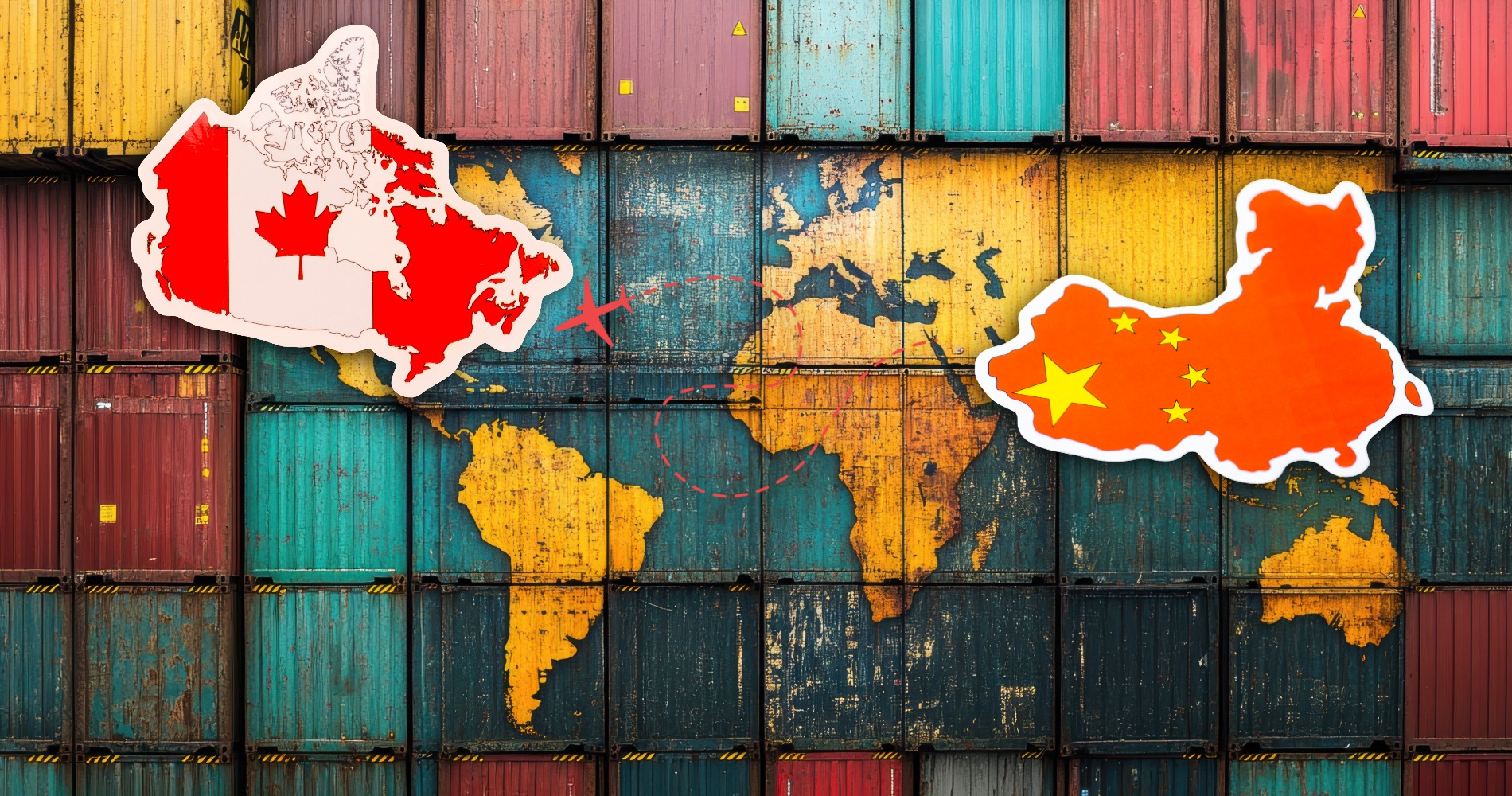
With the Canada-U.S. relationship showing no signs of improving and trade war–related factory closures making regular headlines, Prime Minister Carney routinely makes trade diversification announcements aimed at creating a “stronger, more independent, and more resilient economy.” In January, the Prime Minister visited Beijing where he launched a new Canada–China partnership following years of chilly relations related to the “Two Michaels” incident and arrest of a high-level Huawei executive.
During the prime minister’s visit, Canada and China signed memorandums of understanding to cooperate in a variety of areas, including energy and clean technology. Triggering the most attention, though, was a détente on electric vehicle tariffs, which had been set at 100 per cent in Canada for Chinese-made cars since the Biden administration. Canada would now allow 49,000 Chinese EVs into the country tariff free.
The expectation is that this will lead to the development of joint ventures in auto manufacturing within three years, creating jobs and building a more robust EV supply chain in Canada, and providing more affordable EVs to Canadian customers. U.S. President Donald Trump initially called the move “a good thing.” But one week later, following Carney’s “rupture” speech in Davos targeting U.S. unilateralism, Trump threatened to slap a 100 per cent tariff on Canadian goods if the country struck a trade deal with China, which is not on anyone’s agenda.
It is widely believed that the “poison pill” provisions in Article 32.10 of CUSMA, which would allow the U.S. to withdraw from the agreement if Canada or Mexico sign a free trade agreement with a “non-market country,” are designed to prevent China from treating Canada or Mexico as a gateway to the North American market. Given U.S. trade minister Dominic LeBlanc’s insistence Canada does not want a China free trade agreement, the Prime Minister’s China tour appears at least partially intended to create leverage in the upcoming CUSMA review—more risk management than a pivot away from the United States.
The joint review mechanism in Article 34.7 of CUSMA fits within Trump’s global reciprocal trade strategy. The first joint review begins on July 1. If all parties agree, the agreement will be extended for another 16 years (to 2042). If no consensus is reached, the review becomes annual, and continued disagreement would lead to the agreement’s automatic termination in 2036.
As former United States Trade Representative (USTR) Ambassador Robert Lighthizer explains, “this mechanism (joint review) was designed to ensure that the U.S. ‘never again be in a position where it has permanently given away its economic leverage or become hostage to outdated rules.’” In this sense, the mechanism has transformed CUSMA from a certainty-based trade agreement into a periodically re-opened negotiation table, allowing for recalibration toward reciprocity from the U.S. perspective.
On December 16, 2025, Jodey Arrington, the Republican chair of the U.S. House budget committee, introduced the Consistency in Foreign Investment in the United States–Mexico–Canada Agreement Act. The bill would require USTR to push, in the joint CUSMA review, for Canada and Mexico to align their national security screening of foreign investment with that of the United States, including closer monitoring and review of foreign investment, to strengthen North American coordination in addressing investment-related risks.
Given the importance of harmonizing investment screening measures in recent Trump agreements and in the Pax Silica pledge it is selling to critical minerals and silicon chip producing nations, and the evolving changes to Canada’s EV import policy, we should expect the conversation to come up in the CUSMA review. It’s worth looking at Canada’s existing screening measures in the Investment Canada Act (ICA) and Canada’s investment obligations in the Canada-China Foreign Investment Protection Agreement (FIPA) signed by the Harper government in 2012.
Under the FIPA, Canada’s federal government retains the ability to screen Chinese investment in Canada under the ICA, and China can similarly screen Canadian investment under its own laws and practices. These investment screening policies are excluded from the treaty’s controversial investor-state disputes settlement and state-to-state arbitration system. However, there is an imbalance in the treaty noted by Gus Van Harten in his assessment of the FIPA.
Canada’s investment policy space is tied specifically to decisions made pursuant to the ICA, whereas China’s carve-out applies broadly to laws, regulations and rules, present or arguably future amendments, reserves substantially wider regulatory flexibility at multiple levels of government, while Canada’s preserved authority remains linked primarily to the existing ICA framework. The ICA itself also contains structural limitations as an investment screening mechanism.
To assess foreign investment in Canada, the ICA operates through two parallel review procedures: one focuses on whether an investment provides a “net benefit” to Canada, and the other assesses whether it may be injurious to Canada’s national security. On March 5, 2025, Innovation, Science and Economic Development Canada issued updated Guidelines on the National Security Review of Investments (Guidelines), introducing economic security as a factor and expanding the scope of national security review to include risks related to supply chain control and dependency. The government may initiate a review where it has reasonable grounds to believe that an investment could be injurious to Canada’s national security.
With the exception of national security review powers, the ICA traditionally authorized review only where a foreign investment involved the acquisition of control of an existing Canadian business. Greenfield investments generally fell outside the ordinary review mechanism. In addition, the ICA imposed relatively high monetary thresholds before a transaction became reviewable under the “net benefit” test. As a result, the design of the Canada-China FIPA may constrain Canada’s future policy space in emerging strategic sectors such as electric vehicles, batteries, critical minerals, and semiconductor supply chains, including future compliance with the kind of harmonized North American investment screening scheme envisioned by the Trump administration.
In recent years, the Canadian government has explicitly included critical minerals (iron, silicon, phosphorus, etc.) in the “trinity of supervision” of national security, economic security, and supply chains. Through the Policy Regarding Foreign Investments from State-Owned Enterprises in Critical Minerals under the Investment Canada Act (2022) and its guidelines (2025), it’s becoming harder to pass investment screening in the critical minerals sector.
In November 2022, Canada ordered three Chinese companies to divest from lithium assets they held inside and outside Canada via ownership stakes in Canadian-listed companies. However, cases have shown that such foreign investment is still possible if it responds to the government’s key concerns: retaining control, securing supply, and reinvesting in domestic capacity. Commitments go a long way in facilitating the completion of such deals.
For example, in the La Arena gold-copper project, which was approved in 2024, the Chinese party committed that 60 per cent of future copper concentrate output would be supplied to Pan American Silver for sale in the North American market. In the merger between Anglo American and Teck, commitments included setting the merged company’s headquarters in Canada, maintaining local job positions, and investing $10 billion in Canada.
As this demonstrates, Canada is already taking steps to restrict Chinese investment in sensitive industries in the North American market.
In terms of EVs, while Canadian consumers may welcome more affordable vehicles, the auto industry has expressed concern about the policy, particularly opposing the possibility that Chinese firms may establish joint ventures focused on assembling vehicle kits in Canada, which could generate limited domestic employment. “We cannot ship cars to Canada as kits. Making cars in Canada must help support the local supply chain,” said Canadian Minister of Industry Melanie Joly.
On the other hand, the first 24,500 import permits are allocated on a first come, first served basis. While Chinese brands (such as BYD or Geely) are still hiring and scouting, Tesla has already made its move. The company recently launched its Shanghai-built Model 3 Premium RWD in Canada at a reduced price. Industry estimates suggest Tesla could secure 7,000 to 10,000 of the first 24,500 import permits, roughly 29 to 41 per cent of the total first-half allocation. Canada is weighing whether to impose company-specific limits within the new 49,000-vehicle low tariff quota for China-made electric vehicles.
With domestic restrictions in place and pressure from the U.S., the partnership between China and Canada remains limited at this stage. For China, investing in either Mexico or Canada may be seen as a way to mitigate the negative effects of the so-called “One Big Beautiful Bill Act,” under which projects involving “prohibited foreign entities” may be ineligible for certain clean energy tax credits. However, given the uncertainty surrounding the renewal of CUSMA, China may be more cautious in expanding its investment in Canada, anticipating potential regulatory or political constraints.
For Canada, this renewed “honeymoon” with China may provide some leverage in navigating the upcoming review, but its practical impact appears limited. Difficult choices are likely to arise, and the broader goals of diversifying trade partnerships and achieving greater independence may still have a long way to go.
About the author
Jieyu Qin
Jieyu (Laraine) Qin is a Juris Doctor candidate at Osgoode Hall Law School and an internationally trained lawyer specializing in commercial litigation.