
July 21 was supposed to be Canada’s deadline to secure a new trade and security agreement with the United States. What it got instead was more uncertainty.
This is because Donald Trump has threatened to impose a new wave of tariffs on the country if no deal can be reached by a new August 1 deadline. Without an agreement, Canada will face a 35 per cent tariff on goods not currently covered by the CUSMA, in addition to a 50 per cent tariff on copper and a potential 200 per cent levy on pharmaceutical products.
Canada is already facing tariffs of 50 per cent on its steel and aluminum sectors, 25 per cent on its automotives, 34 per cent on lumber, and 10 per cent on potash and energy, all of which have translated into thousands of job losses in the months since. There is also a net 25 per cent tariff on goods not covered by CUSMA.
Trade between the two countries is significant, with roughly the equivalent of 25 per cent of Canadian GDP tied to exports to the United States. While a deal would be beneficial, it must be weighed against other costs, like the normalization of Trump’s bullying tactics, unreliability, and the level of tariff concessions politicians are willing to make. According to one report by the Centre for Future Work, a “lower” agreed upon “effective” tariff rate could still equal three per cent of Canadian GDP, meaning that Canada would be paying more than China or the EU as a share of GDP. In that scenario, Canada would inevitably face a recession and severely damage its national industrial capacity.
To date, officials have been coy as to what a potential deal with the U.S. may look like. During a July 11 media presentation, Industry Minister Melanie Joly emphasized that we are “not in normal times,” a claim that shouldn’t come as a surprise to anyone. Since taking office, Trump has threatened, promised, enacted, delayed, raised, and walked back tariffs on most countries. This isn’t new but par for the course, underscoring America’s growing unreliability as a trading partner.
No deal can be reached if the president is constantly moving the goal post for what he deems a suitable agreement.
While the government has refused to update the public on the status of negotiations, tariffs are likely to be part of any future agreement.
According to the prime minister, “there isn’t a lot of evidence” that the U.S. is looking to cut a deal without levies, at least for the time being. This shouldn’t come as a surprise.
After sending out tariff letters to several countries last week, the President insisted that those were, in fact, “the deals” and that there were “no more deals to make.”
So far, five countries and the EU have a “deal” with the United States including Vietnam, Indonesia, Japan, and the Philippines, though the U.K. is the only one to have actually put pen to paper. Until finalized, we don’t know what these agreements will look like in practice, save for the fact that they will all include some tariffs. The U.K., for instance, agreed to a 10 per cent tariff while most recently the EU consented to a 15 per cent levy and committed to investing hundreds of billions of dollars into the American economy. This implies that not only have the President’s ultimatums been serious, but that he has also successfully gotten his way.
The U.K. deal came way back in June, however—have Canadian negotiators been paying attention? The Prime Minister is only now expressing openness to holding out longer for a new agreement. This is an important break from the status quo, where officials have clung to the notion that Canada’s “unique” relationship with the U.S. will ultimately prove to be a favourable, deciding factor in negotiations.
As political science professor Blayne Haggart argues, to date, Canada has been acting as though the Trump threat can be resolved through conventional, rational negotiations. What politicians and pundits have been slow to acknowledge, however, is that the shared political and economic consensus which has underlined this relationship has changed.
For Trump, tariffs are a political tool as much as they are an economic one. The language surrounding them often boils down to gripes over the domestic policy of sovereign nations—like the tariffs levied against Brazil, citing the charges against longtime Trump ally Jair Bolsonaro.
The federal government has neglected this shift, as evidenced by its concession-based approach to negotiations. So-called efforts to show “good will” are little more than gifts to corporate America and the Trump Administration, eroding what leverage the country has.
The most recent example of this is the rollback of the digital services tax (DST) after the President demanded its repeal as a condition of continued trade negotiations. Regardless of public sentiments on the tax itself, making changes to domestic tax policy on the whim of a foreign leader sets a bad precedent. This also didn’t result in any movement in trade talks, with the President promising new tariffs in the subsequent weeks.
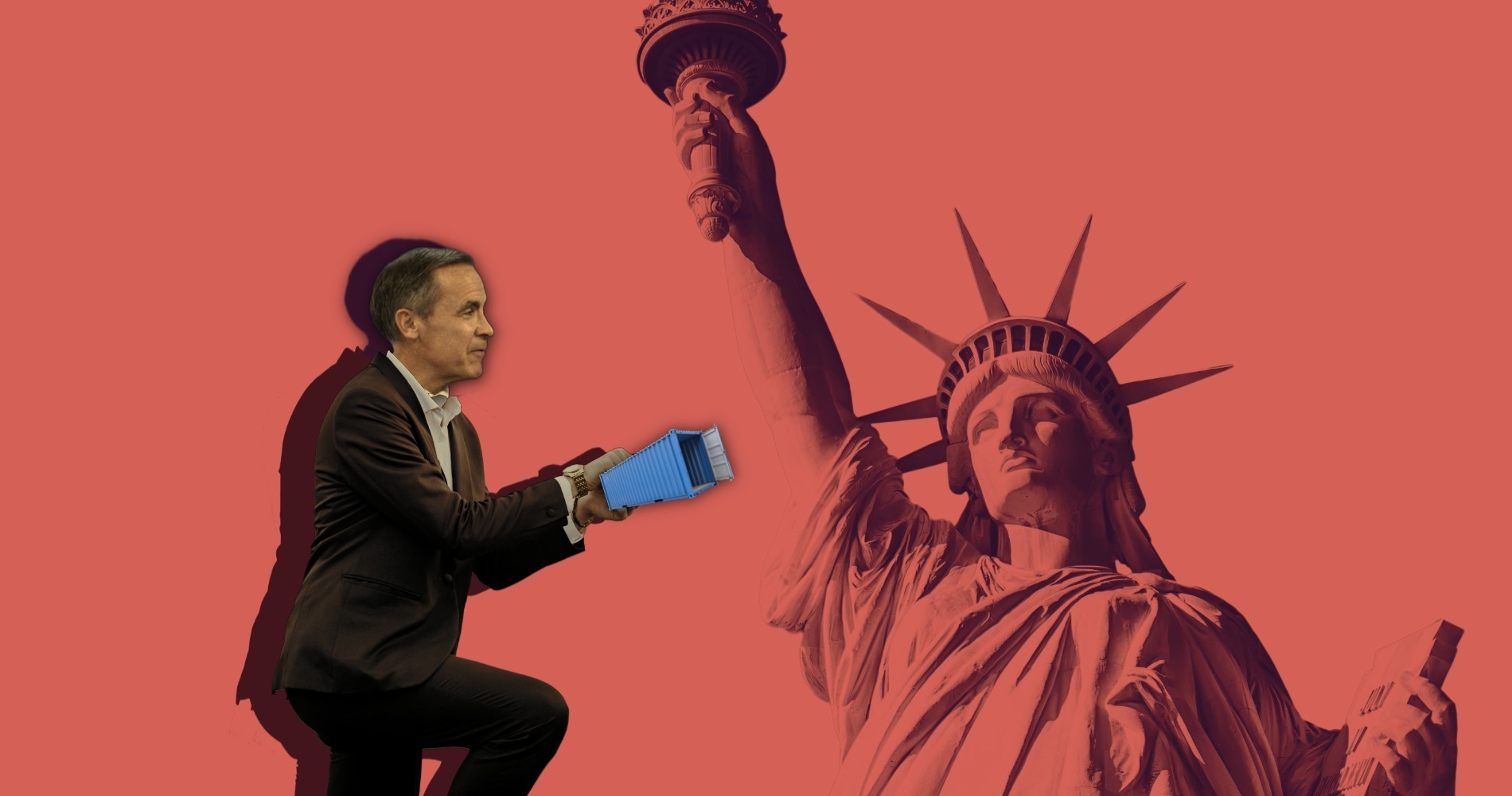
For a government elected on an “elbows up” promise, it has consistently gone the route of appeasement. Pressure to curb virtually non-existent drug trafficking, for instance, led to a hardening of the border. Late in June, the federal government announced that it would spend billions more on defence, pledging to meet the new 5 per cent target for NATO member-states, a gripe dating back to the first Trump Administration. The Prime Minister has also pledged tens of billions of dollars to Trump’s fantastical continent-stretching “Golden Dome.”
The federal government also opted not to retaliate to the 50 per cent tariffs imposed on Canadian steel and aluminum, delaying its response until after the now-defunct July 21 agreement deadline. Add the aforementioned walk-back of the DST, and we see that Canada has spent billions of dollars and lost thousands of jobs with less than nothing in return from their American counterparts.
This approach is problematic but can be linked back to the overarching philosophy guiding the Canadian side: that trade between our two countries makes sense because of shared borders, values, and traditions. Officials’ inability to comprehend why the Americans wouldn’t want a deal seems to inform much of the public discourse on the matter. Like it or not, Trump doesn’t seem to share the rosy view of free trade between our two countries, regardless of how integral a trading partner Canada is. Negotiators on this side of the border must accept this instead of fixating on how things once were.
In doing so, we must ask real questions of how we see ourselves relative to the United States, given its domestic and international instability. We must also be open to the reality that no deal may indeed be better than a bad one.
Donald Trump is an unreliable partner in matters of trade and diplomatic relations. He has consistently shown that he is unable to keep his own words, going as far as to violate his own agreement: CUSMA.
Combine this with the troubling fascist-backsliding in the United States, and Canadian officials should start giving serious thought as to whether it is worth further cementing ourselves within the American sphere of influence.
Trade may be top of mind, but it isn’t just this country’s economic future that’s at stake.