
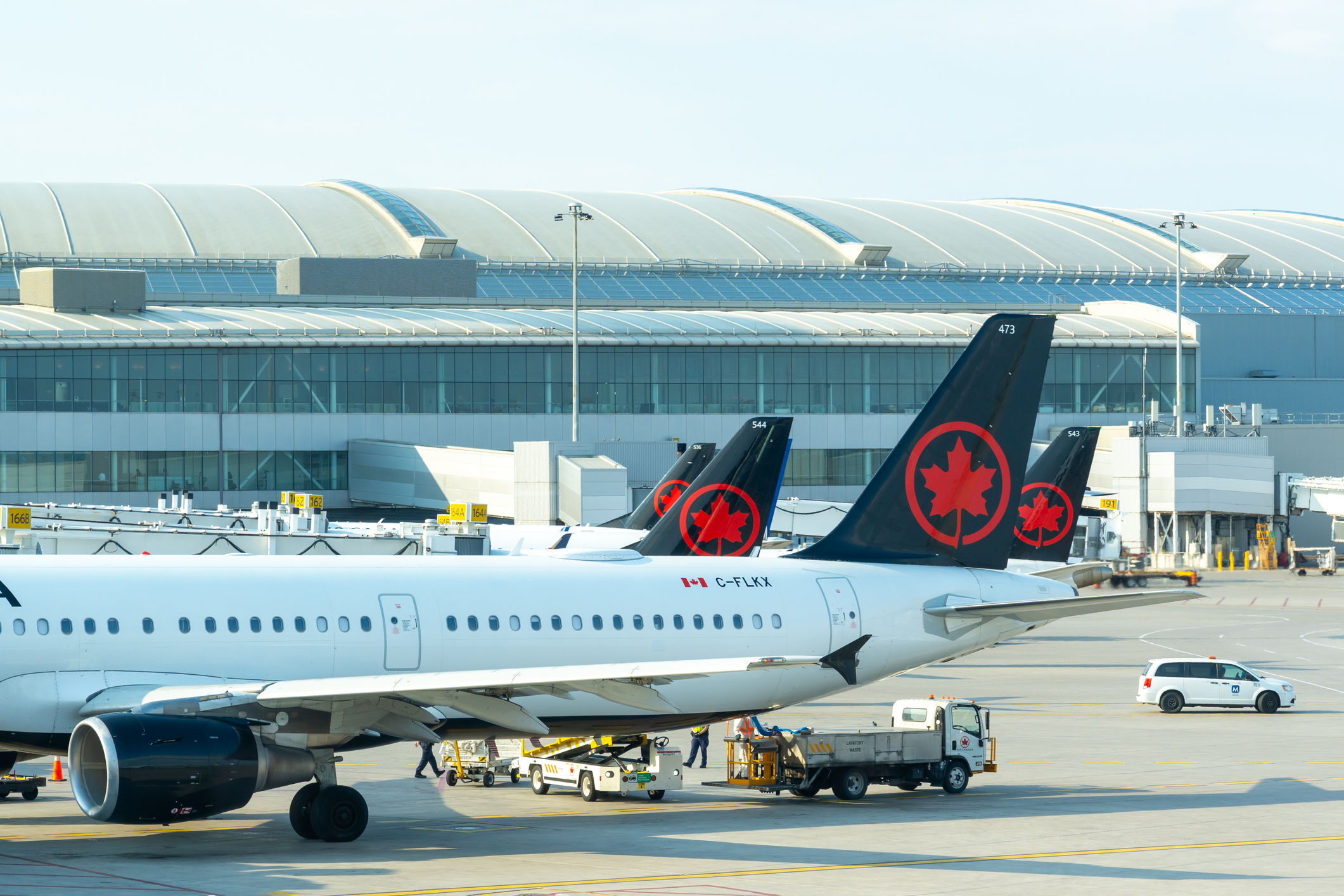
The ongoing strike by CUPE flight attendants at Air Canada has sparked a moment in the Canadian labour movement. Unions across Canada have been pledging their support for CUPE flight attendants and showing up on picket lines at major airports.
After decades of Canadian workers seeing their rights eroded,workplace closures, pensions lost, and growing inequality, this is a moment to fight back. This is the time to defend the right to strike.
Air Canada assumed that the federal government would intervene, and therefore did not bargain to a settlement with CUPE—a move which has sadly hurt the travelling public.
CUPE members have not been able to negotiate a new collective agreement for over 10 years. They have fallen far behind in terms of wages and benefits: their wages have gone up only eight per cent over the decade, while the cost of living has gone up over 20 per cent. Wages remain in dispute.
A second key issue is the fact that flight attendants are only paid for work when the aircraft is in the air. All time before and after the flight, although required as part of the job, is unpaid. With more delayed flights, greater passenger loads, more cabin baggage and more passenger demands, there is no question that the work performed by flight attendants extends beyond the flying time, and should be compensated.
Over 70 per cent of this workforce at Air Canada is women. I began my union work with Air Canada as a passenger agent at Pearson airport. In bargaining with Air Canada in the 1980s. I remember then, when we, overwhelmingly women, pressed for wage increases, and an Air Canada executive shrugged this off saying that as women we were just working for ‘pin money’. It seems their views of women have not advanced in over 40 years.
Jobs Minister Patty Hajdu ordered the flight attendants back to work by invoking Section 107 of the Canada Labour Code, which gives the minister the power to end a work stoppage and send workers to binding arbitration.
Ordering flight attendants back to work after just 12 hours on strike has ignited protests across Canada, drawing in other unions and supporters to join the picket lines. Polling demonstrates that public opinion is overwhelmingly behind the workers.
Previously a little used power, just last year, the federal government invoked Section 107 in several major disputes in the federal jurisdiction, including in ports, rail and Canada Post. Unions are taking the federal government to court arguing the government is violating Canadians’ constitutional right to strike.
Why is the union unwilling to go to arbitration? Over 90 per cent of the flight attendants voted to strike with a mandate of 99.7 per cent. This is almost unheard of and indicates overwhelming member support for the union and their bargaining committee. They want the right to bargain a new and fair agreement and they are willing to strike until they get that.
An arbitrator can find middle ground in wages and benefits, but will not break new ground such as calling for pay, for currently unpaid work. The union knows that the arbitrator will likely side with the company on this key issue because it is new.
Furthermore, CUPE alleges that the chair of the Canada Industrial Relations Board has a conflict of interest since she served as in-house legal counsel for Air Canada for over six years and represented the company in cases as recently as 2022.
The penalties for the union and its members for defying the government order could be significant. In 1978, postal workers President Jean Claude Parrot was jailed for defying a back to work order. The following round of bargaining, and ensuing strike action, resulted in the postal workers winning paid parental leave in 1981. This led to the creation of policy that benefited workers and families across Canada. And in 1981, national CUPE president Grace Hartman was jailed 45 days for refusing to send striking hospital workers back to work.
A similar situation in Ontario in 2022 where striking CUPE education workers, also overwhelmingly women, were ordered to return to work, sparked the broader labour movement and the public to support them and led to the Ontario Government backing down.
The federal government can’t keep letting very profitable corporations like Air Canada off the hook. While the company CEO and senior executives are making millions of dollars (the company’s CEO was paid $12 million last year. No unpaid time for him!) The airline has let down the travelling public. Their role now is to go back to the bargaining table, meeting the union face to face, and find a negotiated solution. Our role as progressives to defend labour rights, and to support the union.
A better world is possible if we fight for it. Now is the moment.