
- Home
- Topics
- Regions
- Magazines
-
-
-
The Monitor
While world leaders are increasingly saying out loud that the postwar liberal world order is dead, the ruling classes in the Global North have an answer for what will come to replace it: fascism. Will they be able to implement their vision?
-
-
-
-
Our Schools/Our Selves
A guide to standing up to book bans and beyond, and how to protect and strengthen public education in Canada
-
-
-
-
- Media Inquiries
- Subscribe
- Legacy Gifts
- About
- Contact
- Donate Now
- Donate Now

Search results for “site/economics of childcare”
-
 Scott Lough / Flickr” style=”border-radius:0px;–objectFit:cover;–imagePosX:50%;–imagePosY:50%” decoding=”async” srcset=”https://www.policyalternatives.ca/wp-content/uploads/2025/04/PN_may2018_caribou-300×141.jpg 300w, https://www.policyalternatives.ca/wp-content/uploads/2025/04/PN_may2018_caribou-1024×480.jpg 1024w, https://www.policyalternatives.ca/wp-content/uploads/2025/04/PN_may2018_caribou-768×360.jpg 768w, https://www.policyalternatives.ca/wp-content/uploads/2025/04/PN_may2018_caribou.jpg 1280w” sizes=”(max-width: 300px) 100vw, 300px” />
Threatened caribou further endangered: Suppressed audit shows Oil and Gas Commission undermining provincial efforts to save species
On an April morning in 2014, members of the Fort Nelson First Nation tucked into a helicopter to begin a day of flying to fossil fuel company operations in their territory. The Nation’s lands are part of the expansive Treaty 8 territory that includes northeast British Columbia. A professional biologist…
-

Five steps BC needs to take to begin building a universal, affordable, quality child care system
There’s no question that BC’s fragmented patchwork of child care programs with exorbitant prices, inadequate spaces and inconsistent quality fails to meet the needs of BC families. It was great to see that the 2017 Confidence and Supply Agreement between the BC New Democrat Caucus and BC Green Caucus included…
-

The KPMG Report
No solution for the low-income housing problem Consulting firm KPMG’s recommendations that Manitoba Housing units be sold and that the private sector play a greater role in providing housing for low-income people are profoundly mistaken. Far from being the solution to the problem of low-income housing, the private sector has…
-
Steve Estvanik / Shutterstock” style=”border-radius:0px;–objectFit:cover;–imagePosX:50%;–imagePosY:50%” decoding=”async” srcset=”https://www.policyalternatives.ca/wp-content/uploads/2025/04/pn_mar2023_logging-trucks-300×133.jpg 300w, https://www.policyalternatives.ca/wp-content/uploads/2025/04/pn_mar2023_logging-trucks-768×341.jpg 768w, https://www.policyalternatives.ca/wp-content/uploads/2025/04/pn_mar2023_logging-trucks.jpg 900w” sizes=”(max-width: 300px) 100vw, 300px” />
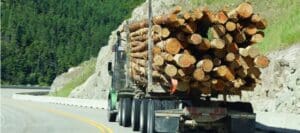
The extra-long logging haul
As forests shrink, drivers work 16-hour days to deliver single loads of logs to BC sawmills When Eugene Wilson started driving a logging truck 24 years ago, he worked out of the Bulkley valley community of Houston three hours west of Prince George. He recalls the trips as if they…
-
Fast Facts: Policy Alternatives in the Face of Rising Prices:
Who will Bear the Burden? Media headlines and price tags alike are sending the message loud and clear: The cost of living is increasing, with inflation higher than we’ve seen in decades. The most recent data shows an annual increase of 6.1% in Manitoba, when compared to the price level…
-
Fast Facts: The Shock Doctrine Playing Out in Manitoba
Noted Canadian author and social activist Naomi Klein published The Shock Doctrine more than a decade ago. The book’s major thesis is that governments and others in position of power exploit national and international crises to establish controversial policies while citizens are too distracted to notice, to engage and to…
-
A Dam Troublesome Exception: Progress Energy’s dams should not be exempted from environmental review
I sent the following letter to BC’s Environmental Assessment Office (EAO) in response to Progress Energy’s extraordinary request to retroactively exempt the Lily and Town dams from environmental reviews. Such reviews should have been conducted before the dams were built. Not only did those reviews not happen, but the company…
-
BC Budget 2021: Stay-the-course budget misses the mark on key areas of urgency outside health
The BC government tabled a surprisingly stay-the-course budget today, making some improvements on the margins but missing the opportunity to shift BC towards a more inclusive and sustainable economy. While it appropriately includes large sums of time-limited spending relating to the pandemic (and indeed BC has led other provinces on…
-
Who owns it? The democratic socialist debate Canada should be having this election
We live in an era of extreme inequality of wealth and power across much of the developed world, and Canada is no exception. Public confidence in political institutions and “political classes” in the West is in long-running decline. The failure of established institutions to grapple adequately with the crises we face…
-
A BC poverty reduction plan is long overdue
As the BC government prepares to table its budget on February 21 and political parties try to convince British Columbians to vote for them in May, they all need to focus on poverty – specifically, how to reduce it throughout the province. At 13.2 per cent, BC’s poverty rate is…
-
Why are we letting corporate medicine take hold in Vancouver’s new urgent care centres?
The BC government has rolled out a flurry of impressive measures to strengthen our public health care system over the past two years. Flying below the radar, though, is a new effort by for-profit corporations to push their way into BC’s health care system — and the Vancouver Coastal Health…
-
Financialization of housing must be confronted
Previously published in the Winnipeg Free Press January 12, 2023 Government housing policy preferences are based on values, the most fundamental being the extent to which housing is viewed as a right, or as a commodity. From a rights value base, housing is a social good — a home and…
 Scott Lough

 Steve Estvanik