
Share
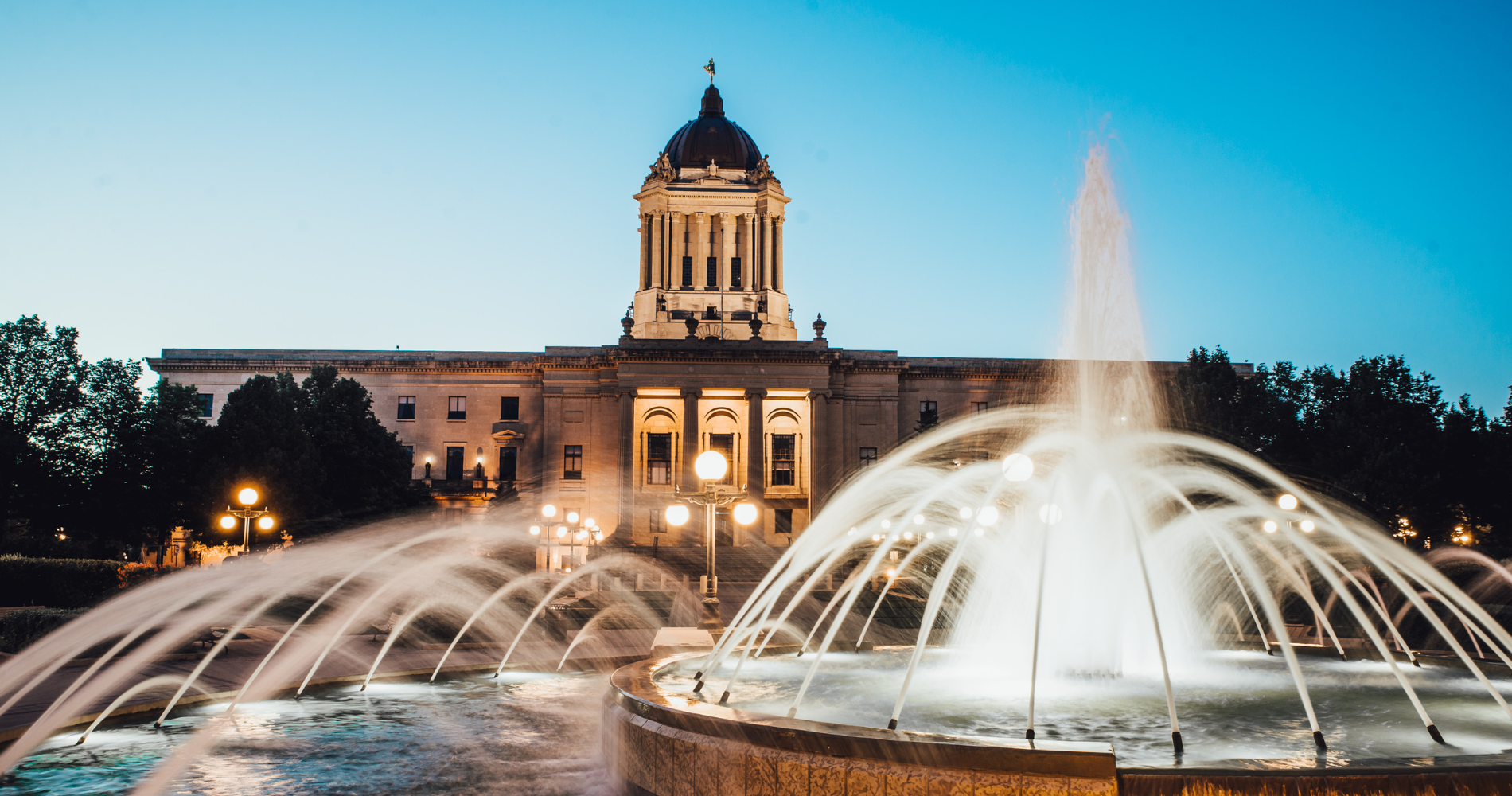
As the third fiscal plan of this mandate, Budget 2026 attempts to balance three competing commitments within the Manitoba government’s fiscal strategy: rebuilding public services after years of austerity, balancing the budget by the end of this first mandate, and a commitment not to raise tax rates. Amid a difficult economic climate and own-source revenue reductions created by tax cuts introduced under the previous government, balancing these three conflicting priorities has proven difficult.
While Budget 2026 makes important investments in childcare, adult education, transit, and health, a broader focus on balancing the budget this term is slowing investment in rebuilding public services and action on climate change. At the same time, while this budget provides broad tax cuts, there is not enough targeted relief for low-income Manitobans who have experienced the worst impacts of the affordability crisis.
Heavy focus on balancing the budget
Budget 2026 projects a deficit of $498 million in 2026/27, down $1.2 billion from the $1.66 billion deficit projected for 2025/26. This dramatic reduction to the projected deficit is built upon a range of factors, including spending restraint across much of government (more on this below), continued growth in federal transfers (+8.1 percent), and strong income tax growth (+5 percent). Income tax growth projections are driven in part by a 17.4 percent increase in corporate income tax in 2026/27.
While Budget 2026 projects a major reduction to the deficit (and even forecasts a small surplus for 2027/28), this should very much be considered a projection. As written, the Budget projects a profitable year for Manitoba Hydro, restoring income from government businesses to $941 million. Last year’s budget projected net income from government businesses was $1 billion, however a loss for Manitoba Hydro due to drought conditions brought this figure down to $255 million. The Province’s flood forecast released last week does not project a major increase in water flows heading towards the Churchill and Nelson Rivers, raising concerns about a return to profitability for Hydro.
As the Budget outlines, if all goes to plan Manitoba’s deficit as a ratio of GDP will be the lowest among Canadian provinces in 2026/27. This raises the question whether further investments in areas such as Housing, Addictions and Homelessness, Families, or Environment and Climate Change could have been made in this budget. There is no question that more needs to be done to address social crises across the province and reduce our reliance on fossil fuels, and that delaying these investments only raises their cost in the future. With that said, now that departments have gone through the process of reigning in spending, Budget 2027/28 must be viewed as an opportunity to shift the balance back towards investments in public programming and infrastructure.
Public service rebuild
As referenced above, reigning in spending across government departments is a significant factor in the provincial treasury’s projected deficit reduction for 2026/27. Seven out of eighteen departments will experience budget freezes or reductions in 2026/27, including Agriculture; Housing, Addictions and Homelessness; and Labour and Immigration. This is likely to slow the public service rebuild across many areas, and leave many workers across the public service, who are in many cases doing the work of more than one position, exhausted. As reported by MGEU in January, many departments across government are still struggling with high vacancy rates created by cuts under the previous government.
While some departments are taking a haircut, there are large investments being made into other public services. Health, Seniors and Long-Term Care will receive a 10.3 percent funding increase in 2026/27. This increase will bring inflation-adjusted, per-capita spending in the provincial public system back above 2016/17 levels, providing further resources for system repair and expansion. Investment in Education and Early Childhood Learning is also set to increase by 6.3 percent. Advanced Education and Training will receive a 3.2 percent increase, grants to public universities and colleges are only increasing by 2.5 percent, which is status quo when inflation is factored in.
Affordability, Poverty, and Income Inequality
The budget delivers on a long-standing ask of the Child Care Coalition of Manitoba to eliminate the $2-a-day fee that the lowest-income, highest-subsidized parents pay on child care, making child care free for parents under the poverty line who are able to secure a licensed space. The budget also includes a commitment to 2,000 new child care spaces, a 2.9% wage increase for Early Childhood Educators, and a 1% increase in operating funding for child care. These are good steps forward in the commitment to creating 23,000 new licensed child care spaces in Manitoba.
Importantly, Budget 2026 increases funding for adult learning and literacy by $2.5 million, including $1 million dedicated to First Nations and northern communities. This will bring total funding for adult learning and literacy to $24.9 million. As previous CCPA reports have made clear, adult learning and literacy is a highly effective poverty reduction strategy, providing hundreds of Manitobans with life changing education every year. This investment is an important step in expanding this program.
Funding for housing, addictions, and homelessness is frozen, and the budget commits to building 215 affordable and social housing units, down from last year’s commitment of over 600. This is a far cry from the Right to Housing Coalition’s recommendation to build 1,000 net new units of social, deeply affordable housing per year.
While these are some important steps forward on poverty reduction, the budget does little to bring down poverty rates. It does not match the urgency and need to address the problems of poverty, which drive costs in other departments such as health care.
A central plank in this budget is the removal of PST from prepared foods, which account for approximately 10% of the food the average family buys at the grocery store. A family that has more disposable income will save more on this measure. This repeats the mistake of the gas tax “holiday”, which benefited those who owned cars and drove more often, but those who cannot afford a car, or in this case, cannot afford prepared foods, do not benefit from this affordability measure.
Budget 2026 also increases the Homeowners Affordability Tax Credit to $1700 (+$100). The cost of increasing the Homeowners Affordability Tax Credit is partially offset by a new measure which reduces the credit for owners of homes valued between $1 million and $1.5 million, and eliminates the credit for owners of homes valued above $1.5 million. While this is an important step, this claw back only recovers $1.7 million, making this more of a symbolic measure than a true revenue generator. Together the Homeowners Tax Credit increase and PST exemption for groceries will reduce provincial revenue by approximately $60 million over the full year.
This is in the context of the freeze on Employment and Income Assistance rates, which has been in place for four years, as food costs have risen by 20% appears particularly egregious. When budgets are about choices, the $32 million the province is losing in PST revenue from the PST cut could have instead gone to increasing the basic needs budget of the 30,000 households in Manitoba that rely on provincially funded social assistance.
Rent Assist, which was cut by the previous provincial government, remains untouched in this budget. It is indexed to median market rent, but, as Jesse Hajer documents, cuts by the previous provincial government eroded this benefit by $142/ month and have not yet been reversed. The Renters Tax Credit, meanwhile, will be raised from $625 to $675.
Conclusion
Overall, this budget signals the provincial government’s priorities on rebuilding health care, affordability for the middle class, and child care. However, progress on the social deficit, including homelessness and poverty rates, will remain slow as the government pushes to balance the budget by 2027. Inaction in these areas will be far more costly than short-term measures, as the long-term costs of poverty and inequality are borne across government departments including health, child welfare, and emergency response.
About the authors
Niall Harney
Niall was the CCPA-Manitoba Errol Black Chair in Labour Issues from 2021 to 2026. His research focused on labour markets, income inequality, public finance, and political economy. Niall has a BA in Global Political Economy from the University of Manitoba and an MSc in Geography from McGill University.
Molly McCracken
Molly McCracken (she/her) is the Director of the Canadian Centre for Policy Alternatives–Manitoba office. Her research and commentary focuses on social inclusion and climate action. Molly holds a Masters degree in Public Policy and Administration from Carleton University and an undergraduate honours degree in Sociology and Womens Studies. She is a member of the Make Poverty History Manitoba Steering Committee.

