

Share
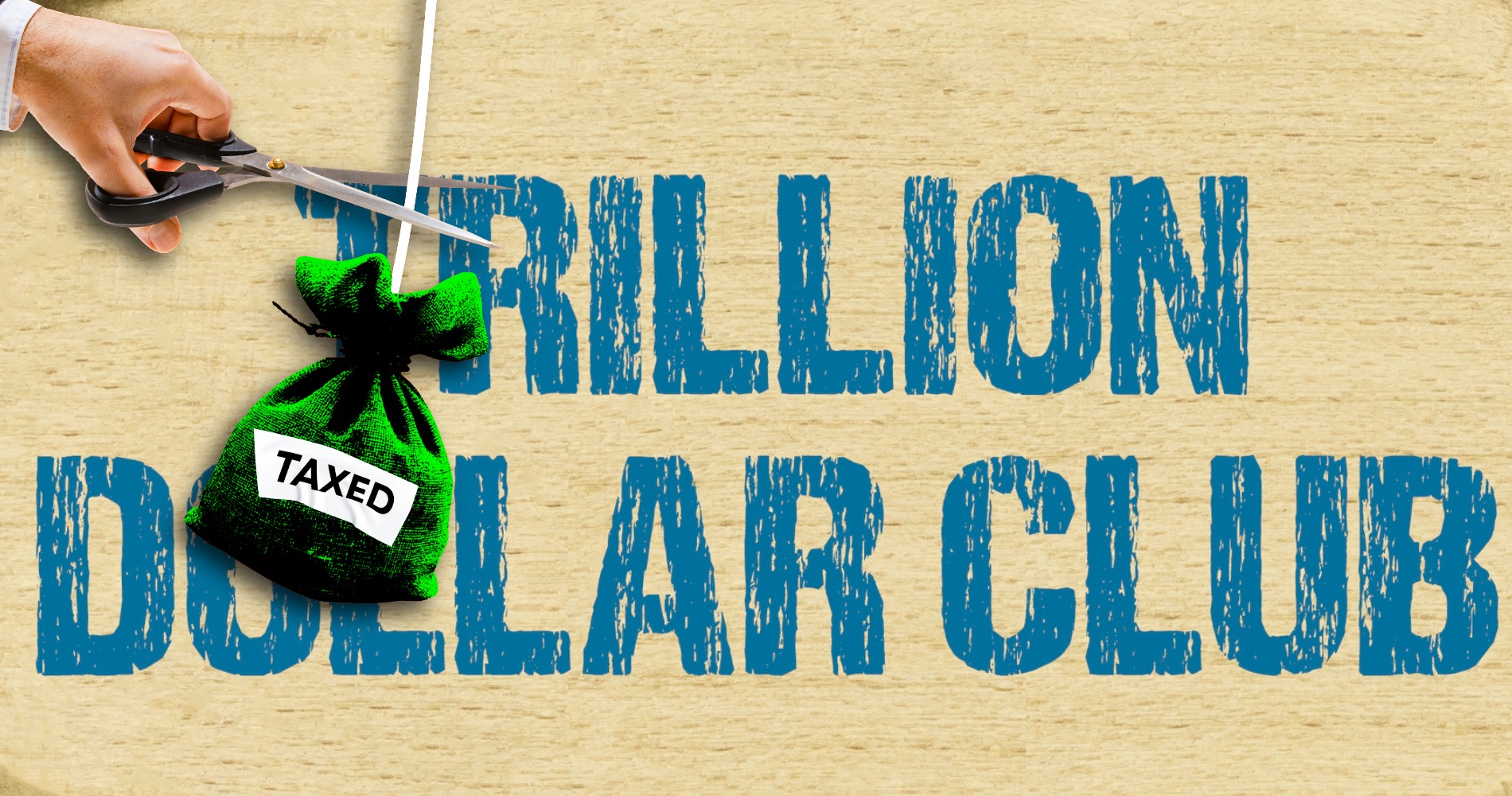
We are currently witnessing the largest transfer of wealth in Canadian history, with an estimated $1 trillion moving from the bank accounts and real estate portfolios of the Baby Boomer generation into the hands of their children.
I am among those children.
I was born into the kind of financial safety net that most Canadians can only dream of. My access to education, housing, and opportunity was paved by money I did not earn. And now, as this giant wealth transfer accelerates, I stand to inherit a significant windfall simply because of the lottery of my birth.
In almost any other G7 country, a transfer of the magnitude I will be receiving would trigger a mechanism to return a portion of that private fortune to the public good. It would be taxed. But not in Canada. Here, I will receive this wealth tax-free.
From a purely self-serving perspective, this is a triumph of estate planning. But from the perspective of a citizen concerned about the fraying social fabric of this country, it is a disaster.
As a member of Resource Movement—an organization made up of people with wealth and class privilege—I am asking the federal government to do something that might seem counter-intuitive to my self-interest: Tax my inheritance.
Without an inheritance tax, the ongoing wealth transfer acts as an inequality multiplier. It further calcifies a class system in which social mobility has already become difficult to achieve.
Canada: The G7 outlier
Opponents of inheritance taxes often frame them as radical, socialist interventions that would destroy the economy. But this is a peculiarly Canadian delusion.
The United States—the global bastion of free-market capitalism—has an estate tax. The United Kingdom, France, Japan, Germany, and Italy all have inheritance or estate taxes. Among the G7 nations, Canada stands alone as the outlier that allows dynastic wealth to accumulate entirely unchecked at the point of transfer.
We have allowed our tax system to become regressive at the very top. We tax income from labour—the money you wake up and go to work for—at a much higher effective rate than we tax income from wealth. An inheritance is the ultimate form of unearned income. It is the receipt of massive purchasing power without a single hour of labour attached to it.
Why should a nurse or a teacher pay 30 per cent or 40 per cent of their earnings in income tax, while we could receive a million-dollar bequest and pay nothing?
Busting the “family farm” myth
Whenever we raise this issue, the defense is immediate and emotional: “What about the family farm? What about the family cottage?”
This is a straw man argument used to protect the ultra-wealthy.
Those who advocate for an inheritance tax are not interested in coming for your grandmother’s modest bungalow or a working family farm. We are advocating for a high-threshold inheritance tax.
Imagine a tax that only kicks in on assets exceeding $5 million or $10 million. Or a progressive tax that targets the top 10 per cent of estates. There are countless policy mechanisms—exemptions for primary residences up to a certain value, distinct carve-outs for active farmland, and so on—that can protect the middle class while still addressing the accumulation of dynastic wealth.
A tool for repair
An inheritance tax is also about addressing historical wrongs. We have to be honest about where much of our wealth comes from.
In Canada, “old money” is often inextricably linked to the colonial extraction of resources, the displacement of Indigenous Peoples, and systems that favored white, settler families.
Redistribution is a form of repair. It is an acknowledgement that we live in a society, not an economy of isolated individuals.
The revenue from a modest inheritance tax would not transform our society overnight, but it could contribute to us making inroads toward a better future. An inheritance tax could help fund a proper National Housing Strategy. It could underwrite a Green New Deal. It could ensure that long-term care is a public guarantee, not a luxury good.
The choice before us
We often hear that wealthy people will leave Canada if we tax them. But where will they go? To the U.S., where they face an estate tax (and would have to live in the U.S.)? To Europe, where taxes are higher?
I am not leaving. This is my home. And because I love this country, I want to see it thrive. I do not want to live in a gated community surrounded by poverty. I do not want my financial security to come at the expense of my neighbour’s dignity.
The $1 trillion transfer is underway. We can let it deepen the cracks in our foundation, widening the gap between the haves and the have-nots until it becomes unbridgeable. Or, we can use this moment to choose a different path.
We can choose to view inheritance not as a private right, but as a lucky windfall that should be shared. We can choose to invest in the living, rather than just protecting the assets of the dead.
I am ready to pay my share. I am asking the government to send me the bill.
About the author
Lindsay Wiginton
Lindsay Wiginton is an organizer with Resource Movement in Toronto.