

Introduction
Unions lean heavily into the idea of the “union advantage.” In organizing workplaces and promoting membership, unions often emphasize the benefits that come with being a union member. Better pay, benefits, and protections are commonly highlighted as aspects of employment where union members tend to do better than their non-union counterparts. That makes sense, from an organizing perspective. But zooming back to take in a broad, social perspective, we need to get a grasp not only on whether unions are good for their members, but distinct from or in addition to that, whether they are institutions that protect, advance, or detract from collective well-being for everyone. If unions have impacts beyond their membership, then there is a public interest in either facilitating (if the effects are positive) or restricting (if they are negative) unionization.
This report examines whether there is any connection between provincial unionization rates in Canada and three measures of social well-being for whole provincial populations, rather than just for union members. Based on three recently published articles,1See Das et al. (Forthcoming; 2024; 2023) we look at three indicators that are fairly uncontroversial elements of a good society: environmental quality, income distribution and poverty, and health outcomes. Two of the three indicators—environment and health—were deliberately selected because they are usually not associated with the “bread and butter” gains like wages, pensions, or hours that unions are typically associated with. Obviously, workers have the right to free association, and on that basis, they ought not be actively prevented from organizing. However, if there is a positive public benefit to unionization, we can make a case that governments should be actively facilitating union organizing efforts.
The debate in Manitoba
The extent to which unions can advance their goals, whether those are exclusive to their members or more broadly envisioned, is a function of both the economic environment (labour market conditions in a specific sector, for example) and the political rules in which unions operate. South of the border, the recent Trump administration’s order to deny collective bargaining rights2See for example Superville (2025) to a broad swath of the federal workforce is a clear case in point. Trump’s orders create a hostile organizing climate that accentuates the already-treacherous landscape that unions have to navigate, including a thriving industry of union busting consultants (LaborLab, 2025), and so-called “right to work” legislation across many states.
Manitoba provided an important counterexample of this in 2024, when the newly elected NDP provincial government announced two key labour law changes. First, single step union certification (card check) was reinstated. Card check means that the labour board will certify a union as the collective bargaining agent in a workplace, without requiring a vote, if a specified percentage of workers (in this legislation 50%+1) sign union membership cards. The second change was legislation to ban scabs or what business calls replacement workers. Anti-scab legislation prevents employers from hiring contract or temporary workers to perform the work of a unionized workforce during a strike or lockout.
These two changes make it easier to form unions in the province, make job action more effective, and strengthen unions’ positions in negotiations with employers. Both card check and anti-scab laws were the subject of fierce debate with the battle lines predictably drawn between employers and workers. The Manitoba Chamber of Commerce argued that the anti-scab policy would unfairly tilt labour law against businesses in the province (Lambert, 2023). The Retail Council of Canada (RCC) was also opposed to both aspects of the legislation, claiming that a secret ballot should be preferred to card check because, “lunchroom peer pressure to sign a card may not reflect the true wishes of the employee” (2023, para. 6). The RCC (2023) also disagreed with the anti-scab provisions of the legislation because, “replacement workers are typically engaged to protect the business” (para. 9) and that prohibiting them was, “generally considered anti-employer, and tipping the scale in favour of unions” (para. 10).
On the other side, anti-scab legislation is seen by workers and their unions as crucial to protecting the only real power they have in the collective bargaining process—the ability to collectively withdraw their labour and prevent the workplace from operating. In terms of card-check legislation, while a secret ballot works well in the electoral system, unions argue that the employment context is very different. In a Canadian election, we do not expect to be harassed or intimidated in relation to voting by an authority—somebody who, for example, has control over your ability to earn a living. That, however, is the unfortunate reality for workers contemplating unionization. In the workplace, the secret ballot process provides employers with an opportunity to wage anti-union campaigns. Employers in Manitoba have intimidated workers during the voting process by threatening to dismiss union organizers and shut down the workplace if a union comes in (Harney, 2023).
Manitoba’s new legislation is more union-friendly than those in many other provinces. Only two other provinces prohibit replacement workers, although in 2024 the federal government passed legislation preventing replacement workers in federally regulated industries, such as transportation, banks, telecommunications, postal and courier services. Four provinces have card check provisions for certification, but all of the others except Quebec set the card check percentage higher than Manitoba’s 50%+1.
Justifications for and against aside, studies show unequivocally that the number of union certifications increases with card check as opposed to voting (Tucker, 2014; Riddell, 2004 & 2010; Johnson, 2002 & 2004; Campolieti et al., 2007; Slinn, 2005) and the number of strikes that are settled in favour of unions with anti-scab legislation increases (Riddell, 2004; Harney, 2023). Returning to the Manitoba example, when the Conservative government brought in mandatory voting to replace card check (at 65 per cent of the workforce) in 2016, certifications dropped from an average of 38 per year between 2011 and 2016 to 28 per year between 2016 and 2021 (Harney, 2023).
The debate around card checks and anti-scab legislation is just the most recent example of the more general conflict over whether and how governments should intervene in the relations between workers, unions, and employers, and in particular, whether there is a public policy case for facilitating unionization.
Provincial unionization rates and provincial policy
As the Manitoba example suggests, provinces control many of the rules that influence the balance of power between employers and unions. They can do so in two distinct methods. The first is through labour relations legislation and regulations, such as the card check method of certification and hiring replacement workers discussed in the previous section (Duffy & Johnson, 2009). The second is through more ad hoc political interventions. These would include back-to-work legislation, enforcing essential services agreements, wage freezes for public sector workers, and other limits on legal union conduct. B.C., under the Liberal government elected in 2001, is an example that, in contrast to the recent Manitoba record, created a more hostile environment for unionization. The B.C. government implemented a new Labour Relations Code that required unions to collect union cards from 45 per cent of the work force, get a majority of votes in a secret ballot, and provided employers with a “right to communicate” with workers undertaking an organizing drive. On the more ad hoc side of interventions, the B.C. government enacted back to work legislation or imposed settlements on many unions from the transit workers to nurses to teachers. According to one study, “the likely consequences of the provincial government actions will be the continual decline in union organizational ability” (Mcbride & Mcnutt, 2007, p. 192).
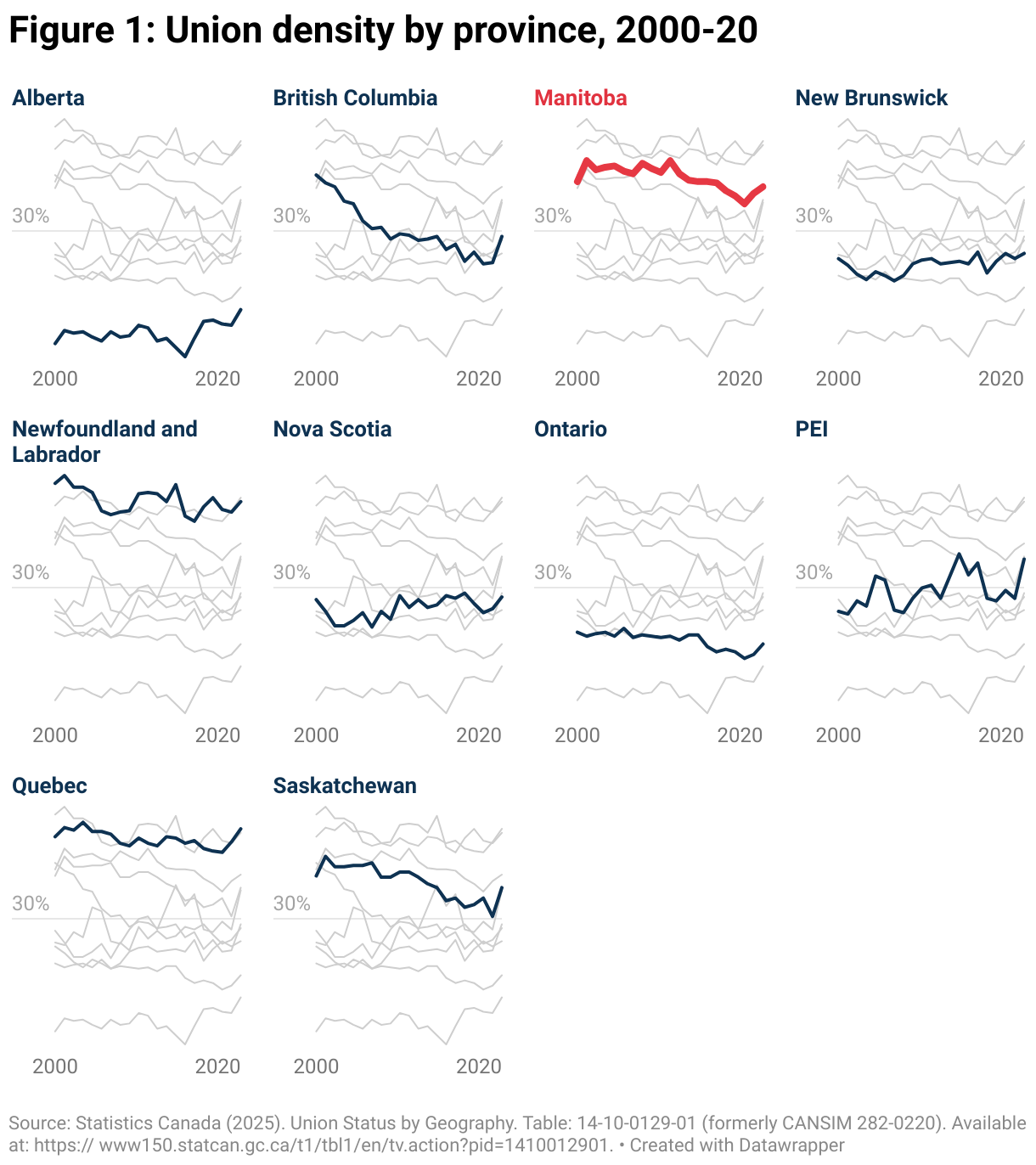
Canada’s overall union coverage rate declined by one percentage point – from 30.1 per cent to 29.1 per cent. However, because job losses in non-unionized sectors were higher than in the unionized sector during COVID-19, the 2020 figure understates the decline. In 2019, the unionization rate was 27.9 per cent, for a decline of just over two percentage points. It is worth noting that there has been a longer-term decline in unionization rates in Canada, which fell from 38 per cent in 1981 to 30 per cent in 2000, with most of the decline occurring in the private sector during the 1990s (Galarneau & Sohn, 2013).
Notable differences in unionization rates can be seen across provinces. In 2000, Quebec and Newfoundland were at the top with around 36-38 per cent, while Alberta had the lowest rate at 21.4 per cent. They maintained their ranks throughout the time period, with Quebec and Newfoundland swapping the lead, while the rest of the pack jockeyed for the middle positions. Manitoba maintained its third-place ranking, flirting with losing rank to Saskatchewan in a few of the years. From 2000 to 2020, the rate increased in five of the provinces and declined in the other five, with British Columbia experiencing the biggest drop from 34.3 per cent to 29.6 per cent.
Unionization rates and social wellbeing: Collective bargaining and political roles
The connection between unionization rates and broader measures of social well-being, such as environmental quality, income distribution, and health outcomes, can be traced to two pathways of union influence.
First, unions can improve social well-being through the collective bargaining process. Unionized workers have been able to win higher pay and greater benefits than their non-unionized counterparts. It is worth noting that many of the benefits that unions win from their employers improve the well-being of workers beyond the obvious issue of higher wages. For example, they regularly bargain for health and safety protections to minimize injuries and illness, and supplemental health care for dental, vision, physiotherapy, and mental health.
These better terms of employment also spill out beyond the unionized workplace, exerting pressure on employers to raise the wages and benefits of non-union members in an attempt to compete for workers and discourage unionization altogether—a phenomenon which Scrimger (2020) described as ‘the threat effect’.
Second, unions do more than just negotiate collective agreements; they also serve as political actors. Because individual unions often lack the capacity for political action, much of this advocacy is conducted through labour federations or councils, such as the Canadian Labour Congress, Manitoba Federation of Labour, or Winnipeg Labour Council. Through this role they help shape public opinion, lobby for legislative changes, promote public spending priorities, and support political parties. In Canadian provinces, where political parties bundle together various policies, union political actions can have an indirect effect. For example, if unions support a “left leaning” political party because it tends to push for pro-labour policies, that party may also be more inclined to support environmental protection, anti-poverty measures, or public health care.
On the three measures of well-being in this report, unions in Canada have been directly active in the political system. On environmental issues, unions have explicitly lined up on both sides of the debate. There are certainly many examples of unions opposing specific environmental policies that were seen as detrimental to the industries in which they operate (Foster, 1993; Logan & Nelkin, 1980). For example, the International Woodworkers of America (IWA), one of the two major woodworkers’ unions in Canada, joined forces with timber companies in opposition to environmental regulations and wilderness set-asides, pitting its members against environmental organizations by insisting that environmental regulation and preservation were job killers (Simon, 2003).
However, many unions have a long history of promoting environmental issues and policies (Dewey, 1998). For example, significant work within high-carbon, industrial unions such as the Canadian Auto Workers (CAW) went into preventing the emergence of a labour-environmentalist split over global warming, beginning as early as 1980 and building through the 1990s (Nugent, 2011). Returning to the Canadian forestry industry, in contrast to its rival union, the Canadian IWA, the Pulp, Paper and Woodworkers of Canada (PPWC), in coalition with environmental organizations, supported thoroughgoing reform of the forest industry’s environmental practices and the establishment of protected wilderness areas (Simon, 2003; for other examples see Stanford, 2021). There is now an emergent movement of labour-environmentalism that aims to bring together workers’ struggles with environmental protection, as represented by groups like the Labor Network for Sustainability in the U.S., and Blue Green Canada.
Unions in Canada have also been politically active advocating for a variety of anti-poverty and inequality measures. Individual unions, and their umbrella organization the Canadian Labour Congress, advocate for full employment, higher minimum wage, greater employment insurance benefits, and income redistribution through a more progressive tax system and greater transfers. Studies have also shown that sub-nationally in Canada, higher levels of unionization are, through union political activity, associated with greater redistribution and regulation surrounding the labour market, resulting in less inequality and poverty (Haddow, 2014). In Manitoba, the Federation of Labour has consistently fought for improvements to the minimum wage, arguing that “no one should work full time and still live in poverty, but that is the harsh reality for many minimum wage earners in Manitoba,” (MFL, 2025, para. 2) and paying for polling to show broad support among Manitobans for higher increases to the minimum wage.
On the health front, nurses’ unions and unions of other public employees employed in health care have been and continue to be vocal advocates of increased public funding of government-run health care. Manitoba readers will recall the Manitoba Nurses Union’s 2023 campaign during the election, calling out the state of the province’s health care system as “OutRAGEous,” and urging voters to “Vote like your life depends on it”. The campaign contributed to the tight focus in the election on fixing the public health care system. Manitoba unions are not alone in this. The Québec-based Alliance du Personnel Professionnel et Technique de la Santé et des Services Sociaux (APTS), launched a ‘Strong Union for a Strong Public System’ campaign in 2022 that pushed for a ‘budgetary shield’ against underfunding as well as the inclusion of psychological services and physiotherapy in public coverage. In 2024, the Public Service Alliance of Canada, The National Federation of Nurses Union, and Service Employees International Union rallied to demand increased investment in public health care infrastructure, a halt to for-profit care, and accessible, single-payer, universal health care (Public Service Alliance of Canada, 2020). These actions are perfectly understandable within a framework that understands unions as acting primarily in the self-interest of members. But private-sector industrial unions, non-health public sector unions, and union federations have engaged politically for universal benefits that advance public health overall. The Canadian Labour Congress launched a cross-union campaign in support of universal pharmacare in 2017, which bore fruit with the passage of the Pharamacare Act in 2024, and they continue to push for its expansion to cover 50 per cent of the most prescribed drugs.
All this suggests the possibility that unions might have an impact on social well-being. This report summarizes findings from three published studies that put this possibility to the test by examining whether there is a statistical connection between unionization rates in Canadian provinces, on the one hand, and cleaner environment, lower income inequality, reduced poverty rates, and better health outcomes, on the other.
Empirical approach
As mentioned earlier, this report is based on three distinct studies that examine the relationship between unionization and income inequality and poverty, environment, and health outcomes. These studies use data from 10 Canadian provinces. A multivariate approach to determine the effects of unionization on social well-being is used so that potential impacts due to confounding factors (such as unemployment rate, economic activity etc.) can be accounted for. As opposed to a bivariate approach, multivariate regression improves the accuracy of the relationships between variables and reduces biases. In all of the estimations, the strength of unions is measured by the unionization rate (UNION)—the percentage of employees who are in unions.
Unions, inequality, and poverty
The provincial data on inequality encompasses the period between 2000 and 2020. We chose two measures of inequality: The GINI and the percentage of total after-tax income going to the richest 1 per cent of the population. To measure poverty, we use three measures: the percentage of the population below the Low-Income Cutoff (LICO), the percentage below the Low Income Measure (LIM), and the average after tax income of the poorest 10 per cent of the population.3The GINI is a measure between 0 and 1, where 1 is complete inequality (one person gets everything) and 0 is a perfectly equal distribution. The LIM is half of the Canadian median of adjusted household after-tax income, multiplied by the square root of the household size. LICO is a set dollar amount depending on household size below which a family will likely devote a larger share of its income on the necessities of food, shelter and clothing than the average family.
In all of the inequality and poverty equations, we account for the impact of several non-union factors that might influence inequality and poverty: the education level of the population—measured by the per cent of the population without a high school degree, a provinces’ exposure to international competition—measured by the sum of international exports and imports as a ratio of gross domestic product (GDP), the extent to which a province is a beneficiary of federal transfer payments, the per cent of the total population that is Indigenous, and the unemployment rate. We further account for the political ideology of the current government by including a variable that distinguishes right-wing parties from those of the centre or centre-left.
Our sample years include 2020, in which the COVID-19 pandemic caused a decrease in market incomes, but also a huge increase in government transfers to households. The result was a decrease in inequality, the percentage of the population living below the poverty line (according to the official Market Basket Measure), and low incomes (Statistics Canada 2022).
Unions and the environment
As environmental indicators, our study looks specifically at greenhouse gas (GHG) emissions and total particulate matter (TPM). GHGs most likely need little explanation or justification. TPM, on the other hand, might be less obvious. TPM are small particles suspended in the air and are a broad measure of air pollution. While some of these can come from dust and wildfires, the majority is due to activities in industry, agriculture, and transportation. This experiment covers the period from 2001–2019.
While studying the association between UNION, and GHG and TPM, we account for GDP, output from resource and manufacturing sectors, and the unemployment rate. These variables can independently impact environmental outcomes, so it is imperative to account for their impact while examining the union-environment connection. Emissions can grow as GDP grows. Emissions may decrease when the economy contracts, which is captured by the rate of unemployment. Emissions also depend on the industry mix in a province. Some industries are more emissions-intensive than others, so we also control for the share of resource-sector output in total provincial output in the GHG model and the share of the combined output of the manufacturing and resource sector in total industry in the TPM model.
Unions and health
Dying is a pretty good sign that your health is not great. Our study uses mortality (the number of deaths in a population) between 2000 and 2020 to measure health. There are three measures of mortality that capture different influences on health: age standardized mortality rate per 100,000 population, age standardized mortality rate from preventable causes per 100,000 population, and age standardized mortality rate from treatable causes per 100,000 population. The mortality rate reflects the overall number of deaths in a population, adjusted for differences in age between regions. Preventable mortality is the rate of premature deaths that could have been prevented through primary prevention efforts. This is an indicator of deaths from health problems that could have been avoided in the first place. Treatable mortality, on the other hand, represents a failure to adequately treat an existing illness or injury, resulting in fatality.
As with the previous measures, we control for non-union factors that might impact mortality: the percentage of population with tertiary education, the percentage of the population that is Indigenous, and the percentage of females in the total population.
Findings
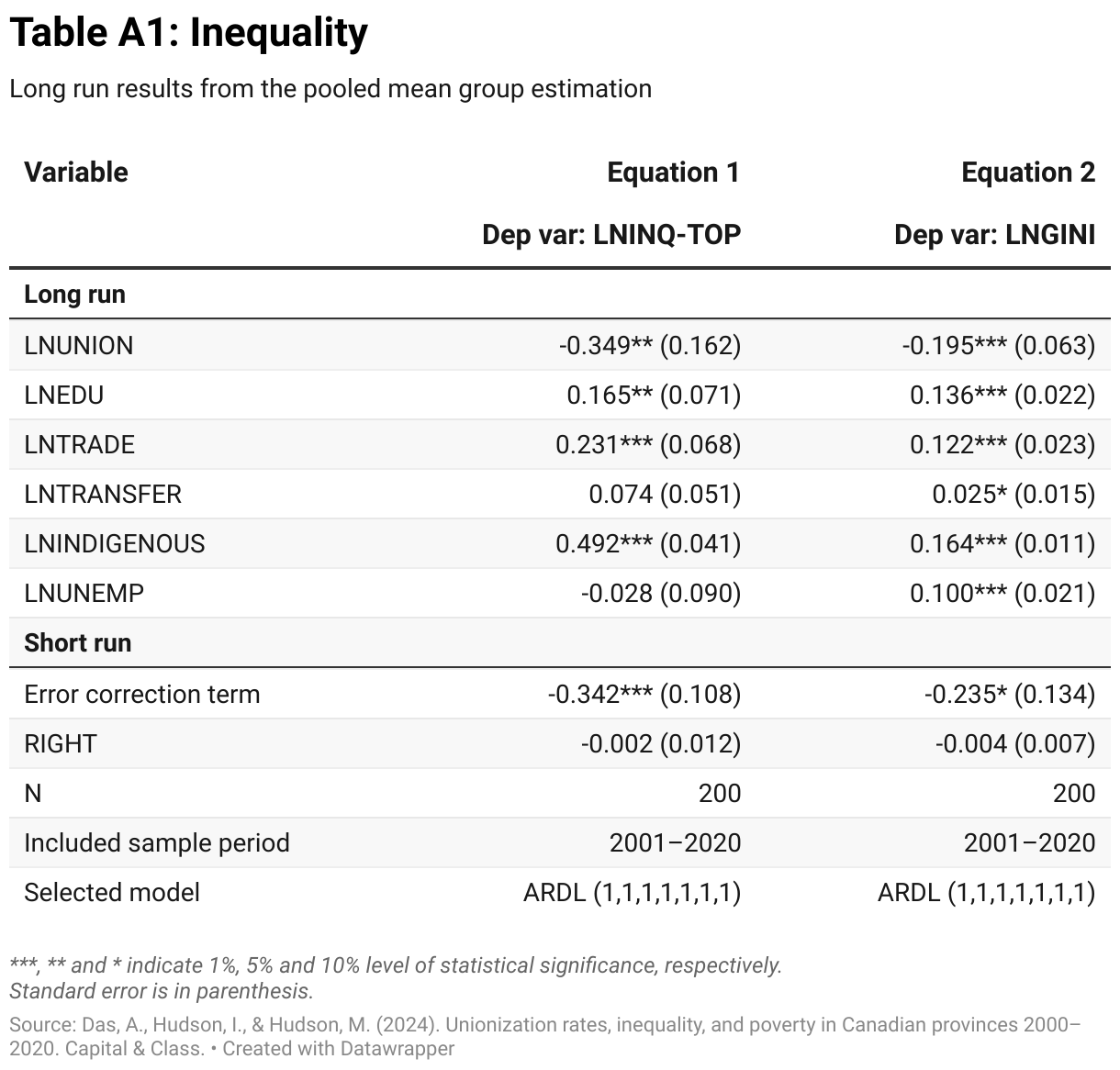
The most important finding of these three studies is that, on average, there is a positive association between unionization and social outcomes in Canadian provinces. More specifically, for both inequality measures – the GINI and the share of after-tax income that went to the richest 1 per cent of the population—unionization rates are negatively related to inequality. This means that when more workers are in unions, the very richest take home a smaller percentage of total income and the overall income distribution across all income groups is more equal.
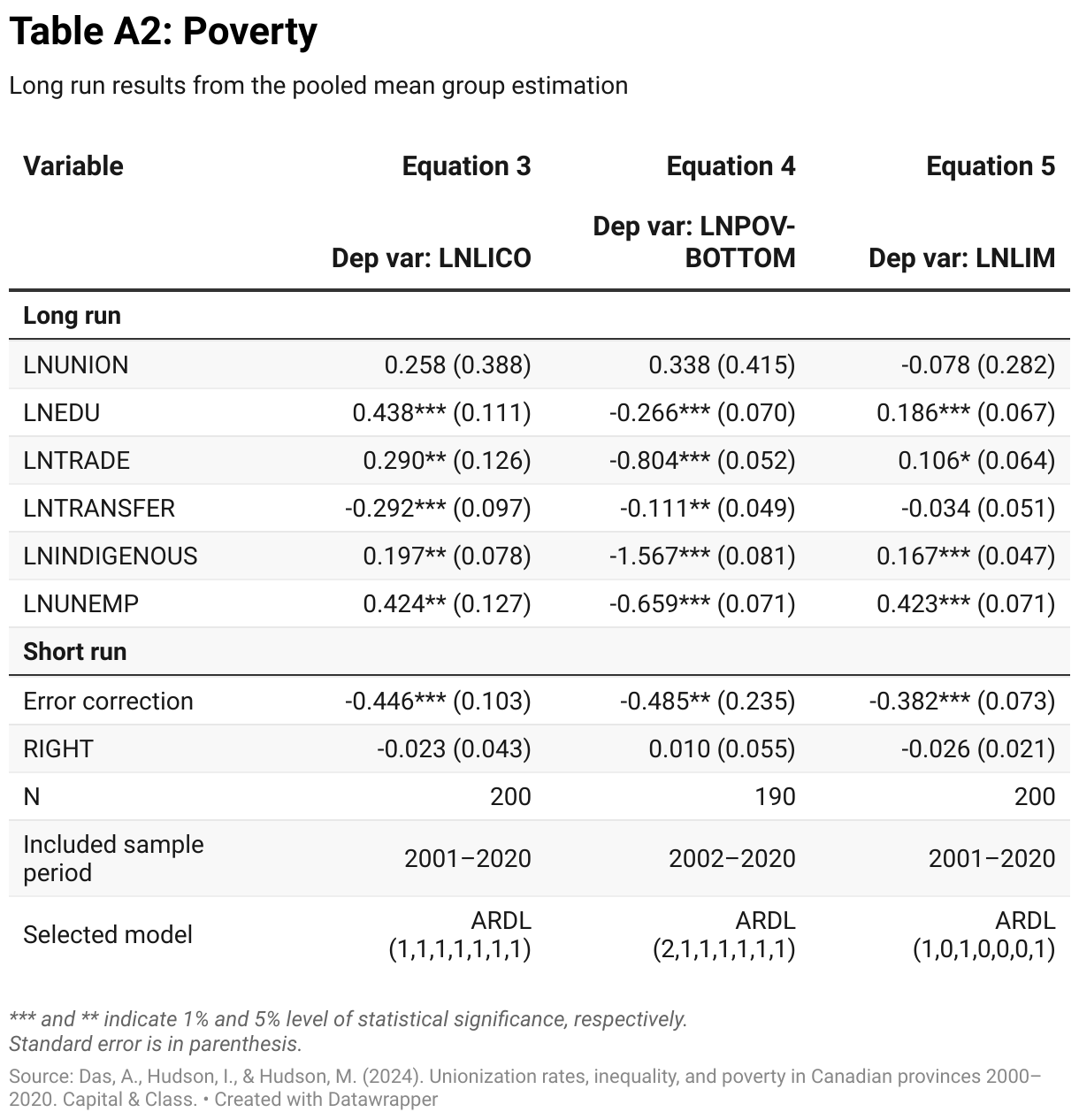
Contrary to Haddow’s (2014) findings, none of the three measures of poverty in our study are statistically related to unionization rates, meaning that there is no relationship, one way or another, between unionization and these three measures of poverty. A possible explanation for this is that unions tend not to represent workers at the lowest end of the income spectrum. In part, this can be viewed as a success of the union movement in increasing the wages of their members. However, it also speaks to the difficulties unions have in organizing low wage workers, including the strong resistance of low wage employers to unionization drives. It might also mean that unions may not be working effectively as political actors—say, on minimum wage campaigns or welfare spending. The full statistical results are in the appendix tables A1 (inequality) and A2 (poverty). A complete discussion of the model is available in Das et al. (2024).
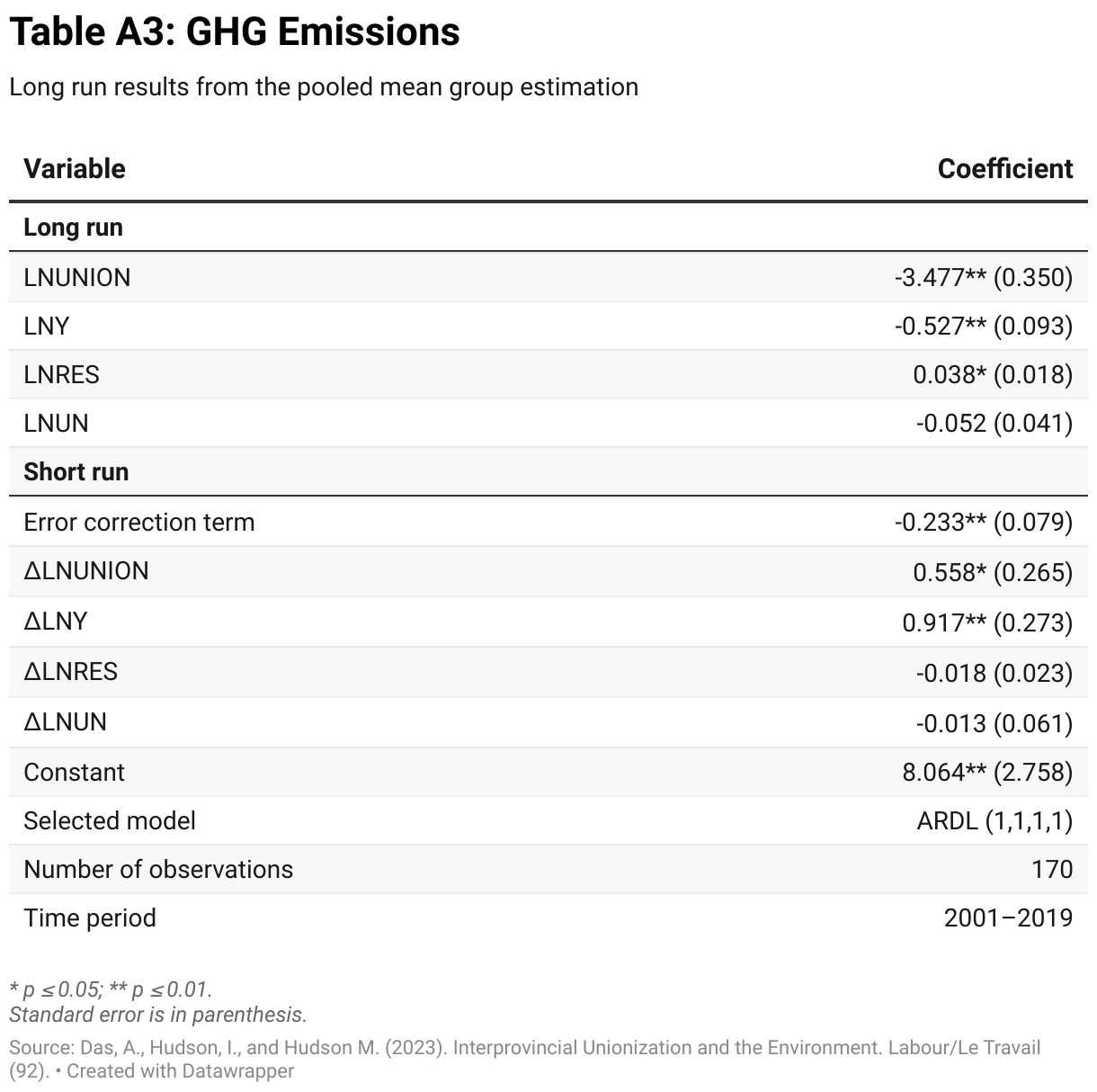
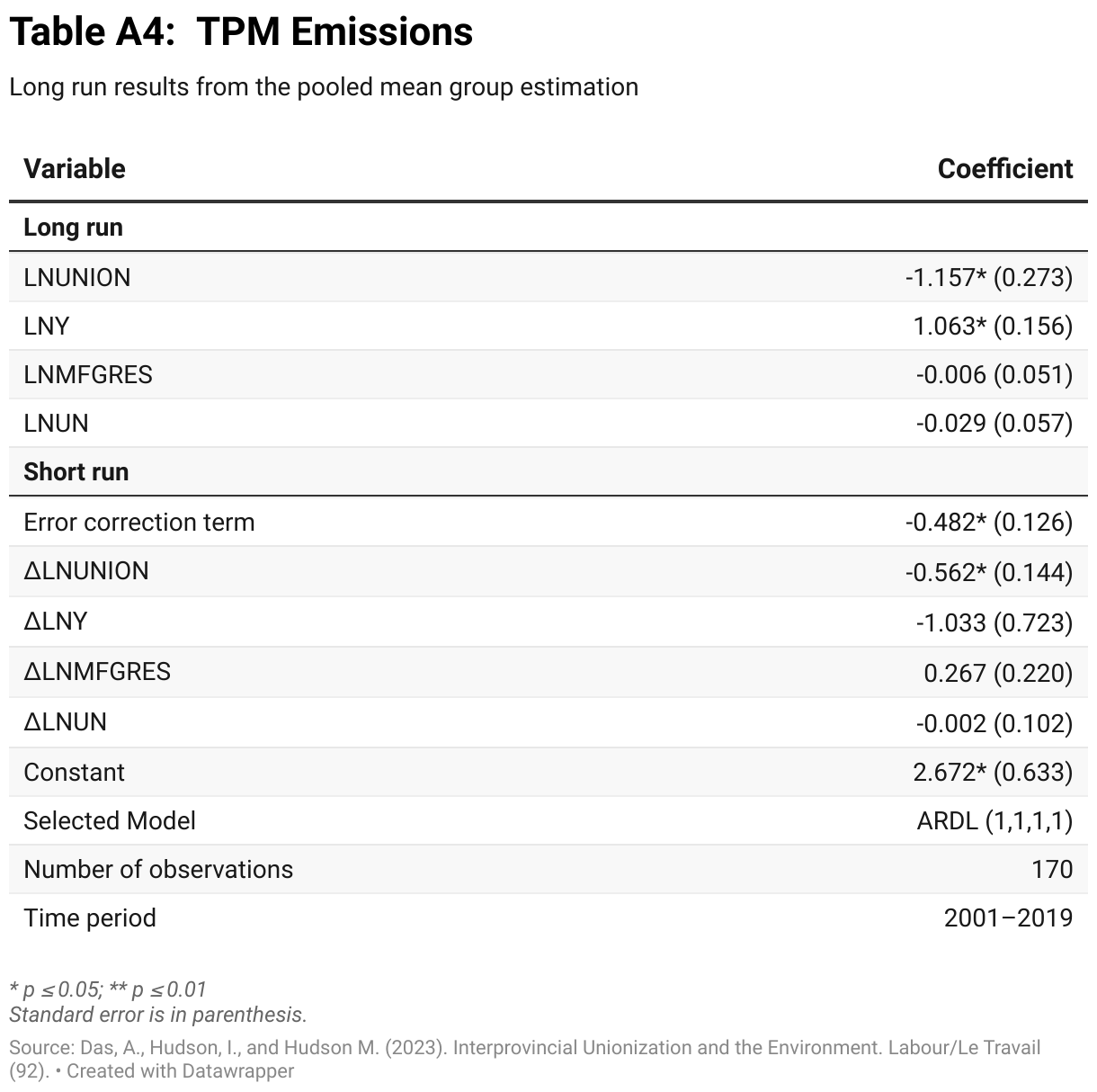
For environmental measures, we find that higher unionization is associated with lower GHG and TMP emissions. This simply means as unionization rates increase, there is a decrease in both GHG and TPM per capita. In contrast to the idea that unions tend to prop up polluting industries to maintain jobs, at a public cost, our evidence suggests that higher unionization is associated with the public benefit of lower pollution levels. The full results are in tables A3 (GHG) and A4 (TMP) of the appendix and a full discussion of the model can be found in Das et al. (2023). Our results support a previous study based on national data (as opposed to provincial data), which argued that unionization, when measured as the proportion of workers who are covered by a collective agreement, limits pollution through collective bargaining and advocating for better working conditions (Das, 2023).
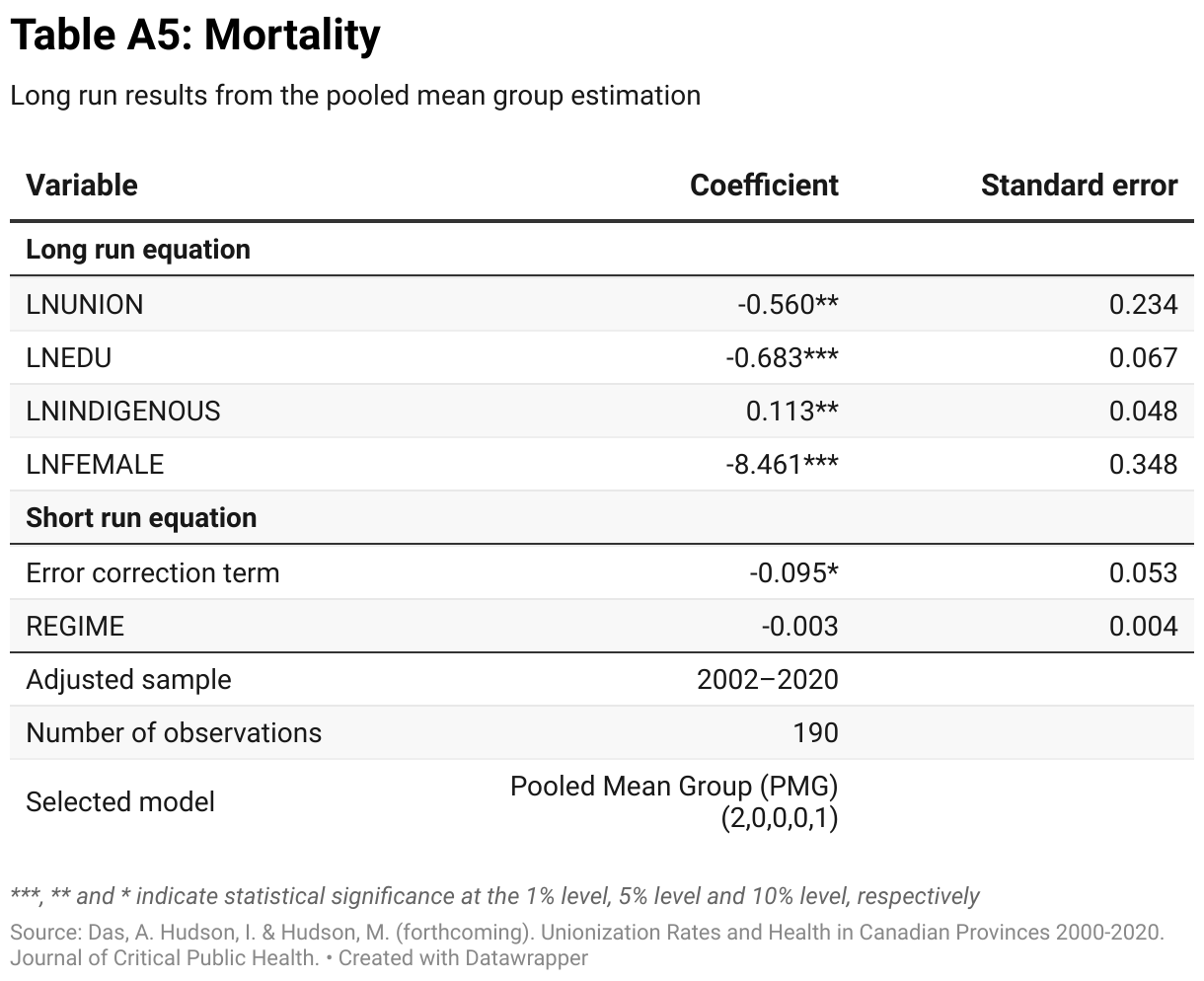
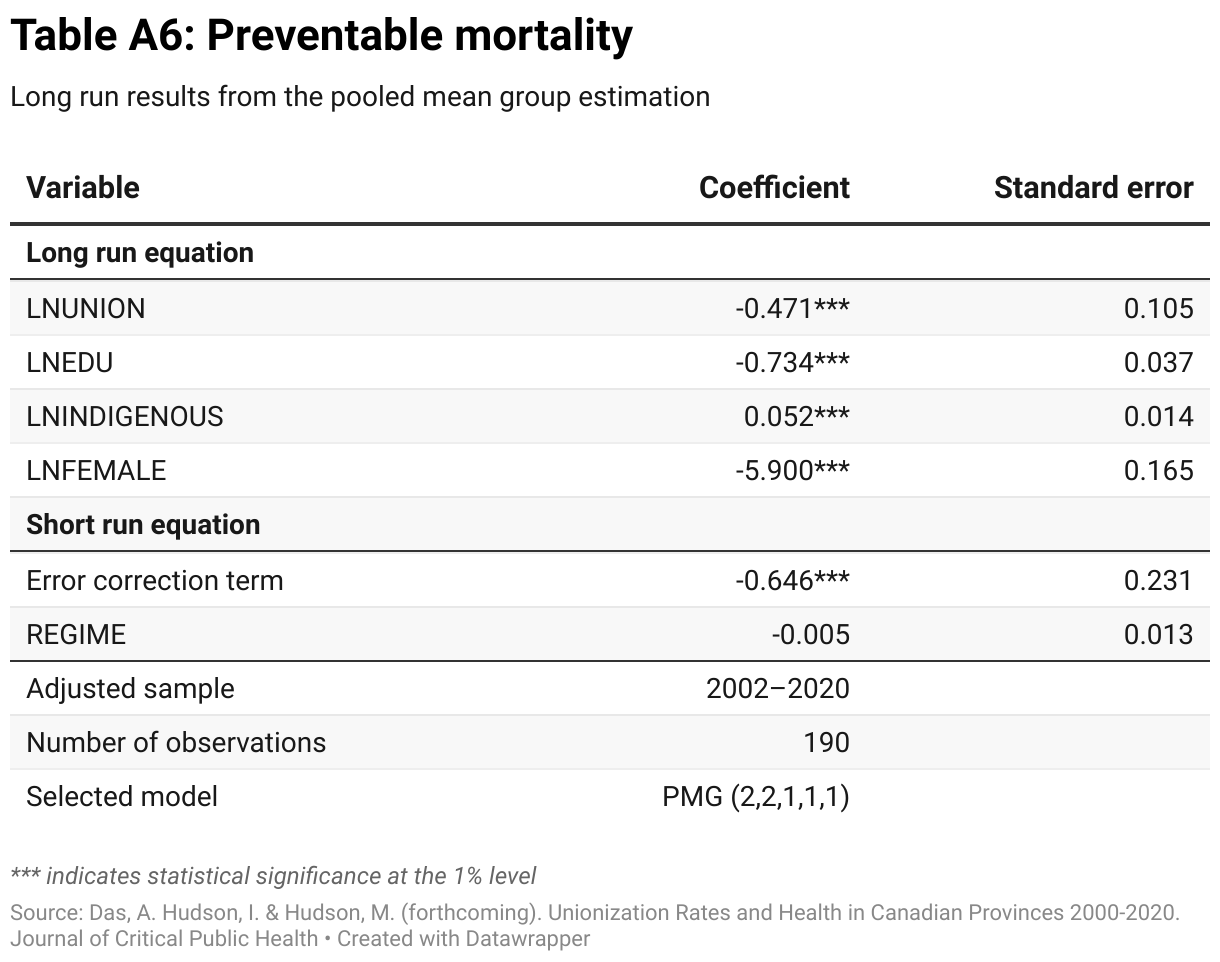
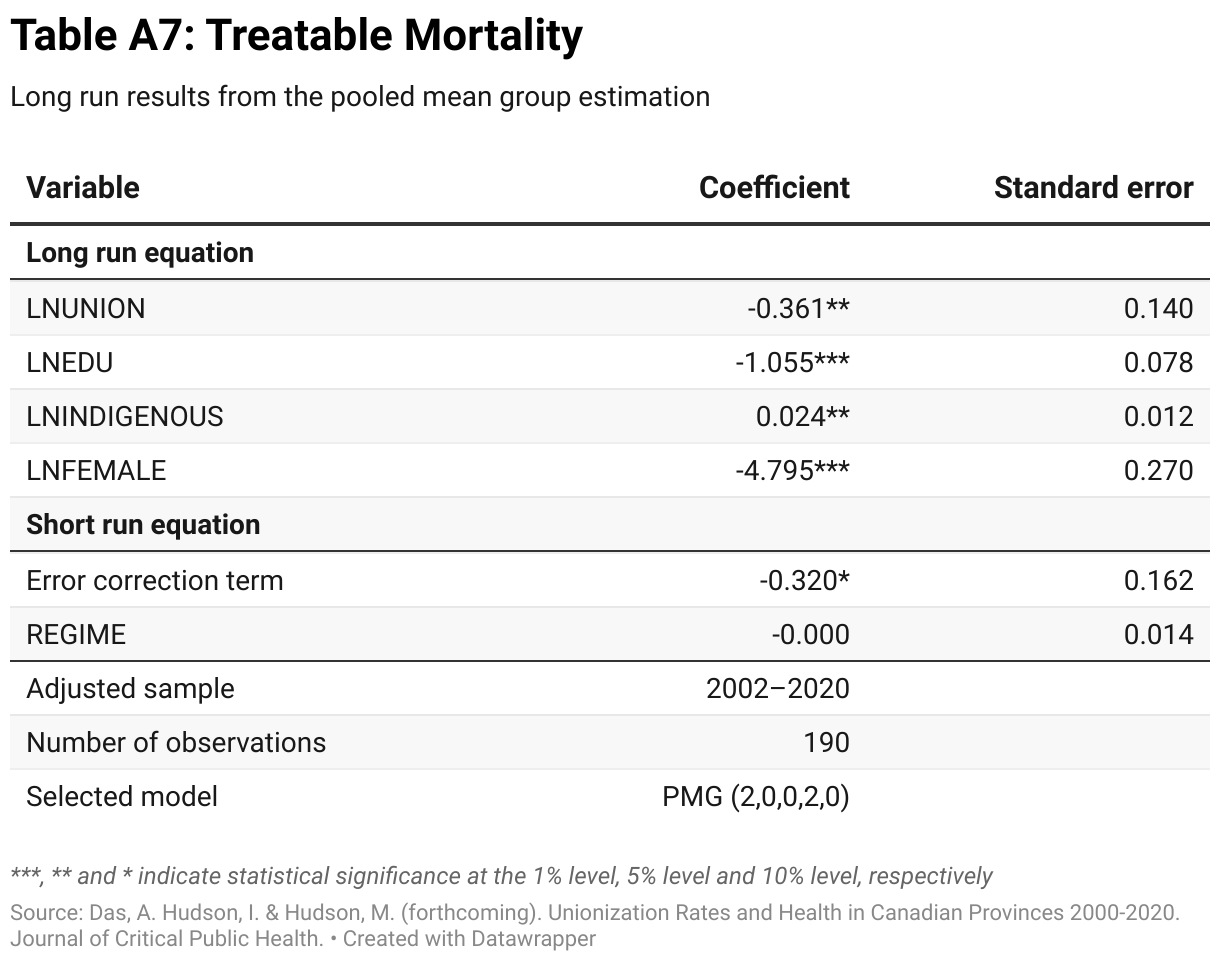
The last set of results, which are available in Das et al. (2025), show that after accounting for the impacts of education, Indigenous population, and female population on health outcomes, increases in unionization in Canadian provinces are associated with better health outcomes—fewer deaths from treatable and preventable causes, and fewer deaths overall. The full results are in Table A5 (Mortality), A6 (Preventable Mortality), and A7 (Treatable Mortality).
It is important to make a few notes about statistical experiments of these studies. First, the datasets in all three studies only consider information from the last two decades. In the future, when more data points are available, it will be interesting to examine if these results hold for a longer time period. Second, the findings of these studies should not be interpreted as proof of causal relations between unionization and different social outcomes. Instead, the purpose was to examine whether there exists any association between unionization rate and some of the social issues that are important for Canadians.
Conclusion
This report shows that unions offer more than just better higher wages, hours, and pensions for their members. The evidence presented here suggests that when unionization rates are higher in Canadian provinces, the environment is cleaner, inequality is lower, and health is better. While this study does not distinguish between the collective bargaining and political roles of unions, it seems likely that both play a role, but that role might be different for the different measures of well-being. For example, given the low percentage of workers covered by collective agreements, and, of those, the small number of agreements that negotiate better environmental conditions, it seems probable that it is unions’ political role that is more important. Our research also does not differentiate between public and private sector union densities, and it may be possible that differences across provinces on that front matter. For example, being more insulated from markets and the employment effects of production costs, public sector unions might be more willing to take stronger political stands on health or environmental issues.
Overall, this evidence suggests that promoting unionization is not just good for the workers who will be unionized. There is a broad social benefit to higher unionization rates. The obvious implication for provincial level policy is that labour market rules should at the very least not discourage union formation, and there is a case to be made that governments, which have historically tended to side with employers in labour disputes and in labour regulation, should be actively intervening to support unionization. In the current Manitoba context, the direction of the provincial government to allow certification through card-check and prohibit replacement workers is a step in the right direction. But labour policy and its effects on the public does go beyond the question of the union organizing environment. As the workplace and labour relations shift, for example in response to digital platform technologies or new health risks arising from changing labour processes, labour policy has not responded quickly or adequately. The CCPA-MB has laid out further steps that could be taken in its Progressive Labour Agenda (Harney, 2023).
References
Black, E., & Silver, J. (Eds.). (1990). Hard Bargains: The Manitoba Labour Movement Confronts the 1990s. Manitoba Labour Education Centre.
Breau S (2007) Income inequality across Canadian provinces in an era of globalization: Explaining recent trends. Canadian Geographies/Géographies Canadiennes 51(1): 72–90.
Campeoleti, M., C. Riddell, and S. Slinn. (2007). Labour Law Reform and the Role of Delay in Union Organizing: Empirical Evidence from Canada. Industrial and Labour Relations Review 61(1), 32–58.
Card, D., Lemieux, T., & Riddell, W. C. (2017). Unions and wage inequality. In What do unions do? (pp. 114–159). Routledge.
Das, A. (2023). Does unionization reduce CO2 emissions in Canada? Environmental Science and Pollution Research, 30(22), 61455–61465.
Das, A., Hudson, I., and Hudson M. (2023). Interprovincial Unionization and the Environment. Labour/Le Travail (92).
Das, A., Hudson, I., & Hudson, M. (2024). Unionization rates, inequality, and poverty in Canadian provinces 2000–2020. Capital & Class.
Das, A. Hudson, I. & Hudson, M. (2025). Unionization Rates and Health in Canadian Provinces 2000–2020. Journal of Critical Public Health
Das, A., Fridell, M., Hudson, I., & Hudson, M. (2020). Do governments matter? Provincial policy and redistribution in two Canadian provinces, 1990–2010. Review of Social Economy, 78(2), 203–233.
Dewey, S. (1998) Working for the Environment: Organized Labour and the Origins of Environmentalism in the USA, 1948–1970. Environmental History 3: 45–63.
Duffy, P. and Johnson, S. (2009) The impact of anti-temporary replacement legislation on work stoppages: Empirical evidence from Canada. Canadian Public Policy 35(1): 99–120.
Foster, J.B. (1993) The Limits of Environmentalism without Class: Lessons from the Ancient Forest Struggle of the Pacific Northwest. Capitalism, Nature, Socialism 3: 11–41
Galarneau, D and Sohn, T. (2013) Long-term Trends in Unionization. Insights on Canadian Society: Statistics Canada. Catalogue no. 75-006-X.
Haddow R (2014) Power resources and the Canadian welfare state: Unions, partisanship and interprovincial differences in inequality and poverty reduction. Canadian Journal of Political Science/Revue Canadienne de Science Politique 47(4): 717–739.
Harney, N. (2023). Balancing Act: Card-Check, Anti-Scab, and the Case for Rebalancing Manitoba’s Labour Relations. CCPA-Mb.
Johnson, Susan. (2002) “Card Check or Mandatory Representation Vote? How the Type of Union Recognition Procedure Affects Union Certification Success.” Economic Journal 112 (April): 344–361.
Johnson, Susan. (2004). The Impact of Mandatory Votes on the Canada-U.S. Union Density Gap: A Note. Industrial Relations 43(2): 356–363.
LaborLab. 2025. Union Buster Tracker. https://laborlab.us/resource/unionbustingtracker/
Lambert, S. (2023, March 26). Manitoba NDP bills stalled in the legislature. CBC News. https://www.cbc.ca/news/canada/manitoba/manitoba-ndp-bills-stalled-workers-1.7147960
Logan, R. and Nelkin, D. (1980) Labour and Nuclear Power. Environment: Science and Policy for Sustainable Development 22: 6–34.
MFL (2025) Most Manitobans think that $16 minimum wage is too low: poll. https://mfl.ca/most-manitobans-think-that-16-minimum-wage-is-too-low-poll/
Mcbride, S. & Mcnutt, K. (2007) Devolution and Neoliberalism in the Canadian Welfare State: Ideology, National and International Conditioning Frameworks, and Policy Change in British Columbia. Global Social Policy, 7(2): 177–201.
Nugent, J. (2011) Changing the Climate: Ecoliberalism, Green New Dealism, and the Struggle over Green Jobs in Canada. Labour Studies Journal 36: 58–82.
Public Service Alliance of Canada. (2024). PSAC convention delegates rally in support of health care. Retrieved September 26, 2024, from https://psacunion.ca/psac-convention-delegates-rally-support-health
Retail Council of Canada. (2023, March 27). Labour-friendly amendments buried in Manitoba budget bill. https://www.retailcouncil.org/advocacy/labour-friendly-amendments-buried-in-manitoba-budget-bill/
Riddell, Chris. (2004) Union Certification Under Voting Versus Card-Check Procedures: Evidence from British Columbia, 1978–1998. Industrial and Labour Relations Review 57(4): 493–517.
Riddell, Chris. (2010) The Causal Effect of Election Delay on Union Win Rates. Instrumental Variable Estimates from Two Natural Experiments. Industrial Relations 49(3): 371–386.
Savage, L., & Butovsky, J. (2009). A Federal Anti-Scab Law for Canada? The Debate Over Bill C-257. Just Labour.
Schenk, C. R. (2014). Unions and democracy (pp. 17–17). Ottawa: Canadian Centre for Policy Alternatives.
Scrimger, P. J. (2020). Unions, Industrial Relations and Market Income Inequality in Canada’s Provinces. Relations Industrielles/Industrial Relations, 75(2), 321–350.
Simon, A. (2003) A Comparative Historical Explanation of the Environmental Policies of Two Woodworkers’ Unions in Canada, Organization and Environment 16: 289–305.
Slinn, S. (2005) An Analysis of the Effects on Parties’ Unionization Decisions of the Choice of Union Representation Procedure: The Strategic Dynamic Certification Model. Osgoode Hall Law Journal 43(4): 407–450.
Stanford, Jim. (2021, May 3). Canada’s secret weapon in fighting climate change: Great trade unions. Progressive Economics Forum. https://www.progressive-economics.ca/2021/05/canadas-secret-weapon-in-fighting-climate-change-great-trade-unions/
Statistics Canada (2022) Pandemic benefits cushion losses for low income earners and narrow income inequality – after-tax income grows across Canada except in Alberta and Newfoundland and Labrador. The Daily, Wednesday, July 13.
Statistics Canada (2025). Union Status by Geography. Table: 14-10-0129-01 (formerly CANSIM 282-0220). Available at: https://www150.statcan.gc.ca/t1/tbl1/en/tv.action?pid=1410012901.
Superville, D. (2025, March 28). Trump signs executive order to end collective bargaining at agencies involved with national security. Associate Press. https://apnews.com/article/trump-unions-collective-bargaining-end-national-security-deabc796751dc038a8500774fe174a99
Tridico, P. (2018). The determinants of income inequality in OECD countries. Cambridge Journal of Economics, 42(4), 1009–1042.
Tucker, Eric. (2014) Shall Wagnerism Have No Dominion? Osgoode Legal Studies Research Paper Series. Toronto: Osgoode Hall Law School of York University.
Appendix: Regression results
Acknowledgements
We acknowledge the support of the Manitoba Research Alliance and the Social Sciences
and Humanities Research Council. Thank you to Godfrey Erechabor for his careful data
collection.