

Share
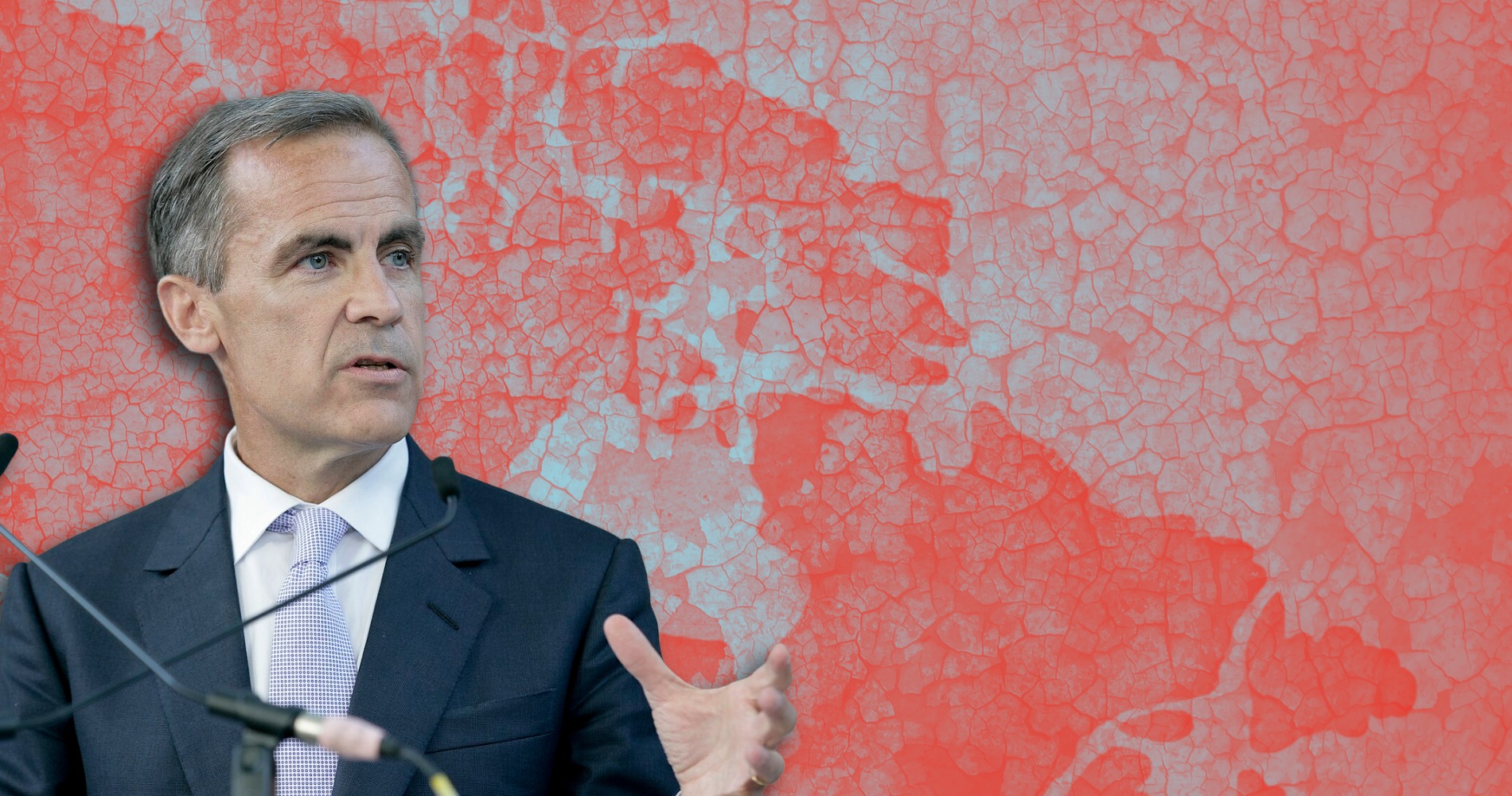
A year ago, Mark Carney was just a glimmer in the eye of a Liberal party that was inevitably headed for a horrendous defeat at the hands of Pierre Poilievre’s Conservative machine. We know how the election went: Carney played the Trump card and won, albeit only a minority government. As of now, however, a majority is but one seat away after a couple Conservatives crossed the floor.
Personally, I’ve enjoyed Mark Carney’s speeches and interviews this year. He’s an excellent communicator who represents Canada to the world with a steady grace and calm. In contrast to the bombast of President Trump, Carney’s demeanor is forged out of a central banker’s desire to cultivate confidence among domestic and foreign investors, and the financial markets. He’s clearly a smart man with an impressive resume and global network of contacts. In the current moment, we could do a lot worse.
Like many, I tried to give Carney the benefit of the doubt, and I enjoyed the term “elbows up” as an election rallying cry for the nation. Yet, in practice, the Carney government is implementing a fairly conservative agenda of deregulation, public sector downsizing, tax cuts, boosting defence and championing resource megaprojects. Carney’s resurrected Liberals have set out an economic agenda with a big push on fossil fuels and mining, while rolling back nearly a decade of modest progress on climate action along the way.
What happened to “elbows up”?
Under Carney’s stewardship, the Liberals promised a new trade accord with Trump shortly after the election, but a couple deadlines came and passed without a deal. In hindsight, the deal we got was to sacrifice the implementation of the Digital Sales Tax in exchange for Trump confirming that Canadian exports that qualify under the Canada U.S. Mexico Agreement (CUSMA) would maintain duty free status. In October, Trump pulled the plug on the negotiations, ostensibly due to Ontario Premier Doug Ford’s viral ad featuring Ronald Reagan expounding the alleged virtues of free trade.
The CUSMA is up for review in 2026 and all three countries have begun various internal consultations. The United States will likely seek major concessions from Canada, and it’s hard to know what the federal government would be prepared to give up in order to achieve a deal with the United States that could be broken at any moment. However much corporate Canada wants to turn the page back to 2024, no deal is better than a bad deal.
In lieu of “elbows up,” the federal government has switched its emphasis towards deregulation and accelerated resource megaprojects. The first salvos of this came about when PM Carney invoked the misleading rhetoric of “one Canadian economy, not thirteen” to make big claims about so-called inter-provincial trade barriers. We’ve heard this story before: from time to time, Canadian politicians will raise allegedly massive barriers to internal trade as an issue, so that they can paint themselves as the ones slaying the dragon.
In fact, the vast majority of goods, services, investments and people move seamlessly across provincial borders; only a few areas like alcohol and some food processing have bona fide restrictions. Stuart Trew and I have probed this issue and we find the potential gains from removal of the few remaining barriers to be vastly overstated. The notion that removing barriers would lead to more than $200 billion in economic benefits is, quite simply, preposterous. In practice, “removing barriers” typically means reducing capacity to pursue legitimate public interest objectives, such as environmental regulation, consumer protection and workplace health and safety.
The One Canadian Economy Act, passed at the end of June, merely removes most federal exceptions to the Canadian Free Trade Agreement, the 2017 deal that reaffirmed that Canada is already one economy (this is also in the Constitution). At the federal level, there were no restrictions that undermined interprovincial trade in any event. But eliminating federal exceptions could prove to be problematic in the future in areas such as coastal fisheries management (see our full analysis here).
The Act then shifts to the real issue at hand: fast-tracking federal approvals of fossil fuel megaprojects, now elevated to “major projects” in the “national interest.” Using the trade threat from the U.S. as cover, the federal government conferred upon itself sweeping new executive powers to exempt environmentally destructive projects from public processes and regulatory oversight through its new Major Projects Office.
Resource megaprojects
The first tranche of major projects, announced in September, focused mostly on old-school resource projects rather than bold infrastructure investments, like an east-west clean electricity grid, that would tie the country closer together. A second round of major projects announced in November reinforced this pattern. As of December 2025, the major projects list includes:
- Two liquefied natural gas (LNG) projects in BC
- Five mining projects across the country
- A major new transmission line in northern BC (to support LNG and mining)
- Nuclear power in Ontario
- Hydro power in Nunavut
- Port expansion in Montreal
The big action is in BC and focuses primarily on a foundation of LNG and mining supported by new electric power from BC Hydro. At this point, federal and BC priorities diverge. This was made clear with the announcement of plans for a new bitumen pipeline as part of the Canada-Alberta Memorandum of Understanding (MOU), announced in late November.
The BC government and most First Nations have opposed the construction of a new bitumen pipeline from Alberta to the North Coast of BC. Such a pipeline through BC (Enbridge’s Northern Gateway) was strongly opposed in the early 2010s, and was taken off the table by the Trudeau government in order to pursue the Trans Mountain Pipeline Expansion. The resulting nationalization of the expansion went notoriously over-budget at $34 billion.
The MOU links federal support of the bitumen pipeline to commitments to the Pathways carbon capture project—a pipe dream of the oil and gas industry (see detailed analysis here). As such, it’s not obvious that these two megaprojects will happen at all. There is no private sector proponent for the pipeline, but it’s possible that the Alberta government steps in to build the pipeline itself. It is also not clear how much public support the federal and Alberta governments are willing to provide to make this all happen.
The economics of such projects is sketchy at best in light of the ongoing renewable energy transition happening worldwide. What global demand looks like a decade from now is highly uncertain but many observers feel that oil demand will be in decline around the mid-2030s. Pipeline projects could also move in the other direction: a revival of the Energy East pipeline from Alberta to Ontario or Quebec, and/or the upgraded Keystone XL pipeline to the United States.
In the short term, the real effect of the MOU is to gut federal climate and energy regulations developed over the past few years. Should a pipeline be built to BC, the feds would end a tanker ban on the North Coast. The newly developed federal Clean Electricity Regulations will be dropped for Alberta—and presumably other provinces too, given the precedent. Alberta gets a five-year delay in implementing federal regulations on the greenhouse gas methane. And corporate advertising from the oil and gas industry will no longer need to be limited to making factual claims due to the scrapping of federal anti-greenwashing legislation.
Federal budget
The gap between the rhetoric and reality of theMark Carney government was also evident in the federal budget, tabled in early November. Well before the actual budget, Carney had already rolled back the modest tax increase planned for capital gains (which would only have affected a handful of wealthy households) as well as scrapped the federal consumer carbon pricing framework (which was the central plank in the government’s climate action plan).
Heading into the November budget, the big talk was about “generational investments” in housing and infrastructure, but on closer inspection there was fairly little new money for such investments. Carney’s government has been pushing Build Canada Homes, a promising initiative, but its budget allocation is fairly small. BCH is, at best, a pilot program that will start on only 4,000 new homes some time in 2026. Meanwhile, the Parliamentary Budget Officer revealed that “federal planned spending on housing programs is set to decline 56 per cent, from $9.8 billion in 2025-26 to $4.3 billion in 2028-29. This decline is driven by the expiry of funding for existing programs and cuts set out in Budget 2025, offset in part by the launch of Build Canada Homes.”
While defence receivedgets a big boost from the budget, and federal transfers to the provinces and individuals have been maintained, other federal departmental spending will face austerity in the short term. A number of other neoliberal reforms were repackaged as inducements to investment to “boost productivity and competitiveness.”
The federal budget’s cuts include a target of 40,000 fewer federal civil service jobs by year three of the fiscal plan. Exactly how department-level cuts will be implemented was not clearly stated, but as a CCPA analysis notes, these cuts will likely entail the winding down over the next few years of existing programs that would otherwise be renewed. Both the nature of programs cut and reduction in the number of civil servants that back them will have a disproportionate impact on women, racialized groups and Indigenous people.
This human sacrifice appears to have appeased Bay Street, perhaps not surprising given the prime minister’s central banking CV. A lot of eyes were on the bottom line of the federal deficit but ultimately a higher nominal deficit that merely maintains the federal debt relative to GDP was not something that financial markets seemed to care a whole lot about.
The federal government still has substantial fiscal capacity to make big generational investments that might inspire and unite the country. Instead, the budget reinforced the same strategy discussed above, emphasizing oil and gas and mining and resource projects, while shedding green industrial strategies associated with an energy transition off of fossil fuels.
What’s next in 2026?
All things considered, Canada has weathered the Trump trade storm reasonably well, with acute tariff challenges in forestry, steel and automobiles met by modest federal support for affected companies and workers. But stresses are accumulating and 2026 is likely to include new attacks on Canadian manufacturing sectors from the Trump administration. How the federal government addresses the ongoing negative impact in key manufacturing sectors will be a key determinant of its success in 2026.
This means living up to the rhetoric of “elbows up.” Canada is going to need to bolster its sectoral and industrial strategies and pivot to policies aimed at domestic strength and sovereignty. But it also means investing in and strengthening the care economy and other public services and infrastructure that bind Canadians together and improve ordinary people’s standard of living. The end of the era of free trade with the U.S. is not necessarily a negative, but the moment must be met with a much more deliberate and strategic approach on the part of Carney and the federal government.
About the author

Marc Lee
Marc Lee is a Senior Economist with the Canadian Centre for Policy Alternatives. Marc joined the CCPA’s British Columbia office in 1998, and is one of Canada’s leading progressive commentators on economic and environmental policy issues. From 2009 to 2015, Marc led the CCPA’s Climate Justice Project (CJP), which published a wide range of research on fair and effective approaches to climate action through integrating principles of social justice. Marc continues to write about climate and energy policy, strategies for affordable housing, federal and provincial budgets and macroeconomics. Marc has an MA in Economics from Simon Fraser University and a BA in Economics from the University of Western Ontario. Marc is a past chair of the Progressive Economics Forum, a national network of heterodox economists. He also served as a Visiting Professor at Simon Fraser University’s School of Public Policy in 2024 to 2025.