



Share
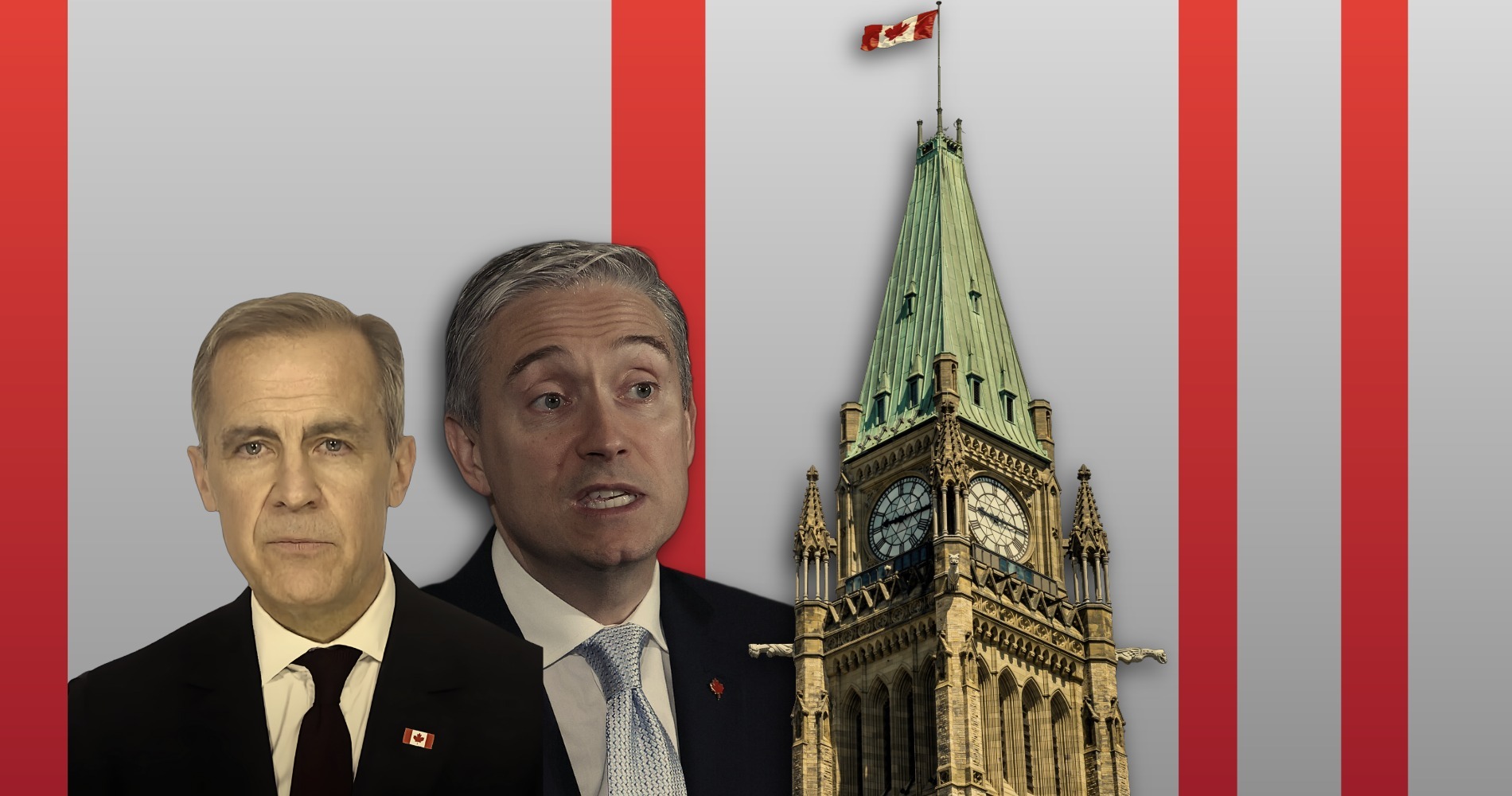
On April 28, the federal government released its spring economic update, a fiscal update that comes halfway through the year between federal budgets. While economic updates are significantly less detailed than full budget documents, they do contain a lot of useful information about what the government is prioritizing—or not—in its orientation.
This economic update is particularly significant because it is the first one the federal Liberals are passing as a majority government—Canada’s first majority since 2019, one which was won primarily through an unprecedented wave of floor-crossings of Members of Parliament from other parties, especially the Conservatives. This spring update will let us know how the Liberals plan to govern without having to collaborate with other parties.
Since being elected Prime Minister, Mark Carney has pivoted significantly to the right compared to the previous administration of Justin Trudeau. The federal government over the past year has embarked on a series of major cuts to the federal public sector while also rolling out the red carpet for “major projects,” particularly in resource extraction.
The update also comes in the context of a simmering economic crisis due to the U.S.-instigated trade war, which has hit key industries and flatlined economic growth for much of the past year. For these reasons, we would normally expect for this update to paint a dire picture of government finances—but, paradoxically, the overall picture of government finances is quite a bit rosier due to the massive explosion in oil prices brought on by the U.S.-Israeli war of aggression in Iran. Those price increases have led to increased resource revenues, softening the blow of the overall economic downturn and shaving a whopping $11.5 billion off of the previously projected deficit, despite the government’s failure so far to adequately capture a proper share of these windfalls.
What will the federal government do with its majority, and its sudden uptick of resource revenues? The economic update gives us a roadmap. Let’s get into it.
—Jon Milton
Climate: “Major projects” and resource extraction displacing transition planning
After delivering the worst climate budget since the Harper era, the federal government followed it up with two new fossil fuel subsidies—one for liquefied natural gas facilities and another for the extraction of oil using captured carbon. On a more positive note, the economic update included $500 million in net new international climate finance, in addition to previously announced funding for electric vehicles incentives and nature conservation. These are positive steps, but they do not outweigh the climate cuts from last fall’s budget. Total federal climate spending is on track to decline precipitously in the next several years as Trudeau-era programs expire.
—Hadrian Mertins-Kirkwood
Few details on new sovereign wealth fund
The introduction of the $25 billion Canada Strong Fund—what the government is calling a sovereign wealth fund—is intriguing, but the economic update provided few details on how it will work or, more importantly, what kinds of projects it will invest in. A genuine sovereign wealth fund is long overdue in Canada. If it followed the Norwegian model, it would take resource revenues and reinvest them into economic diversification. However, the Canada Strong Fund appears poised to do the exact opposite—to take public money and invest it into resource extraction projects, potentially including oil and gas production.
—Hadrian Mertins-Kirkwood
Housing: Lots of bragging, little clarity
On housing, the spring economic update celebrates market corrections: “Growing supply—combined with efforts to bring population growth back to more sustainable levels—is helping to narrow Canada’s housing supply gap and deliver meaningful improvements in affordability.” It also reiterates this government’s optimism regarding “public-private collaboration” and “modern methods of construction” which will create an “entirely new Canadian housing industry.” The update also touts the HST rebates on new homes—a de facto bail out of condo developers—which has been repeatedly presented as a measure to make homes more affordable.
Cutting through all that fog, the update provides no additional information about programs or measures with a direct impact on affordability. Build Canada Homes (BCH) remains a black box, with little known about how projects are chosen or implemented. Concerning the National Housing Strategy (NHS), no information on which programs will be part of permanent funding cuts and which may be renewed.
Once again, Ottawa is asking millions of people struggling with high rising costs to wait for market mechanisms to deliver affordability.
—Ricardo Tranjan
EI reform remains on the back burner
Too many workers still can’t access Employment Insurance (EI), and the program’s benefits remain inadequate. The chilling effect of the recent spike in energy prices is just the most recent assault on the Canadian economy. Economic disruptions have become a constant. Our EI program is ready for none of this.
Despite a reprieve at the beginning of the year, the unemployment rate has been on an upward trajectory and entry level jobs are disappearing. Against this backdrop, Canada continues to struggle with historically low recipiency rates for regular EI benefits, averaging about 40 per cent of unemployed workers, half the rate it was in 1989, and even less this past March, at just 35.8 per cent.
The Spring Economic Update 2026 extends supports for seasonal workers in the 13 targeted regions until October 2028. But where are the fixes needed to create a program capable of responding to 21st century challenges?
—Katherine Scott
Trade: More of the same free trade, even as the model collapses
Minister Champagne’s spring update reads more like an investor pitch than a realistic account of Canada’s economic challenges. The impact of Trump’s trade wars is sugarcoated, the potential for trade treaties to diversify exports overstated, and we are still waiting for workable industrial strategies for preserving desperately threatened automotive, steel and lumber jobs. Just yesterday, we learned that a viable 80-year-old furniture company in Quebec, South Shore, was closing permanently due to U.S. tariffs and a flood of cheap imports from Canada’s free trade partners that the government ignored for too long.
We need new rapid-response mechanisms, something faster than our trade remedies process, for addressing production-destroying imports and urgent coordination between producers and consumers of Canadian industrial output in this country. Buy Canadian procurement strategies should be urgently sped up to further supplement lost U.S. exports of Canadian goods, services and raw materials.
Federal and provincial measures to try to increase interprovincial trade, like recent mutual recognition agreements, focus on removing minor, exaggerated differences in permitting and other regulations between jurisdictions that do not demonstrably affect investment decisions. The more important barrier to domestic trade is the cost of moving goods, which demands trade infrastructure spending, including east-west rail and highway improvements, and harmonized high standards for trucks and their drivers.
Finally, Canada’s rush to lock in new trade and investment treaties containing extreme investor protections is quietly exposing the public to billions in future lawsuits related to fossil fuel projects. With Canada already facing over $3 billion in trade lawsuits, targeting the rejection of a polluting coal mine in Alberta and non-viable LNG facility in Quebec, weakening regulations to push projects forward only raises the risk. The government should cancel its new investment treaty with the UAE and reopen the Ecuador and Indonesia agreements to remove investor-state dispute settlement.
—Stuart Trew
Health care: killing pharmacare before it even got off the ground?
The federal government has responsibility for helping fund public health care services with the provinces and territories. The Canada Health Transfer—the largest federal transfer to the provinces and territories—as well as bilateral funding agreements are the main ways that the federal government supports public health care.
Under the Trudeau Liberal government, the federal government signed four bilateral pharmacare agreements with British Columbia, Manitoba, P.E.I., and the Yukon. However, it appears that there will be no additional funding for additional pharmacare deals. With the bilateral health funding dropping from $4.3 billion in 2025-26 to $3.1 billion in 2027-28, it’s clear that the federal government doesn’t see a future for national pharmacare nor an expansion of Canadian medicare in any other areas like primary health care.
This is no surprise considering P.E.I.’s health minister revealed that Ottawa will be cutting $29 million in health care funding to the province over the next three years. The federal government appears poised to allow existing bilateral funding agreements to expire without renewal, translating into cuts for existing provincial health care services, including funding for diabetes medications and contraceptives negotiated with the three provinces and one territory.
—Andrew Longhurst
Post-secondary education: No transformative investments for one of Canada’s most important economic drivers
In addition to educating the next generation of workers and citizens, universities and colleges drive economic growth at the municipal, provincial and federal level through research and development, procurement, and the wages they pay (which contribute to the local economies where those employees live and work). But the loss of international tuition fees—which institutions relied on in the absence of sufficient government investment—has created a funding crisis in the sector that has been a long time in the making, and demonstrates the profound failure of the user-pay funding model.
It’s long past time for the federal government to meaningfully invest in post-secondary education as a sector, and recognize colleges and universities as the important economic drivers that they are—more impactful when compared to oil sands extraction, or when compared to mining, or when compared to transportation manufacturing. Unfortunately, the Spring Economic Update failed to recognize this as an “Elbows Up” moment for innovation or economic resilience, let alone for the labour force of tomorrow. Continuing to download costs onto the next generation—with pre-announced measures that nowhere near offset the rising price of obtaining a degree or diploma—is not only unsustainable, it further entrenches inequality during an affordability crisis that will not be fixed with piecemeal approaches and (often) temporary pocketbook measures.
– Erika Shaker
About the authors

Hadrian Mertins-Kirkwood
Hadrian Mertins-Kirkwood (he/him) is a senior researcher and political economist at the Canadian Centre for Policy Alternatives. His work focuses on federal economic, social and environmental policy, especially in the areas of climate change, artificial intelligence and industrial strategy. Hadrian edits the monthly Shift Storm newsletter on climate and labour.

Ricardo Tranjan
Ricardo Tranjan directs the research program for the CCPA-Ontario. Ricardo’s expertise centres on Ontario public finances and the political economy of social policy, especially public education funding, income support programs, and rental housing. He is the author of multiple books, including The Tenant Class (2023).

Katherine Scott
Katherine serves as the director for the CCPA’s gender equality and public policy work. She has worked in the community sector as a researcher, writer and advocate over the past 20 years, writing on a range of issues from social policy to inequality to funding for nonprofits.

Stuart Trew
Stuart serves as director of the CCPA’s Trade and Investment Research Project (TIRP), which pools the expertise of academic, labour and non-governmental organization researchers to understand the impacts of trade and investment treaties and policy on the Canadian economy, public services, human rights and international relations.

Andrew Longhurst
Andrew Longhurst is a senior researcher and political economist, with a focus on health policy, at the Canadian Centre for Policy Alternatives. He holds an MA from Simon Fraser University where he is a PhD candidate. He is the author of over 45 publications on public finance, health services, and the care economy.

Erika Shaker
Erika (she/her) became Director of the National Office in 2020, but began her career at the CCPA in 1997 as director of the Education Project. Originally established to monitor corporate intrusion in public education, the project broadened its focus to include standardized testing, social justice and anti-racism education in schools, educational equity, school finance, child care and early childhood education, tuition and user fees, technology, surveillance and privacy, the arts, and community-based education. In 2000 she also became editor of Our Schools/Our Selves, the popular education journal founded in 1988. It provides commentary and analysis on a wide variety of education-related topics. Erika has a BA in History from McGill University and an MA in English (critical literary analysis) from the University of Guelph. Prior to coming to the CCPA, she worked in Washington DC researching the corporatization of childhood, and was one of the founders of UNPLUG (which became the now-defunct Center for Commercial-Free Public Education). She spends far too much time on social media.

Jon Milton
Jon Milton is a writer and editor on the Canadian Centre for Policy Alternatives' communications team. His work focuses on social movements and social change.