



Share
“When can I get my own phone?” my eight year old daughter asks me. “Never,” I say to myself, wanting to protect her from the open internet. Families are living through unprecedented exposure to technology that is both an undercurrent and overcurrent of our lives. Phones and tablets are everpresent, always available to “look something up” and risk going down the rabbit hole of everything else available at an instant touch. As the parent of two school-age children, both with ADHD, technology’s “dopamine hits” are a risk and reward we are constantly dealing with.
Management of technology for children has been mostly left up to families—but communities, schools and governments all have a role to play. The recent introduction of the federal Safe Social Media Act will help, but governments must also provide public services and give children healthy alternatives, as children are especially driven to screens when there’s little else to do, and families when they need a digital babysitter.
Last winter, parents at our school gathered for meetings based on the book The Anxious Generation: How the Great Rewiring of Childhood is Causing an Epidemic of Mental Illness by Jonathan Haidt. Haidt explains that individual families cannot solve this problem alone, that community action is essential to protecting children from internet harms and improving mental health. This community action needs public government support to be successful.
Haight explains that parents are trapped by a collective action problem. Many parents don’t actually want to give children smartphones or social media, but they feel pressured because they see many others with access to social interactions like group chats.
The social dilemma is that everyone would benefit if most families delayed smartphones and social media, but it’s difficult for anyone to go first.
Rather than telling parents to simply “be stronger,” Haidt says communities need to create new social norms by delaying smartphones and creating opportunities for children to play outside together. To buffer against the proven negative impacts of social media on mental health, children must develop competence through real-world experiences, not merely reduce screen exposure.
What does this look like? Families are busy—usually both parents are working to keep up with how expensive everything is. Some are lucky enough to have $10-a-day child care, but many are not. Years of cutbacks mean the community centre and library have limited programs and hours. Summer camps, and lessons for sports, music, and arts add up. Grandparents and extended families do not always live nearby. All of this leads to stressed out families and children at risk of mental health challenges.
If we are serious about protecting children from the harms of the online world, we need to build a richer offline one. That means investing in the public spaces and services that children and families want to participate in: quality recreation, libraries, parks, community centres, after-school programs, child care and summer camps. It means creating neighbourhoods where children can safely ride their bikes, walk to a friend’s house and spend time together without needing a screen to connect. These investments are essential infrastructure for children’s mental health. Strong communities make it easier for parents to set healthy limits because children have meaningful alternatives to screens.
Our family should not have to shoulder this challenge alone. I want my daughter to ask me “When can I roller-skate to meet my friends at the community centre?” instead of asking about getting a smart phone. Just as governments regulate unsafe products and build roads for public safety, they have a responsibility to create the conditions in which children can thrive. We all will benefit from changing the anxious generation into a healthy generation.
About the author
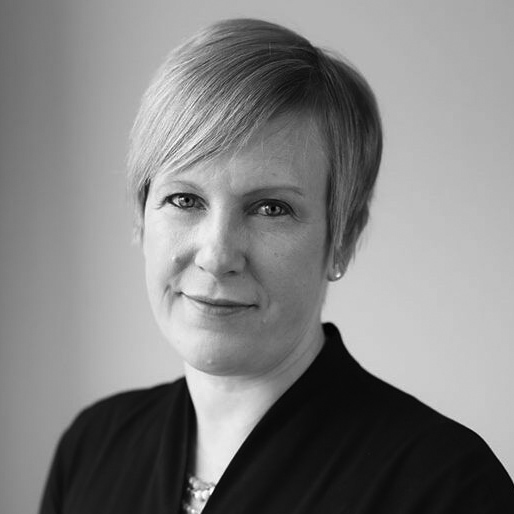
Molly McCracken
Molly McCracken (she/her) is the Director of the Canadian Centre for Policy Alternatives–Manitoba office. Her research and commentary focuses on social inclusion and climate action. Molly holds a Masters degree in Public Policy and Administration from Carleton University and an undergraduate honours degree in Sociology and Womens Studies. She is a member of the Make Poverty History Manitoba Steering Committee.