


Share
If there’s one thing that everyone seems to agree upon when it comes to artificial intelligence, it’s that it’s going to change everything, and there is no stopping it. Like a force of nature—a hurricane making landfall, an earthquake, a wildfire—the AI revolution is coming.
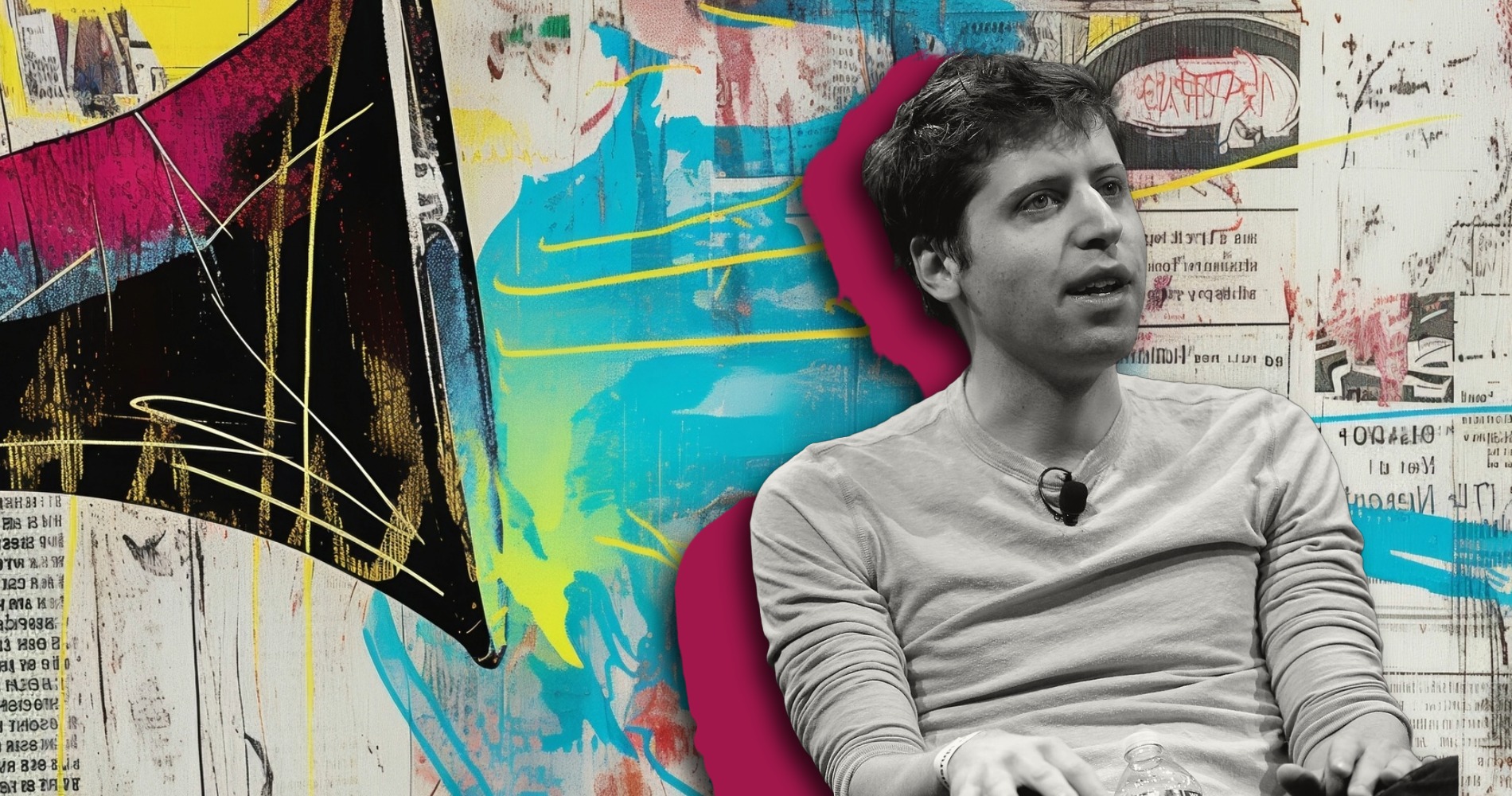
AI, they say, is going to revolutionize work. It will eliminate countless jobs and send labour productivity into the stratosphere. It is going to fundamentally change public services. It will revolutionize warfare. It will transform arts and culture. It will destroy all previous assumptions about the possibilities of technology. OpenAI CEO Sam Altman, in one of his many outlandish claims, said “we are close to creating a genie that can grant any wish.”
Even negative stories can reinforce this framing. Scary tales about frontier AI models “breaking containment” out of their testing areas and engaging in “autonomous” hacks against other AI companies reinforce the idea that these new digital technologies are accelerating faster than human designers can control. We are, indeed, on the verge of the AI revolution, everything seems to say—whether we view that as a good thing or not.
But are we? The actual rollout of AI has been, for the most part, underwhelming. The productivity gains have mostly failed to materialize. AI integration into online services like Google search has almost universally worsened the quality of those services, with next to nothing on the upside. Nobody likes AI “art.” Companies are re-hiring workers that they laid off to replace with AI during the early days of the rush. Stock markets are beginning to punish major tech companies for their growing debt ratios.
Altman’s genie claims are obviously absurd, but they do reflect the way most people view AI technology: as a type of magic. Tech companies and their boosters deliberately mystified AI technology, and that lack of understanding is a key part of why AI seems like an inevitable behemoth.
Take the term “AI” itself: ChatGPT is a Large Language Model (LLM), a type of word prediction machine that guesses, based on probability, which word is likely to follow another—much like the predictive text feature on your cell phone keyboard. It is not, in any meaningful sense, intelligent, in that it contains no internal capacity for logic or to check the veracity of references. Its core function is word prediction, not reason (which is why it is significantly less reliable for information retrieval than a standard search on Google or Wikipedia). “Artificial intelligence” is a marketing term.
By referring to these technologies as “intelligent,” we contribute to mystifying them. It certainly feels more serious to tell ourselves that we “asked AI” about something rather than asking the Magic 8 Ball.
But the hype cycle this narrative produces has consequences. Policy-makers across the world are falling over themselves to deeply embed “AI” systems into the economy. They are constructing energy-hungry data centres, replacing public service workers with chatbots, and funnelling public money to tech companies that constantly claim to be on the verge of “revolutionizing” something or other, if only we gave them a little more cash.
Back in the 1980s, governments across the developed world were massively restructuring their economies—they were going to war with labour unions, gutting the welfare and regulatory state, signing away sovereignty through trade deals, and running fire sales for newly privatized public services. It was the early days of neoliberalism, and UK Prime Minister Margaret Thatcher put it in simple terms: “there is no alternative.”
From tech CEOs to the federal government’s AI strategy to the chattering classes in the media, that narrative is once again taking hold with regard to a massive restructuring project. This time, the people deploying that rhetoric are using technology (rather than economic theory) to justify their power grab. But just like last time, it is indeed a power grab—and one that we do have the capacity to resist.
About the author

Jon Milton
Jon Milton is a writer and editor on the Canadian Centre for Policy Alternatives' communications team. His work focuses on social movements and social change.

