


Share
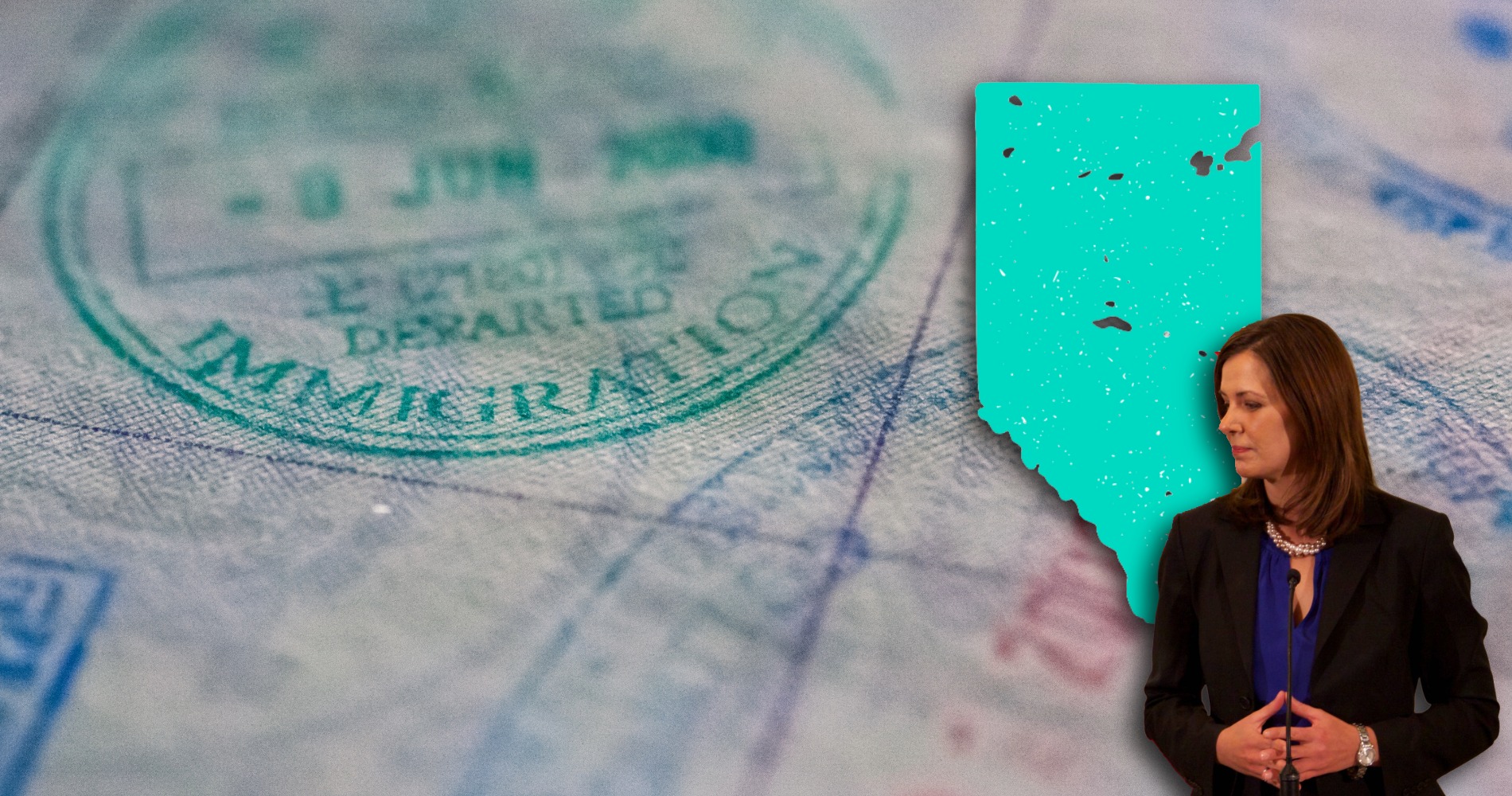
Alberta Premier Danielle Smith recently sparked heated debates by announcing a series of referendum questions, mostly related to immigration and the Canadian constitution.
The referendums will take place in the fall. The province is aiming to wrest control of immigration selection from the federal government, as well as imposing caps on international students, temporary foreign workers, and asylum seekers in Alberta. The questions also propose to limit access to public services (like health care) for immigrants who aren’t “Alberta-approved,” and introduce new ID requirements for voting in provincial elections.
Beyond the issue of immigration, other referendum questions will ask Albertans whether they want the provincial government to work towards amending Canada’s constitution. These constitutional questions cover a variety of topics—like having greater provincial say in the appointment of judges, abolish the senate, allow provinces to opt-out of federal social programs (while, incredibly, still receiving federal funding for them), and increase provinces’ ability to override federal law.
Referendums may seem like an exercise in participatory democracy, providing citizens with a direct say in shaping public policy. However they can also be designed to create the illusion of public participation while ultimately serving the interests of the ruling class. By subjecting policy decisions to popular vote, governments can deflect criticism and claim a mandate for their agendas, even when those agendas may not align with the broader public interest.
Alberta’s immigration referendum appears to be a strategic maneuver to consolidate power and advance neoliberal policies under the guise of democratic decision-making, while using immigrants as a scapegoat. By placing contentious issues like immigration and constitutional questions on the ballot, the UCP aims to rally its right-wing base while diverting attention from pressing systemic issues that demand urgent action.
Making immigration a divisive issue
The decision to spotlight immigration in the referendum is particularly concerning. Immigration has long been a contentious topic, and some politicians use it as a political wedge to pit workers against one another and distract from systemic problems such as unemployment, underemployment, and inadequate social services. By framing immigration as a problem to be solved, Alberta’s government risks perpetuating harmful stereotypes and fostering anti-migrant sentiment—a tactic that has been employed by populist leaders like U.S. president Donald Trump.
Historically, Alberta has benefited from immigration, which has enriched the province economically, culturally, and socially. Immigrants have played a vital role in building the province’s industries, from oil and gas to agriculture and healthcare. Instead of acknowledging these contributions, the provincial government’s focus on immigration seems designed to scapegoat migrants for challenges that are rooted in broader economic and political failures.
This approach is not without precedent. Across Canada, political leaders have often used immigration as a convenient scapegoat for economic struggles. It’s a narrative that shifts blame away from systemic issues—such as the erosion of public services, stagnant wages, and rising inequality—and places it squarely on vulnerable populations. By doing so, governments can deflect scrutiny from their own policies while stoking division among workers who might otherwise unite in demanding systemic change.
A closer examination of Alberta’s recent history reveals that many of the province’s challenges stem not from immigration but from policy decisions made by the government. Since 2019, Alberta has witnessed significant cuts to public services, wage freezes for public sector workers, and attacks on collective bargaining rights. Healthcare workers, teachers, and public service employees—represented by unions like the United Nurses of Alberta (UNA), the Alberta Teachers’ Association (ATA), and the Alberta Union of Provincial Employees (AUPE)—have been at the forefront of resisting these measures.
Healthcare workers have faced immense pressure due to chronic underfunding and staffing shortages, issues that were exacerbated since the COVID-19 pandemic. Instead of addressing these systemic problems, the provincial government pursued cost-cutting measures that further strained an already overburdened system. Similarly, teachers have grappled with larger class sizes and reduced support for students with special needs, while public sector workers have contended with layoffs and wage freezes.
These struggles highlight the real challenges facing Alberta’s working class—challenges that cannot be addressed by targeting immigrants or other vulnerable groups. Instead of fostering division, policymakers should focus on creating equitable solutions that address the root causes of economic insecurity and social inequality.
The emphasis on immigration in the referendum raises serious concerns about the potential impact on marginalized communities. Anti-migrant rhetoric has far-reaching consequences, contributing to an environment of fear and hostility that can lead to racism, discrimination, harassment, and violence against migrant workers, immigrants and refugees. For communities that are already vulnerable—such as racialized groups, Indigenous peoples, and low-income families—such rhetoric only compounds existing inequalities.
Moreover, policies rooted in anti-migrant sentiment risk undermining Alberta’s social cohesion and economic resilience. Immigrants bring diverse skills, perspectives, and experiences in our communities. They drive the economy and innovation. By fostering an inclusive society that values diversity, Alberta can position itself as a leader in addressing challenges such as labor shortages and demographic shifts.
Unfortunately, the provincial government’s policies have consistently prioritized corporate interests over the needs of ordinary Albertans, deepening inequalities and eroding trust in public institutions. By framing immigration as a threat rather than an opportunity, Smith risks further alienating marginalized communities and undermining Alberta’s social fabric.
Constitutional questions
The other key referendum questions are about Canada’s constitution. These questions purportedly aim to renegotiate power dynamics between the federal government and the provinces. While such discussions are not inherently problematic, they take on a different character when driven by neoliberal agendas.
The UCP has long championed deregulation, privatization, and austerity, the hallmarks of neoliberalism. By seeking greater autonomy from the federal government, the provincial government is attempting to create the legal space to advance these policies more aggressively. This could have significant implications for public services, environmental protections, and workers’ rights in Alberta.
Increased provincial autonomy could pave the way for further privatization of healthcare and education—sectors that are already under strain due to funding cuts, and where the Alberta government has already embarked on unprecedented privatization sprees, in direct contradiction to federal laws like the Canada Health Act. It could also weaken environmental regulations at a time when urgent action is needed to address climate change. Such outcomes would disproportionately impact marginalized communities, who are often most reliant on public services and most vulnerable to environmental degradation.
As Alberta moves toward this referendum, it is crucial for Albertans to critically examine government’s actions and policies. The focus on immigration risks perpetuating harmful stereotypes while deflecting attention from systemic issues that demand urgent action—issues which some of these questions aim to worsen.
To ensure that Alberta remains a fair and just society for all its residents, regardless of their background or status, it is essential to hold the policymakers who are driving these questions accountable for their decisions. This includes scrutinizing the government’s policies on immigration, public services, labor rights, and environmental protection to ensure they align with principles of equity and justice.
Furthermore, it is incumbent upon all Albertans to reject divisive rhetoric that seeks to pit communities and workers against one another. By standing in solidarity with marginalized groups and advocating for systemic change, we can build a province that works for everyone—not just the privileged few.
As we navigate these complex times, it is more important than ever to critically examine the actions and policies of our leaders. Only by holding them accountable can we ensure that Alberta remains a province where fairness, inclusion, and justice are not just ideals but lived realities for all its residents
About the author
Marco Luciano
Marco Luciano is the director of Migrante Alberta.

