

Too many workers are struggling to make ends meet
Labour Day is a time to reflect on working conditions and the vital role workers play in our society.
The 2025 living wage rates for Nova Scotia, Newfoundland and Labrador and PEI that were just released reveal a lot about the status of workers in these provinces. The living wage provincial averages are $27.60, $25.31 and $22.77, respectively – this is the full-time hourly wage that workers need to earn just to keep the lights on and food on the table. The Living Wage report illustrates something widely understood by the public – the cost of living has shifted dramatically over the last five years, and many households have fallen further behind in their ability to cover necessary, basic expenses. Although minimum wages have risen in recent years, this followed a long period of neglect when rates lagged behind the increases in the cost of living. Minimum wages have become less effective at ensuring that working people can cover their basic living costs. For residents of Atlantic Canada, the minimum wage is between $6 and $12 an hour less than the living wage—a significant percentage below what would be necessary to afford basic living expenses.
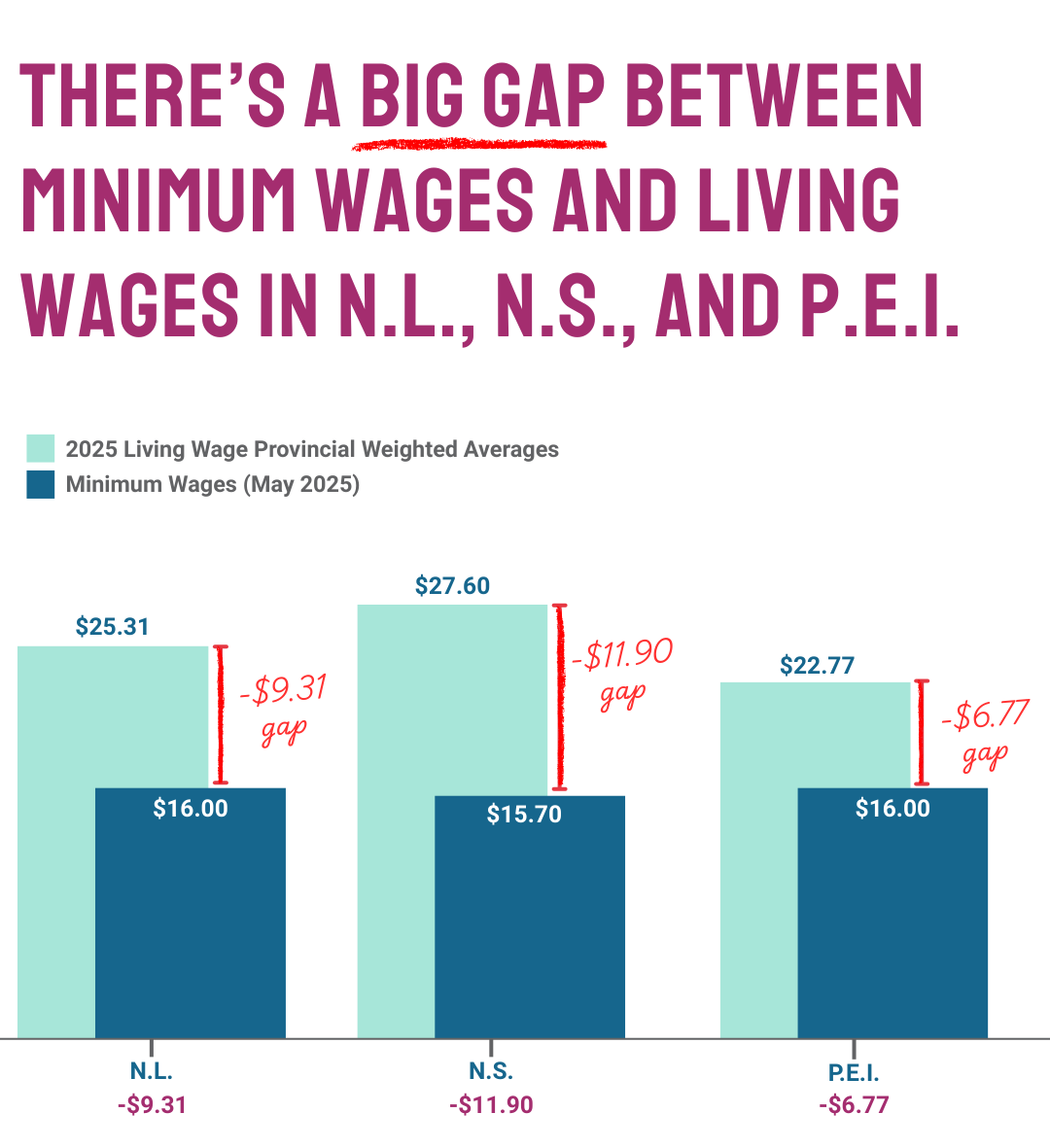
For anyone whose employment income is less than a living wage, their options for meeting their needs are considerably narrowed, often detrimentally affecting their health, denying them adequate housing and contributing to food insecurity. And yet, many workers, from 30 per cent to 50 per cent depending on the province, are trapped in the gap between the living wage-what they need to earn to afford essentials and their current earnings.
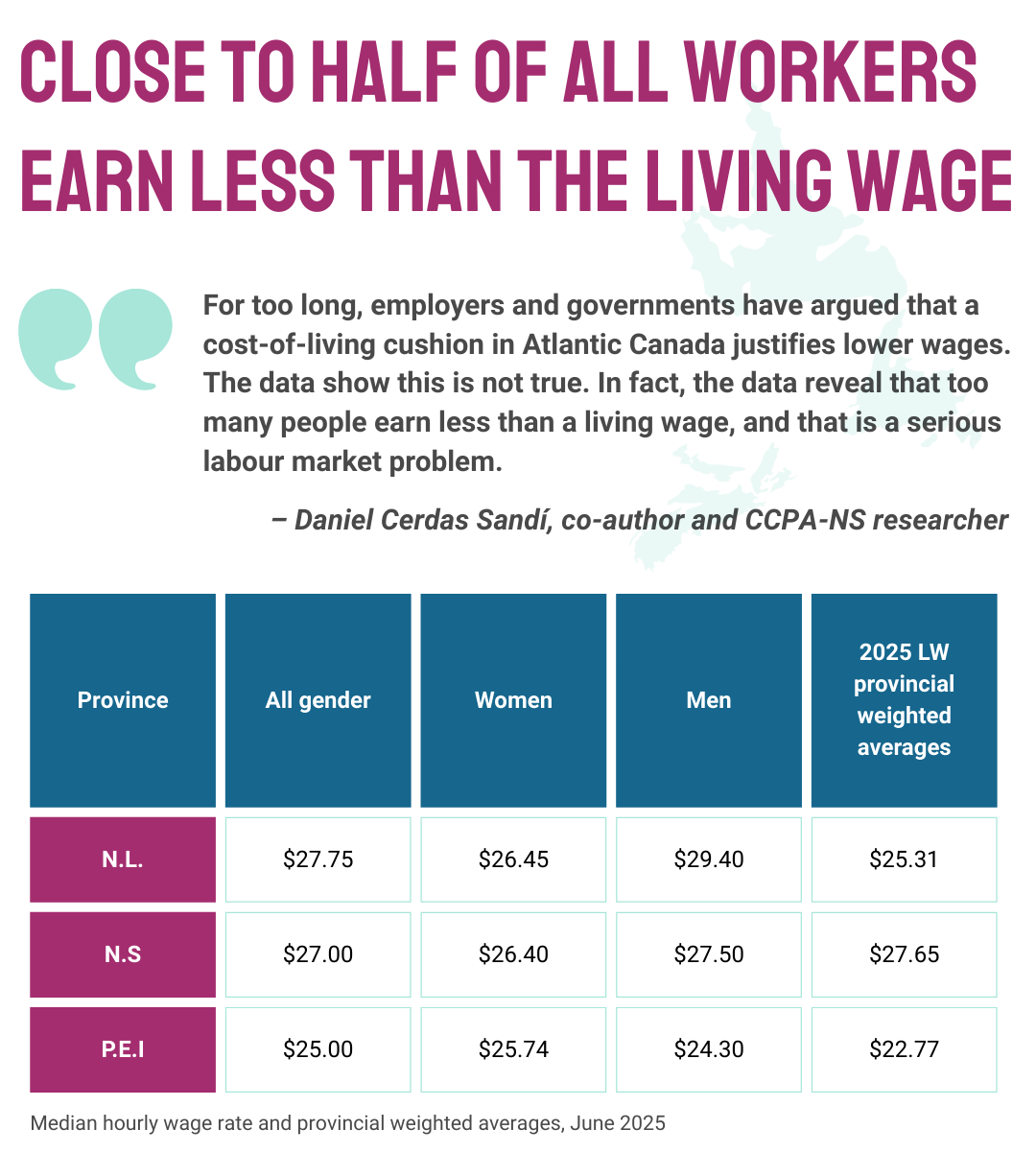
Minimum wages were designed to promote equity, not disregard an expansion of wage injustice. Low-wage workers are disproportionately female and members of visible minority communities; the living wage gap is targeting some members of our community in a systematically unjust way.
Worse yet, because the gap has been allowed to grow so large between the necessary living wage and the minimum wage, it is becoming increasingly hard for employers to imagine the kind of wage increases that would be needed to restore the balance. Employers routinely lobby for the status quo, to keep minimum wages down, but this worsens the problem and results in significant labour force shortages.
The living wage calculation is a conservative estimate, based on averages. Therefore, whether the annual income for two full-time working adults covers expenses, or half of that suffices for one person, depends on many factors affecting costs, often influenced by luck and market availability.
For example, you may be managing if you haven’t had to move recently and have access to hard-to-get licensed, affordable child care. But if these things aren’t true, or if someone in your household becomes ill, has debts, doesn’t have access to affordable public transit, or you don’t have the option to shop around for more affordable groceries and services, you may no longer be earning enough to keep your “head above water”.
Luck should not be the primary determinant of whether you can access the essentials.
This year’s living wages increased in all regions in Nova Scotia and Newfoundland and Labrador, primarily due to increased costs and no increase in income supports or better access to public services. PEI, however, saw its living wage rates stay the same because of a confluence of policy changes, with families having more access to $10 a day child care, to more affordable public transportation, to reductions in taxes, and to the introduction of a child benefit with a more generous income threshold than any other of the Atlantic provinces. Small changes combined to help those households show that we have the mechanisms to close the affordability gap.
Paying higher wages is essential to the affordability equation, but not the only factor.
The living wage calculation is a powerful tool for governments to make evidence-based labour and social market policy decisions. Achieving a living wage can come from increased wages, public programs that reduce the cost of living for low-income households, or a combination of the two.
Unless wages increase and all levels of government act, many thousands of workers will continue to struggle to make ends meet.