



Share
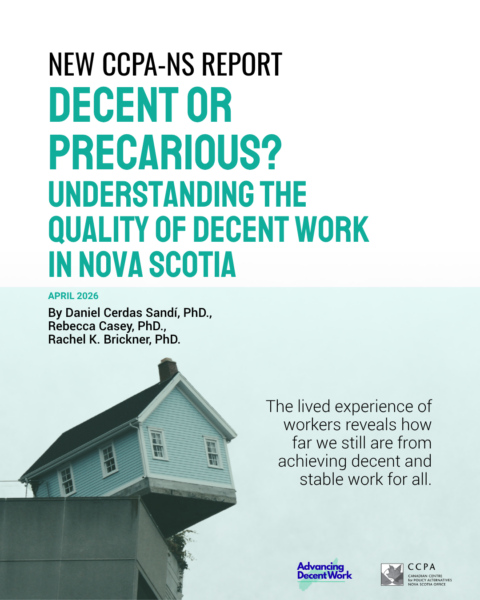
PRESS RELEASE: New report finds nearly one in three Nova Scotia workers in precarious jobs
April 29, 2026
KJIPUKTUK/HALIFAX— A new report on Nova Scotia’s labour market finds that precarious employment is widespread and leaves many workers just one setback away from deeper insecurity.
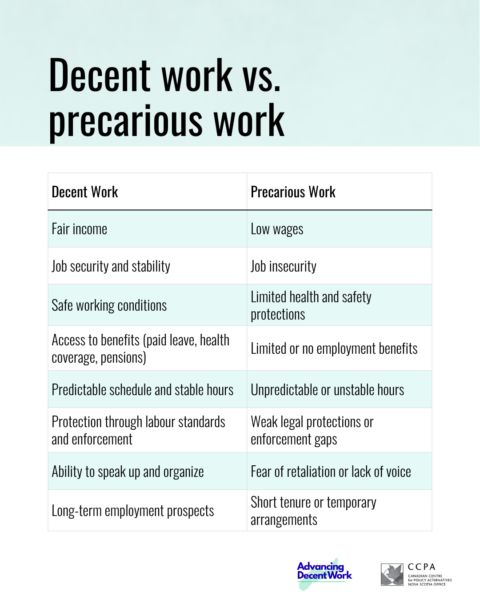
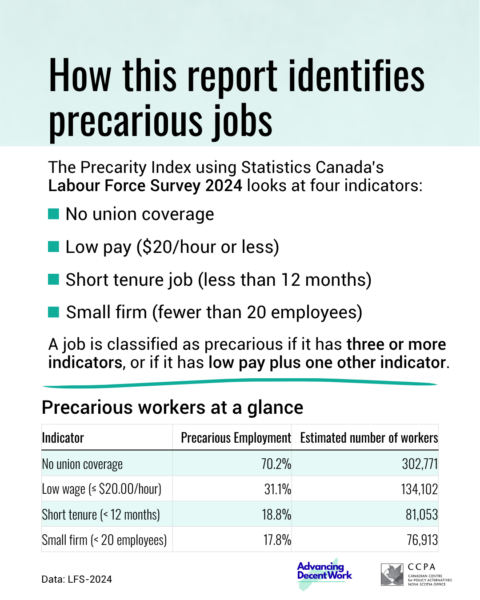
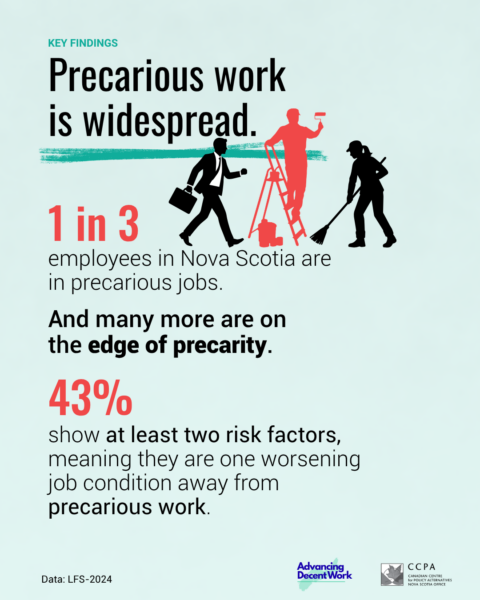
The report shows that 30.4 per cent of paid employees — approximately 131,000 workers — are in precarious jobs, with low wages, limited protection and job instability. About 43 per cent of employees show at least two signs of precariousness, leaving many workers on the edge of precarity, and at risk of deeper insecurity if their job conditions worsen.
Too many workers in Nova Scotia are working hard without the stability they need to make ends meet,” said Dr. Daniel Cerdas-Sandí, co-author and CCPA-NS research staff.
“This is not a marginal issue. Precarity is a defining feature of our labour market,” says Cerdas-Sandí.
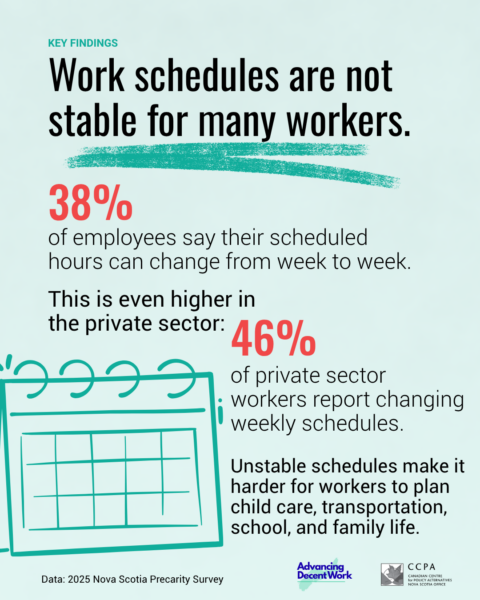
The study uses two complementary tools: an Employment Precarity Index based on Statistics Canada’s 2024 Labour Force Survey, and for the first time a 2025 survey of workers across Nova Scotia conducted by Angus Reid, which captures the day-to-day experiences such as unpredictable schedules, on-call demands, and fear of losing work.
Key findings include:
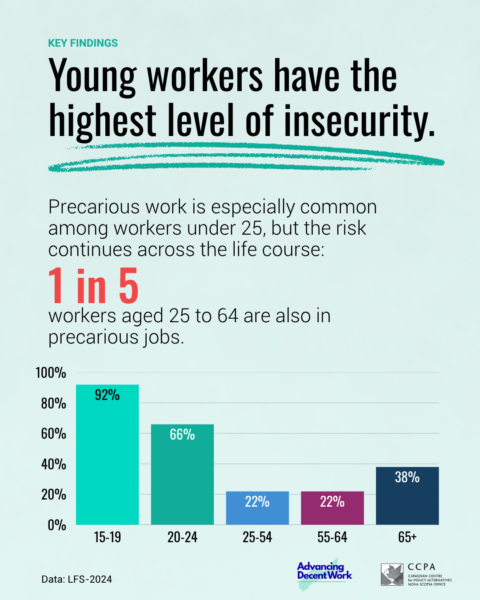
- Precarious work is especially common among young workers, part-time employees, and those in temporary roles, with more than half of workers aged 20–24 in precarious jobs.
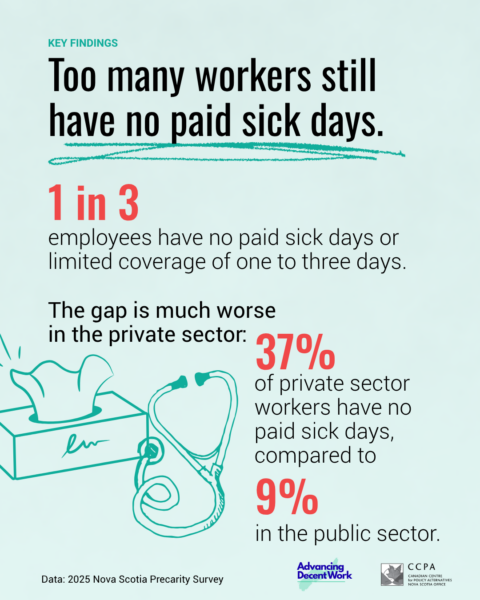
- Unionized workers are significantly less likely to experience precarious employment, with better access to permanent jobs, benefits, pensions, and paid sick leave.
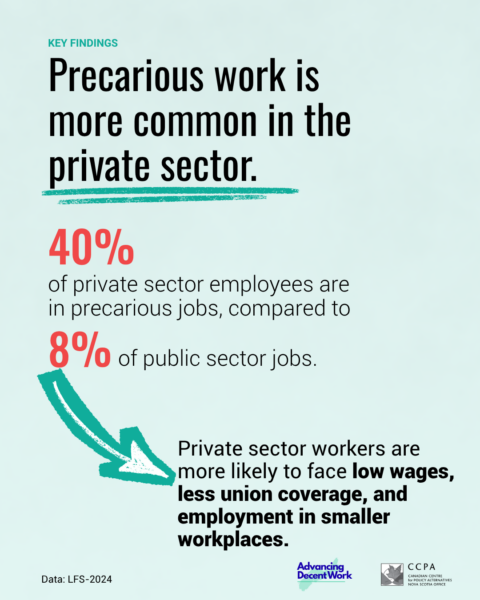
- A sharp divide exists between public and private sector jobs, reflecting differences in union coverage and job protections.
- Many workers face barriers to basic labour protections due to gaps in coverage, weak standards, and a complaint-driven enforcement system.
- Precarious work is especially concentrated in accommodation and food services and retail trade, the two industries with the highest precarity rates in the index. Together, they represent about one in five employees in Nova Scotia.
The report concludes that Nova Scotia’s high levels of precarious employment are not inevitable, but the result of policy choices.
“Weak labour standards and limited enforcement leave too many workers unprotected,” said Dr. Rebecca Casey, Acadia University Sociology professor, “When workers are afraid to speak up or risk losing hours, the system is not working.”
The report is part of the Advancing Decent Work series and outlines a comprehensive set of policy recommendations to improve job quality across the province.
Recommendations include:
- Raising wages and establishing a clear path toward a living wage
- Strengthening rules on scheduling, on-call work, and last-minute shift changes
- Expanding access to paid sick leave, vacation, and basic benefits
- Closing gaps in protections for temporary, casual, and platform workers
- Proactive labour standards enforcement focused on high-risk sectors
- Supporting unionization and collective bargaining
- Embedding job quality standards in regional economic development and public procurement
“Precarious work is a policy choice and it can be changed by policy,” said Acadia University Politics professor, Dr. Rachel Brickner.
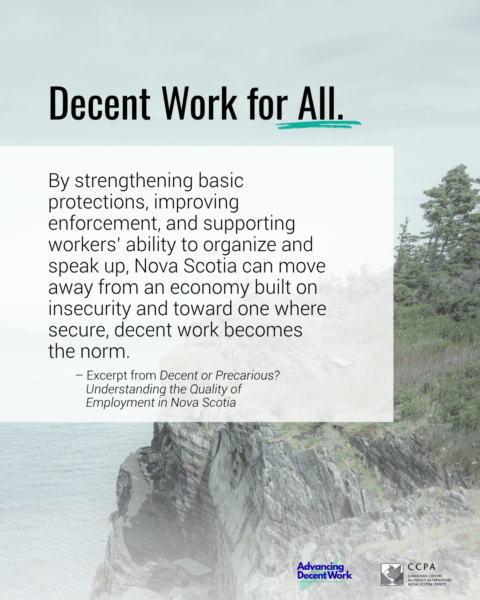
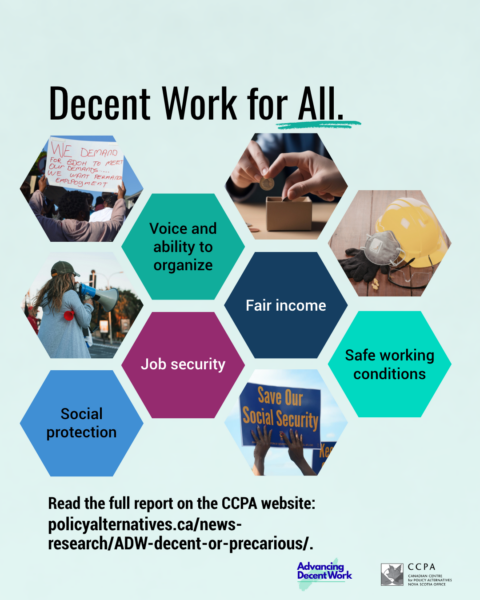
“With stronger standards, better enforcement, and support for worker voice, Nova Scotia can build an economy where decent work is the norm, not the exception,” added Brickner.
“This first-of-its-kind survey of workers in Nova Scotia helps explain the growing number of labour disruptions by low-wage, insecure workers including in long-term care, universities and housing support,” said Christine Saulnier, Director of CCPA–NS.
“What’s especially concerning is that even this data likely underestimates the scale of the problem. After decades of employers pushing for flexibility, too many workers are left without benefits, without stable schedules, and unsure whether they can pay their bills,” says Saulnier.
-30-
For more information, embargoed copies or to arrange interviews please contact: Ruby Harrington at [email protected] or (902) 956-3866.
The CCPA-NS is an independent, non-partisan research institute concerned with issues of social and economic justice, as well as environmental sustainability.
Full report
Graphics
About the authors
Daniel Cerdas Sandí
Daniel Cerdas (he/him) is a political scientist with a Master’s in Sociology and a Ph.D. in Social Science Research. He has over a decade of experience as a research and policy analyst, working at the intersection of labour rights and public policy. His work has focused on freedom of association, collective bargaining, international labour standards, gender equity, and informal work. Daniel has held roles with governments, unions, and international organizations, and is committed to advancing inclusive, evidence-based policy. At the Canadian Centre for Policy Alternatives-Nova Scotia (CCPA-NS), Daniel contributes to key projects including the Living Wage Reports for Nova Scotia, Newfoundland and Labrador, and Prince Edward Island; the Nova Scotia Productivity Report; the Nova Scotia Alternative Budget; and research on precarious work in the province.
Rebecca Casey
Dr. Rebecca (Becky) Casey is an Associate Professor in the Department of Sociology Acadia and a Research Associate at the CCPA Nova Scotia. She teaches research methods and courses in aging, disability, and employment. She is the co-author of the 2025 CCPA NS report with Dr. Christine Saulnier “The Foundations of Decent Work. An Evaluation of Nova Scotia Labour Standards” and the 2019 CCPA NS report “A Rising Tide to Lift All Boats”. Dr. Casey was involved with the SSHRC partnership grant (co-leads Leah F. Vosko and Mary Gellatly) project “Closing the Enforcement Standards Enforcement Gap” and is a co-author of “Closing the Enforcement Gap: Improving Employment Standards Protections for People in Precarious Jobs” (University Press 2020). Dr. Casey has published in the areas of aging with a disability, injured workers with permanent impairments, employment standards, child maltreatment, and student and worker well-being during the COVID-19 pandemic.
Rachel K. Brickner
Dr. Rachel K. Brickner is a Professor in the Politics Department at Acadia and a Research Associate at the CCPA Nova Scotia. She teaches a broad selection of courses in the subfield of comparative politics. Her scholarly interests have an overarching focus on labour rights and workers’ activism throughout the Americas. Dr. Brickner’s ongoing research projects explore the politics of public education in the United States and Canada through the lens of a feminist ethic of care and the work experiences and well-being of workers in Nova Scotia. Earlier work, including SSHRC-funded research, has focused on union activism of women and precarious workers in the food service industry, as well as the rights of migrant workers.
