


Share
“We face a defining moment.”
“Tighten your belt.”
“We need to cut wasteful government spending.”
“We need to do more with less.”
“We need to lay the foundation for future prosperity.”
Blah, blah, blah, blah.
These dead phrases form parts of such a well-worn story that they can no longer be taken seriously. And yet, they are deadly serious. These phrases define the mainstream political framework that limits discussion, imagination, and choice around possibilities for policy.
In what has become the signature message of his tenure, Mark Carney has signalled that Canadians must prepare for ‘sacrifices’ to transform the economy. But we must be clear: in our current framework, ‘sacrifice’ is a code word for the further concentration of wealth.
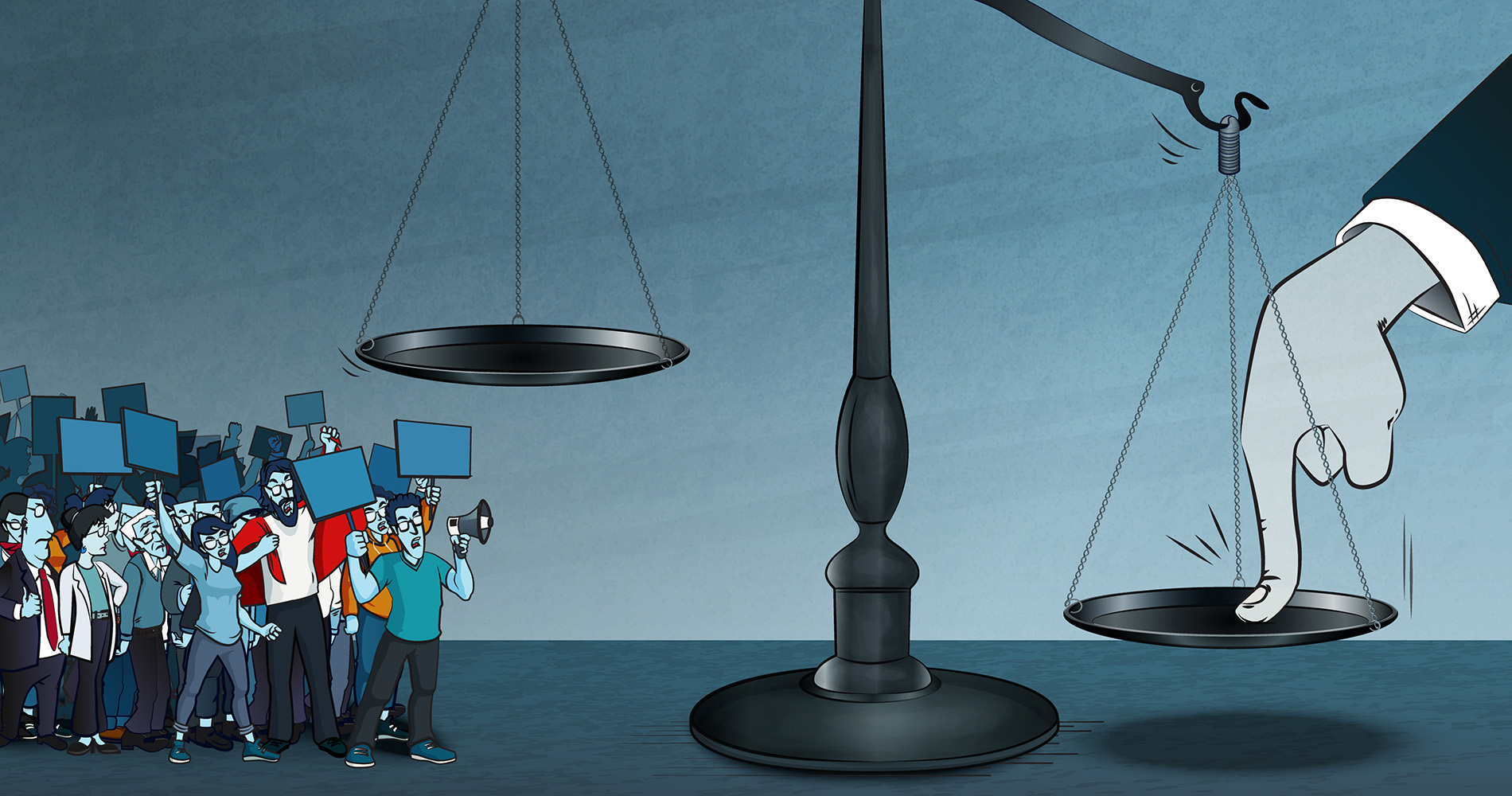
When the elite call for ‘belt-tightening’ and ‘productivity gains,’ they are not asking the billionaires to sacrifice their capital gains; they are asking the working class to sacrifice their public services, their wages, and their time.
By framing these choices as a natural weather pattern that we must simply endure, the technocratic elite are prepping Canadians for a form of managed austerity that doesn’t just ‘include’ inequality—it requires it.
It is a plan to secure the future for those who already own it.
A policy framework that allows wealth to concentrate at the top while more and more Canadians struggle to meet basic needs isn’t just an economic failure, it is a democratic one. When everyday life is defined by the constant pressure of the cost-of-living crisis, the ‘shared citizenship’ required for a healthy democracy begins to dissolve.
As of early 2026, the gap has reached a historic breaking point: the top 20 per cent of Canadian households now control 65.5 per cent of the country’s total net worth, while the bottom 40 per cent—the people who keep our communities running—account for a mere 3.1 per cent.
When wealth is this concentrated, democracy becomes a hollow shell. We are living through a feedback loop where extreme wealth buys political influence (through lobbying and media ownership), which then secures policies (tax cuts and deregulation) that generate even more wealth.
This loop doesn’t just “harm” democracy, it deactivates it. We know this because we can see what’s happening south of the border.
High levels of inequality are historically linked to the erosion of social trust—the basic glue of any functioning democracy. When the life experiences of the wealthy diverge so radically from regular people, a sense of common purpose becomes untenable. This instability creates a fertile ground for polarization and anti-democratic movements, which thrive on the disillusionment that follows when the social contract is broken.
We are witnessing a structural crisis in governance that cannot be solved by simply adjusting the dials of the current system. Rather than continuing to catalog the assaults on our public life, we must begin shaping constructive solutions that break out of this oppressive framework.
To move forward, we must investigate and implement an alternative model that addresses the root of the problem: the distribution of power and wealth itself.
Reclaiming democracy
We should be calling for federal policies that reduce inequality, to safeguard our democracy. But really, we should be approaching this issue from the other way around: we need to build democracy in order to challenge economic inequality.
Ultimately, the most fundamental solution to this crisis is not found in “ticking a box” once every few years, but in reimagining the political process as an active, daily practice. This requires a structural shift from working people being governed to governing themselves—a transition from a passive citizenry to an empowered one.
At the heart of this alternative framework is the democratization of wealth through community ownership. Models like worker and consumer cooperatives ensure that the wealth created by regular people remains in the hands of the many rather than being extracted by a few. When workers are also owners, they gain a direct democratic stake in the decisions that shape their lives, effectively neutralizing the “political inequality” created by concentrated capital.
This democratic control can also extend to the land through Community Land Trusts (CLTs), which remove housing and property from the speculative market to preserve them for long-term community benefit. By stewarding land democratically, CLTs help ensure communities stay intact, preventing the displacement that fuels social instability.
Coordinated through federated networks of workplace and community councils, these strategies build new, tangible bonds of solidarity. They do more than just “address” inequality. They inoculate society against authoritarianism by fostering a sense of shared purpose and agency. By democratizing power at the source, Canadians can begin to build a liberatory democracy that is as robust as it is equitable.
About the author
Scott Marentette
Scott Marentette is a governance consultant who also serves as a member of the Finance and Strategy Working Groups at Resource Movement.

