


Share
During this year’s World Economic Forum in Davos—where the rich and powerful gather annually—a group called Patriotic Millionaires did their best to put extreme wealth on the agenda.
Their call was as simple as it was straightforward: tax the super rich.
“As millionaires who stand shoulder to shoulder with all people, we demand it,” they wrote in their Time to Win open letter, signed by almost 400 millionaires and billionaires from 20 countries, including 25 Canadians.
“And as our elected representatives—whether it’s those of you at Davos, local councillors, city mayors, or regional leaders—it’s your duty to deliver it,” they wrote. “So tax us. Tax the super rich.”
They also released results of a poll of 3,900 millionaires and billionaires in all G20 countries:
- 62 per cent of respondents said extreme wealth concentration is a threat to democracy.
- 61 per cent said our political leaders should do more to tackle extreme wealth.
- 65 per cent said very wealthy individuals should be taxed more heavily to provide better public services.
They are not the only ones who care about wealth inequality. In this edition of the Monitor, we collaborated with the Resource Movement, a youth-led community of upper-middle class and wealthy people who are working toward the redistribution of wealth, land, and power.
In this Monitor, it’s their voices that you will hear. It’s their ideas that you will read. And, hopefully, it’s their passion—and compassion—to reduce inequality that you will share.
The Resource Movement describes itself as people who were born on third base, acknowledging the privileges that come with wealth. In the opening of our themed section, Tackling Wealth Inequality, you will learn some of their personal stories about how they became wealthy—and the responsibility they feel to redistribute their wealth.
They write thoughtfully about the rise of inheritocracy and the myth of meritocracy.
As Daniel Hoyer writes: “The Canadian Promise is fading. Reversing the spiralling inequality we have allowed to accumulate over the last two generations is the only chance we have to even approach ‘a system where individuals succeed based on their abilities, efforts, and achievements—not their background or social status’.”
They call for radical solidarity. They attempt to reframe taxes as a civic duty and a source of pride. And they call for an inheritance tax in Canada.
“When we starve the state, we don’t liberate the individual, we raise the cost of living,” Mohini Athia writes. “We replace progressive taxation with regressive user fees, tuition hikes, and private insurance premiums. We trade a bill based on ability to pay for a bill based on need—a trade that always punishes the poor and working class.”
Concentrated wealth is dangerous to our democracy, Scott Marentette warns. “When wealth is this concentrated, democracy becomes a hollow shell. We are living through a feedback loop where extreme wealth buys political influence (through lobbying and media ownership), which then secures policies (tax cuts and deregulation) that generate even more wealth.”
We are caught in a feedback loop instead of looking at the root cause of the problem, Marentette writes: “the distribution of power and wealth itself.”
Our annual Alternative Federal Budget (AFB) shares a similar vision. It outlines a plan to make Canada’s taxes more progressive, including proposing a tax on extreme wealth. Last year’s AFB noted:
“Currently, the 20 richest Canadians have over $239 billion in wealth, equivalent to over 10 per cent of Canada’s GDP. This level of wealth concentration gives individuals outsized influence over our society. A progressive wealth tax on net worth over $10 million would redistribute wealth and power, while raising over $37 billion in the first year; 99.4 per cent of Canadians would not be affected by this tax.”
This Monitor invites us to consider changing the rules of the game. The conversation is led by a group of young people who, to their credit, are trying to be the change they wish to see. I hope it inspires you, as it does me.
About the author
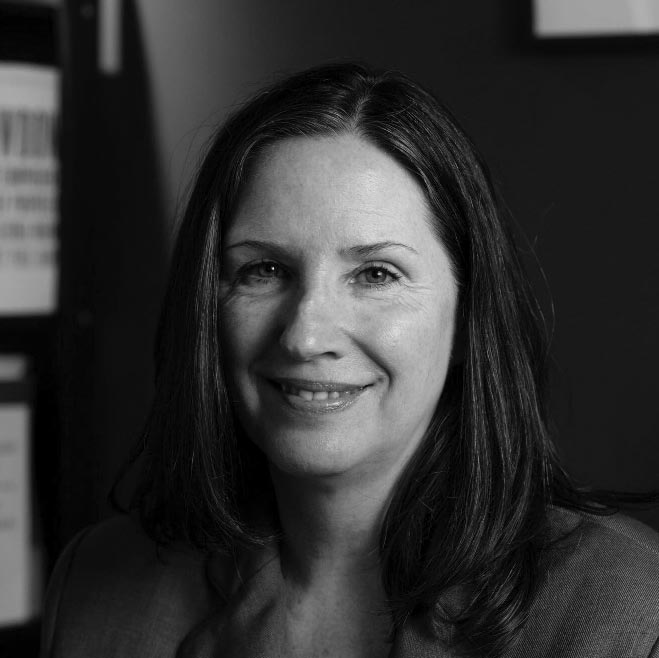
Trish Hennessy
Trish is the Director of the Think Upstream project and a senior communications strategist with the CCPA National Office. She is focused on social determinants health, sustainable development goals, income inequality, decent work, an inclusive economy, and wellbeing budgeting. Trish was the founding director of the CCPA Ontario and co-founded the Ontario Living Wage Network. She was the founding director of the CCPA National Office’s growing gap project, which began in 2006. Trish was a former newspaper journalist, originally from Saskatchewan but she now lives in Ottawa. She has a B.A. Sociology from Queen’s University, a B.S.W. from Carleton University, and an M.A. in Sociology from OISE/University of Toronto.