


Share
“Nobody’s independent in the modern world,” says one of the men leading Alberta’s independence movement.
Speaking to CTV, Jeff Rath was, at that moment, dodging a question about his level of coordination with the U.S. government. He rattled off a series of theories about how “communist Ottawa” was in league with “communist China” to keep Albertans as “resource slaves.”
Rath—legal counsel for the Alberta Prosperity Project (APP) and something of an unofficial spokesperson for the Alberta separatist movement—has made no secret of his affinity for the U.S. government during the ongoing campaign to launch a separation referendum in Canada’s richest province. He has, however, attempted to keep the identity and content of his meetings with them under wraps.
Some of the meetings have allegedly taken place in sensitive compartmented information facilities (SCIF), soundproof and highly secure rooms behind multiple complex locks where electronic devices like cell phones are not permitted. SCIFs are typically reserved for high-level classified meetings.
Those meetings, if you believe Rath, have covered a wide range of topics, including converting an independent Alberta to U.S. currency and border arrangements. U.S. officials have not confirmed any of the details of their meetings, but some regime officials, like Treasury Secretary Scott Bessant, have voiced support for Alberta secession.
“We are exchanging information with senior officials in the U.S. state department,” he said. “We have an agreement with the people that we’re meeting with, that we aren’t disclosing the identities of the people that we’re meeting with.”
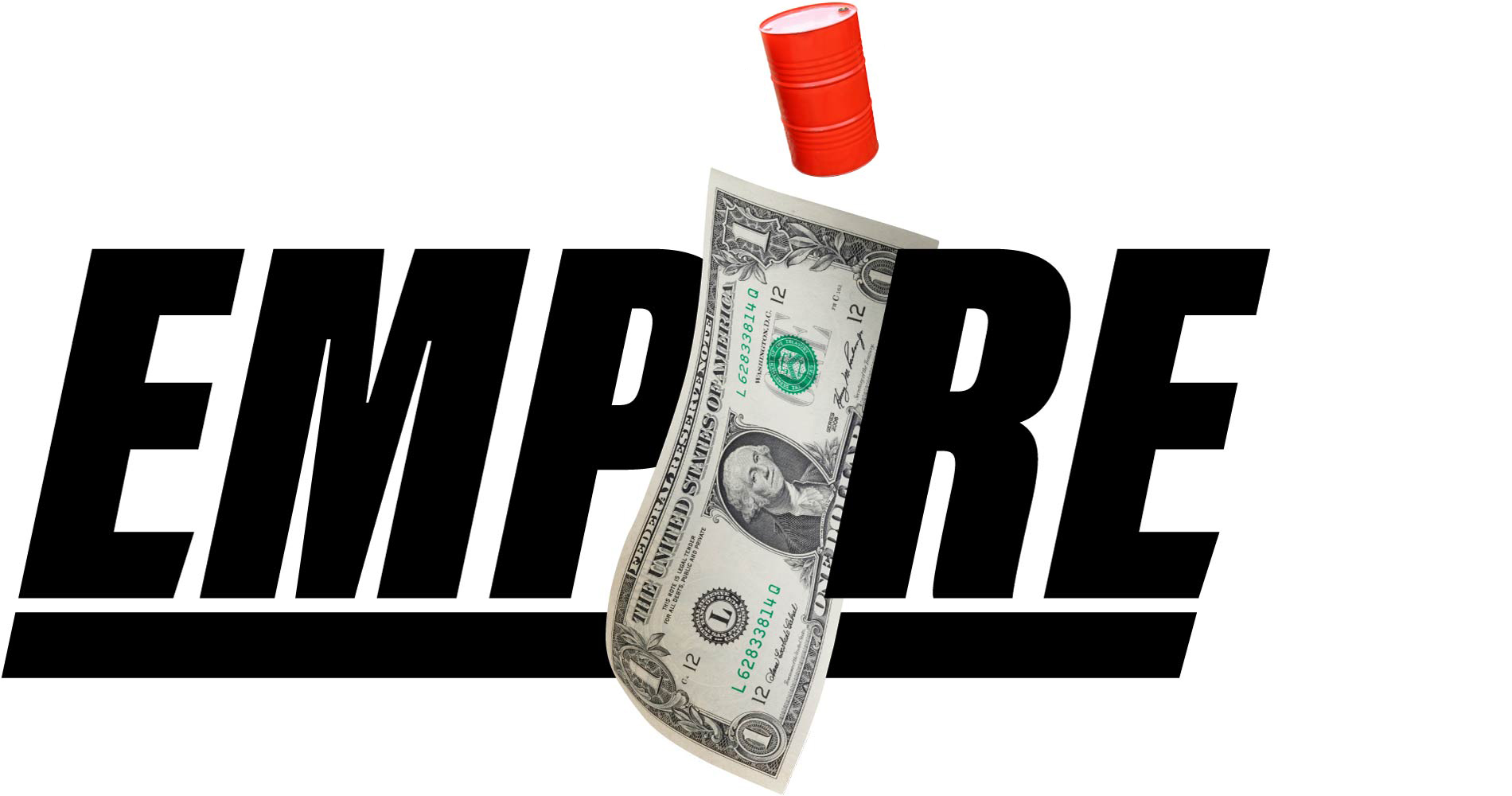
“The Americans see it within their national interest,” Rath said elsewhere, “both under the Monroe Doctrine […] and their new National Security Strategy, to support Alberta independence.” The Americans, he says, support “freeing” Alberta’s oil fields.
Tropical Americanism
When the U.S. government kidnapped Venezuela’s president and his wife from their home in the middle of the night on January 3, the State Department posted an image online of Donald Trump emblazoned with the words “This is OUR hemisphere.” In a celebratory press conference, Trump announced that the operation was an application of the “Donroe document,” and that “American dominance in the Western Hemisphere will never be questioned again.”
What Trump called the “Donroe [doctrine],” the more serious figures in his regime’s inner circle refer to as the “Trump Corollary” to the Monroe Doctrine, an American foreign policy principle first outlined by President James Monroe in 1823. Monroe’s principle was that the United States would use its military might to “defend” the hemisphere against European empires, such as the British, French, and Spanish, who were, at the time, carving up much of the world into colonies and fighting to preserve existing colonies in the Americas. The Monroe Doctrine stated that the U.S. would be the “protector” of the Americas from European powers.
At the time, the announcement was met with cautious optimism in the rest of the hemisphere, particularly among the recently independent states of South America. El Libertador himself, Simon Bolivar, expressed gratitude, as did the leaders of newly independent Colombia and Argentina as well as Mexico.
Before long, it became clear that the “protection” that the United States was offering was the protection of a mafia boss. Within 20 years, the United States had gone to war with Mexico and stolen half of its territory—nearly all of what is now the Southwestern U.S., from Texas to California—as part of its grand designs of “manifest destiny.” The U.S. army conquered and territorialized Puerto Rico and Cuba in the Caribbean, as well as Hawaii and the Philippines in the Pacific.
Southern slave aristocrats like William Walker imagined a slave empire stretching all the way through the Caribbean and central America. Walker led a government-backed battalion of U.S. settlers in an ultimately failed 1856 attempt to conquer Nicaragua and use it as a beachhead to take the entire region. “Tropical America,” he wrote, is the “natural seat of empire” for U.S. slavery.
Imperial secession
Panama—at the time a province of Colombia, not an independent country—was a particularly successful example of U.S. imperial strategy in the region at the turn of the 20th century. Ever since Vasco Núñez de Balboa crossed the isthmus and “discovered” the Pacific ocean in 1513, the area had been of interest to the great powers because of its status as the narrowest point between the Atlantic and Pacific oceans. While the conquistadors dreamed of building a canal, Spain’s King Philip II prohibited it, believing that if God wanted the oceans joined then He would have built a river.
That changed when Latin America’s independence revolutions marched victoriously across the continent. They sought U.S. financing for the construction of a railroad across the 75-kilometer strip of land, and opened to a French conglomerate for the construction of a canal. Hundreds of workers died for every kilometer of canal dug through the swamps and mountains—mostly imported Chinese and Black Caribbean workers, dead of disease or worked to death by their U.S. and European overseers.
When the French venture went bankrupt, the U.S.—which had already been “providing security” to the remote and rebellious province via a defence treaty with Colombia—made a novel proposal: it would take over the canal project in exchange for permanent sovereignty over the canal, which would become a U.S. territory subject to U.S. law. When the Colombian government refused, the U.S. began financing and arming a separatist movement in the Colombian province.
Members of the secessionist movement, such as Manuel Amador Guerrero, who would go on to be Panama’s first president, toured the United States and held secret meetings with U.S. government officials, where they raised significant funds and received guidance directly from arch-imperialist U.S. President Teddy Roosevelt. Those secessionists unilaterally declared Panama to be an independent country in 1903, doing so in violation of Colombian law and holding no vote on the question.
The United States provided diplomatic recognition to the newly independent country immediately. It also sent a large Navy battalion to defend it against the Colombian government—alongside a team of engineers to start planning the canal.
In exchange for this backing, the leaders of the new state signed an agreement with the United States granting it what Colombia had previously refused—sovereignty over the future Panama Canal. The canal itself, as well as eight kilometers in each direction, would be governed as a U.S. territory, separating Panama in two with a border fence and armed U.S. soldiers.
The Canal Zone, as it was called, was an apartheid system modelled on the U.S. Jim Crow south. It divided residents into white “gold roll” workers and mostly Black “silver roll” workers, who lived in substandard housing. It had a number of bizarre moralistic bylaws, such as one outlining that only married couples could occupy homes, while unmarried people lived in shared housing. White and Black workers entered the Canal Zone through separate doors, had access to separate food systems, and lived with vastly different access to resources.
The U.S. fully controlled the Canal Zone until 1979, despite regular protests from Panamanians, who were sometimes killed by U.S. soldiers for crimes such as raising the Panamanian flag. After decades of popular pressure, in 1979 the U.S. agreed to jointly administer the Zone with Panama until 1999, when the country finally recovered sovereignty over the area after nearly 100 years. Recently, U.S. regime officials, including President Donald Trump, have publicly mused about taking it back.
Monroe’s favourite child
Over the course of the 20th century, the United States applied the Monroe Doctrine to systematically destroy democratic governments everywhere in the region. Monroe’s hand stretched over the “banana wars” of the early 1900s, in which the U.S. Marine Corps engaged in dozens of “small wars” against independent-minded governments in Central America and the Caribbean, and onto the U.S.-imposed military dictatorships on the entire South American continent in the 1960s and 70s. Its grip tightened at the School of the Americas (hosted in Panama), where U.S. military officers trained legions of Latin American soldiers in the art of torture, assassination, and repression of dissent. Monroe’s fingerprints covered the “Operation Condor” transnational assassination program, and the U.S.-sponsored genocide against Maya Indigenous Peoples in Central America in the 1980s The Monroe Doctrine has, since its inception, served as justification for brutal U.S. domination over Latin America.
Along the way, the Monroe doctrine was adapted by new and more aggressive leaders. Theodore Roosevelt’s “Roosevelt Corollary” justified limitless U.S. military involvement as an “international police power” in the hemisphere, launching military interventions against countries for crimes like failure to pay debts to European banks or engaging in land reform. The 1980s “Reagan Doctrine” elaborated on U.S. strategy, advocating for arming and supporting far-right terrorist groups in order to destabilize left-wing and socialist governments, with the most famous example being Nicaragua’s Contras.
Canada has long been something of an exception to U.S. domineering in the Americas. After an initial period of uncertainty—U.S. presidents in the early days of the republic did imagine annexing Canada, and famously lost the War of 1812 trying to remove British sovereignty over the territory—the U.S. recognized Canadian sovereignty in 1871 with the Treaty of Washington, and annexationist claims mostly fell to the wayside. Canada sheltered under the umbrella of British power and developed itself as a junior partner of the expanding U.S. empire.
Successive Canadian governments worked towards greater integration with the United States, as well as coordination on extracting resources for the U.S. market, both from within Canada and, later, via Canadian mining companies operating in Latin America. Canada acted as a hemispheric partner in the Cold War and (with some notable exceptions, such as diplomatic support of post-revolutionary Cuba) supported U.S. efforts to suppress democratic, anti-colonial, and socialist movements in the hemisphere that threatened the profits of U.S. and Canadian investors. Canada integrated with the U.S. imperial machine, rather than being targeted by it.
That bargain is collapsing under the “Trump Corollary” to the Monroe Doctrine. Initially outlined in a Foreign Policy article titled “The Trump Doctrine”, by right-wing ideologue Michael Anton in 2019, the corollary was fleshed out and became policy with a document titled National Security Strategy of the United States of America, which the Office of the President released in November 2025. The document, likely also written by Anton, outlines a number of principals for Trump-era foreign policy, guided by explicit ethnic chauvinism and a strategy of using military threats to achieve foreign policy goals. In practice, it has meant engaging in unprovoked attacks against Venezuela, illegal blockades of Cuba, and open threats against countries with left-wing leadership like Mexico and Colombia.
The Trump corollary, to the extent it has been elaborated, is a plan for complete dominance of the Western hemisphere, including Canada and Greenland, both of which have grown of interest to U.S. capital and the U.S. security state as a result of climate change and growing imperial competition with Russia and China. U.S. security planners are already drawing up fanciful plans for militarizing the North with missile defence programs like the “Golden Dome,” and U.S. capital is hungrily eyeing the critical minerals that are increasingly accessible as Arctic ice recedes.
Those environmental changes are also turning the Northwest Passage into an increasingly important shipping corridor. While it’s a long way from being the Panama Canal, the Northwest Passage is seeing significant growth in ship traffic—up nearly 80 per cent between 2013 and 2022, and likely to grow faster due to plans to increase Northern industrial and military activity.
The Canadian government views the Northwest Passage as a Canadian territorial waterway. The U.S. does not recognize Canadian sovereignty over the passage, and believes it constitutes international waters.
The Trump corollary also explicitly rejects the idea that countries in the hemisphere should be allowed to do business with non-U.S. partners. “We want other nations to see [the U.S.] as their first partner of choice,” the National Security Strategy reads, but “we will (through various means) discourage their collaboration with others.” It tasks U.S. embassies with being “aware of major business opportunities in their country, especially major government contracts,” and states that “the terms of our agreements, especially with those countries that depend on us most and therefore over which we have the most leverage, must be sole-source contracts for our companies.”
Stars and stripes over the oil sands
Jeff Rath’s claims about China controlling Alberta oil are obviously absurd, and only the most foolish of rubes actually believes them. As are his claims about Ottawa putting the brakes on extraction. Alberta’s oil production has climbed steadily over the past decade, from 2.9 million barrels per day when Justin Trudeau took office in 2015 to 4.1 million in 2025— scrapping Canada’s climate commitments in the process.
And while it’s true that Alberta’s oil industry is under the thumb of foreign interests, those interests aren’t Chinese—they are overwhelmingly U.S. interests. A 2020 study by Environmental Defence estimated 70 per cent of oil sands production is foreign owned, and 52 per cent of the total is owned by U.S. capital, compared to only 5.2 per cent Chinese ownership.
If we look at the “big four” companies in the patch—which account for the vast majority of total production—we find that the companies, despite having headquarters in Canada, are majority-owned by U.S. investors, with an average of 60 per cent U.S. ownership and 27 per cent Canadian. Those companies only paid a miserly 14.3 per cent of their profits in taxes. During the post-pandemic oil boom, this all meant approximately $58 billion in profits left Alberta to U.S. investors, according to a 2025 report by Canadians for Tax Fairness and the Alberta Federation of Labour.
All this happened without a concurrent employment boom, because the increases in production largely occurred in well-established sites and accelerated through automation. The big four made $3.14 in profit for every dollar they paid to workers in the post-pandemic boom, compared to $0.92 during the 2011-14 boom.
This is why so many Albertans have a sensation—one helping drive secessionist sentiment—that the oil industry never recovered from the 2014 price collapse: because employment never did. Even today, though the U.S.-dominated oil industry is more profitable than ever and produces more barrels of oil to match. None of this is the result of Ottawa’s environmental policy, of course. Rather, it is the result of U.S.-owned companies looking to squeeze every drop of profit that they can out of Alberta’s resources and shipping them across the 49th parallel.
Rath, for his part, claims the unnamed U.S. officials he met have promised to immediately recognize an independent Alberta if they succeed in their secession referendum. He also says they promised him a $500 billion loan during the transition period.
Ballots and bombings
In March 2026, the far-right leaders of 17 countries in the western hemisphere met at one of Donald Trump’s Florida golf resorts to announce the new military coalition, which they called the Shield of the Americas.
These leaders, aligned with the Trump administration, announced their fealty to the U.S. and their plan to allow the U.S. military unlimited access to their territory for strikes against cartels and drug gangs. The U.S. regime apparatchik administering the project is former Homeland Security chief Kristi Noem, who had just finished leading the invasion and occupation of Minneapolis by federal troops with Immigration and Customs Enforcement (ICE).
This takes place in the context of increasingly aggressive U.S. military action across the hemisphere, where Operation Southern Spear has seen the bombing of (alleged) drug boats in international waters, bombing of farms with (alleged) drug labs, and targeted killings of (alleged) gang members. The U.S. has justified these actions by designating various drug cartels as terrorist organizations.
The Trump Corollary is, in practice, a merger of the War on Drugs with the War on Terror, and one that uses both as a thin facade to cover attacks on countries in the hemisphere which don’t toe the line. Reality, under the Trump Corollary, is irrelevant—just like there was no flood of fentanyl pouring over the Canadian border into the U.S., the “Cartel de los Soles” that Venezuelan President Nicolás Maduro supposedly led does not actually exist.
Meanwhile, the U.S. government has also been openly meddling in elections across the hemisphere as well to ensure far-right parties take power. Trump promised a US$40 billion bailout to Argentina if they voted for the far-right party, and the U.S. intervened directly to prevent the election of a left-wing government in Honduras after Trump issued a presidential pardon to former far-right Honduran president Juan Orlando Hernández, who was convicted of major drug trafficking.
Will they intervene to support Alberta’s far-right secessionist movement? If you listen to Jeff Rath, they already are.
About the author
Jon Milton
Jon Milton is a writer and editor on the Canadian Centre for Policy Alternatives' communications team. His work focuses on social movements and social change.