


Share
In 2019, the Governor of the Bank of England told an audience of central bankers and technocrats in Jackson Hole, Wyoming that “we need to change the game.” The international financial system, he argued, must move away from its dependence on the U.S. dollar—the dollar’s status as a global “reserve currency.”
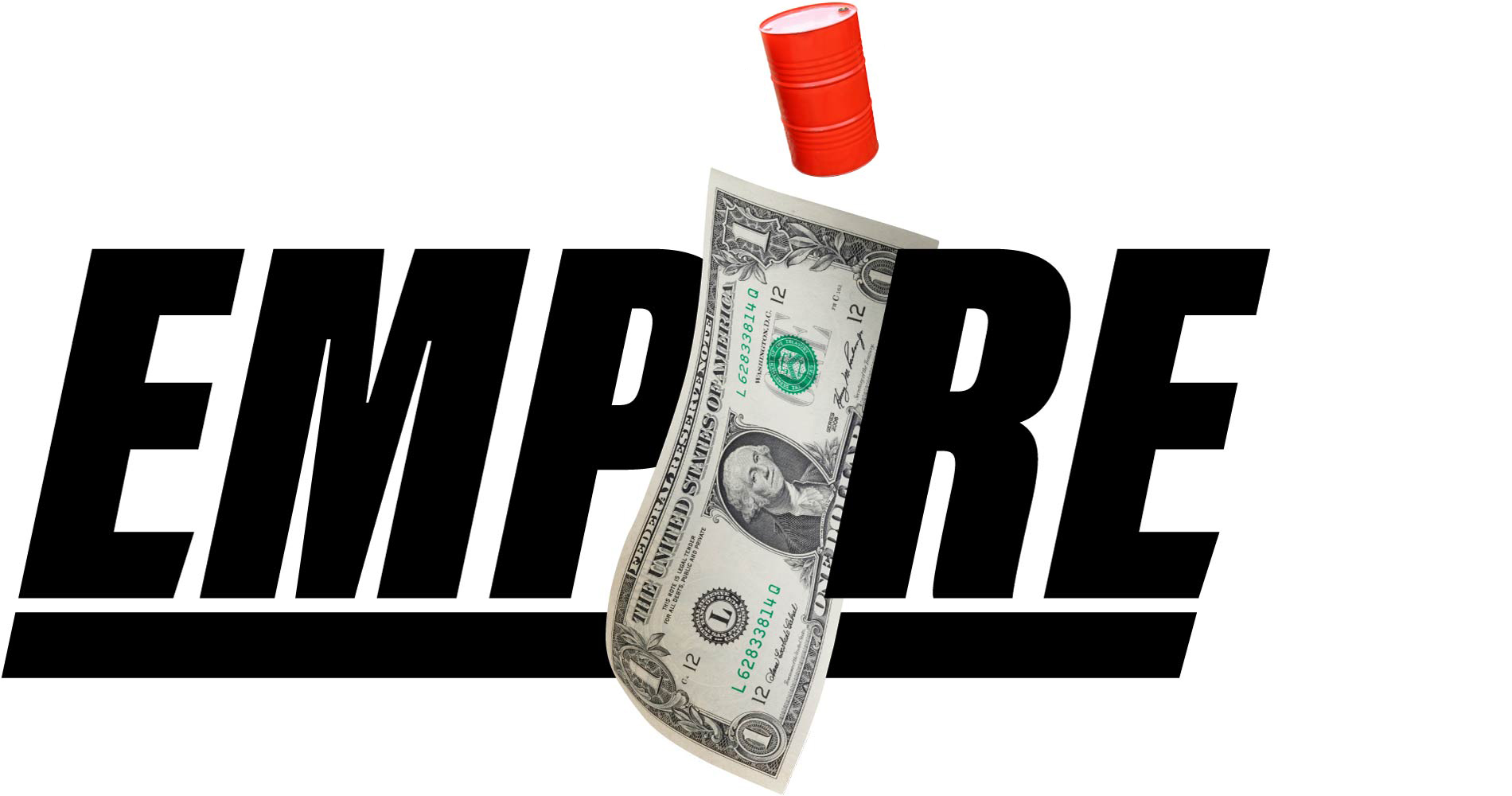
Dollar hegemony is everywhere in global financial architecture. The U.S. dollar is used for 74 to 96 per cent of trade outside the Eurozone; the majority of governments’ foreign exchange reserves are denoted in U.S. dollars; and the majority of cross-border banking claims and liabilities are U.S. dollar based. The U.S. Federal Reserve assessed the U.S. dollar as accounting for nearly 70 per cent of international currency usage in 2024, nearly three times the level of the next currency, the Euro. The dollar, in other words, is the lynchpin of both global trade and the global financial system.
Today, the former banker who gave that speech is prime minister of one of the largest oil-producing countries in the world: Canada. Mark Carney is still giving speeches about the changing world order and the end of American hegemony, but his actions tell a different story.
Canada under Carney has shown itself firmly committed to the maintenance of a fossil-fueled global economy maintained by U.S. power, a project that both relies on and reinforces the monetary system once decried.
U.S. military power, U.S. dollar hegemony, and global fossil fuel demand are interdependent and mutually reinforcing. If one falls, so do the others.
An empire that runs on oil
To understand this interdependent relationship, we need to understand how U.S. dollar hegemony and the global oil economy co-developed over the course of the 19th and 20th centuries.
The story begins with Britain’s industrial revolution, the first in the world, often understood as a domestic phenomenon, but the rise of coal-fired manufacturing is only part of the story. The most impactful transformation of the period didn’t occur within Britain’s borders, but beyond them: coal-fired steam ships granted the British navy a new-found military dominance that it used to build a “fossil empire,” imposing exploitative trade relationships on China, Egypt, and much of the rest of the world. Coal allowed Britain to construct a dynamic domestic capitalism that systematically fed off the global periphery.
In the early 20th century, militaries started shifting to oil, produced predominantly in the U.S., because of its higher energy density and its lower labour requirements. Britain converted its navy in the lead-up to World War I, which facilitated a military advantage but created a structural dependence on the U.S., whose oil industry expanded rapidly.
After the war, U.S. oil suppliers were left overproducing for a small civilian market. The oil industry found its solution by colluding with auto manufacturers to impose car dependence on U.S. society, laying the groundwork for the fossil fuel society that the United States would spend the rest of the century exporting.
Imposing fossil-fueled mass consumerism and securing global oil flows went hand in hand over the ensuing decades. The U.S. remained the largest oil producer until the 1960s (a mantle seized again in 2018), but already in the 1920s and 30s, U.S. firms were developing oil infrastructure in West Asia. By the 1930s, just seven western companies—five of them U.S.-based—controlled virtually all the oil in the region.
By the 1940s, one country stood out: Saudi Arabia, whose oil resources were under the control of a subsidiary of John D. Rockefeller’s Standard Oil. Recognizing Saudi Arabia’s importance, in 1945, U.S. President Franklin Delano Roosevelt established the longstanding “special relationship” we know all too well today.
Intervention in the region during this period focused almost entirely on control over oil. The very first CIA-supported coup took place in Syria in 1949 as a response to the country’s refusal of a Saudi pipeline on its territory. In 1953, when Iranian Prime Minister Mohammad Mossadegh nationalized Iran’s oil, the CIA ousted him and installed a vicious dictatorship that ruled until the 1979 Islamic Revolution.
The invisible hand of the petrodollar
At the end of World War II, oil was central to military might, but it wasn’t yet the lynchpin of global economic activity. The Marshall Plan, the United States’ post-war reconstruction program for Europe, helped entrench fossil fuels as the basis of an increasingly interconnected global economy and established the beginnings of the modern financial system built on oil and the U.S. dollar.
Over 10 per cent of Marshall Plan financing went to buying oil, which European countries purchased almost exclusively from U.S. firms in West Asia. This program was explicitly designed to make western Europe dependent on U.S.-controlled oil.
Oil use rose rapidly in the 1950s, particularly in the U.S. sphere of influence. The “Green Revolution” (the widespread adoption of industrial agriculture) accelerated the rise of fossil fuel use and tied agriculture to fossil fuels, creating an existential vulnerability for fuel importing countries.
In 1973, the outlines of our fiscal and monetary order crystallized during the events following the Ramadan/Yom Kippur War. Saudi Arabia imposed an oil embargo in response to U.S. backing of Israel, which spurred what was (until recently) the largest global energy crisis in history. To end the crisis, President Richard Nixon negotiated an agreement: Saudi Arabia would sell oil only in U.S. dollars, cementing what is known today as the “petrodollar system” and situating the U.S. dollar securely at the centre of the global oil trade.
Until recently, virtually all oil transactions were conducted in U.S. dollars. Over the last decade, a variety of factors, including the overuse of unilateral sanctions by the U.S., has allowed other currencies to edge in, but the dollar still accounts for about 80 per cent of oil transactions.
The petrodollar system, broadly defined by the sale of oil in U.S. dollars and the reinvestment of Gulf oil profits in U.S.-produced arms and U.S. debt, replaced the post-WWII global currency regime, which pegged the U.S. dollar to gold, with a new regime that retained the dollar as its centrepiece, but moved, in some sense, from gold convertibility to oil convertibility.
Since the end of the Cold War, the U.S. has used control over oil and U.S. dollars—the former secured by violence and alliances with reactionary regimes, the latter through international institutions, regulations, and financial infrastructures—to dominate the world. From Iraq in the 1990s, where U.S. sanctions killed millions, to Cuba today, control over dollars and oil has proven to be a weapon more powerful than any conventional arsenal.
If global trade moved away from the dollar, the U.S. would lose not just this weapon, but also the “exorbitant privilege” that its reserve status grants, including its ability to borrow indefinitely—what modern monetary theorists call “monetary sovereignty.”
Decarbonization and de-dollarization
Over the last decade, some have suggested that we are undergoing the beginnings of de-dollarization, but critics point out that in concrete terms, non-dollar trade has made little headway. What these critics miss, though, is the link between dollar hegemony and the most dramatic development of recent years: the increasingly rapid deployment of renewable energy. Oil importing countries are obliged to use the dollar and to retain deep U.S. dollar reserves because of their structural dependence on oil. The energy transition holds the potential to eliminate this obligation, and with it, to destabilize the entire system of dollar seigniorage.
This dynamic is playing out in real time in Cuba today. Trump’s illegal oil blockade—a blockade Carney has refused to challenge—has been starving the Cuban people. Emergency deliveries of solar panels and battery systems sent by China are mitigating the harm and keeping the ventilators running in hospitals. But they’re doing something much more transformative, too: they are laying the groundwork for a Cuba that is no longer dependent on oil and, as a result, is less subject to the whims of the United States.
Dollar hegemony, U.S. military power, and global oil reliance are mutually reinforcing and dependent. Canada’s desire to pump the tar sands dry, which could take hundreds of years at current production rates, requires the country to fight like hell to maintain oil dependence—and, with it, U.S. power and dollar hegemony, because without the latter two, oil demand will rapidly decline. Carney’s past calls for a more resilient, multi-currency global financial system conflict with his present insistence on expanding oil and gas production, whether we understand that as his genuine vision for Canadian development or simply as a commitment to the interests of finance capital.
Much to the U.S. and Canada’s chagrin, the energy transition and its destruction of oil demand has been supercharged by the war on Iran. In the Philippines, a public sector pension fund launched an unprecedented financing program for rooftop solar. In India, liquefied petroleum cookstoves are being replaced en masse with induction cooktops. In the UK, the government just passed a Future Homes Standard that requires new builds to use heat pumps and generate their own electricity.
As far as the energy transition goes, the weeks after the US and Israel launched their war were “weeks where decades happen,” as V. I. Lenin once said.
Which leaves Canada at a crossroads. We can throw our weight behind the U.S. quest for “energy dominance” in a desperate and unavoidably violent bid to maintain share prices for a dying industry, as Carney’s energy secretary Tim Hodgson recently assured a U.S. audience we would. This path requires that Canada endorse U.S. adventurism; it requires that Canada fight to shackle developing countries with out-of-date infrastructure; and it requires that, when push comes to shove, Carney will be standing behind Trump as he commits crime after crime.
Or we can choose the path of international cooperation, rejecting the United States’ new world order and winding down our fossil fuel production in line with a “fair share” approach to climate mitigation.
This doesn’t mean giving up on Canadian prosperity. Instead, it means reckoning seriously with the bifurcation that stands before us: we either move, globally, to a renewable future free from fossil fuel dependence, dollar hegemony, and U.S. domination, or we follow the U.S. path of reckless escalation to its terrifying endpoint: nuclear conflagration.
The choice seems obvious.
About the author
Nick Gottlieb
Nick Gottlieb is a writer and a doctoral candidate at Simon Fraser University. He is the author of the newsletter Sacred Headwaters.

