Share
Americans convincingly rejected Trump’s imperious presidential agenda in midterm elections this week. Democrats now control the House of Representatives by an impressive margin and the Senate by at least 10 seats—enough to control the legislative agenda but not necessarily beat Trump’s veto power if and when he decides to flex it. A record number of declared democratic socialists ran in the election, gaining six seats in the House.
Vice-president JD Vance pinned the blame for the Republican losses on Trump’s military adventurism in Iran (though not in Latin America). But it was MAGA economics that sunk the Republicans. Cost of living was the top issue for the largest share of voters, with foreign policy near the bottom of most polls. A large share of Americans feel Trump’s tariffs were a bad idea, that war has just made gas more expensive, and that the president cares more about his rich friends and family than the MAGA base.
The blue wave
So, what might change in two months, when the two U.S. chambers return to work? The Democrats have promised to scrutinize immigration enforcement in the wake of a spree of killings by Immigration and Customs Enforcement (ICE) officers and more than 30 deaths in detention over the past year. Until then, the Department of Homeland Security has promised the raids and deportations will continue. There is little the Democrats can do to change U.S. policy toward Cuba, where illegal U.S. sanctions—including new ones since the election—have created a humanitarian crisis.
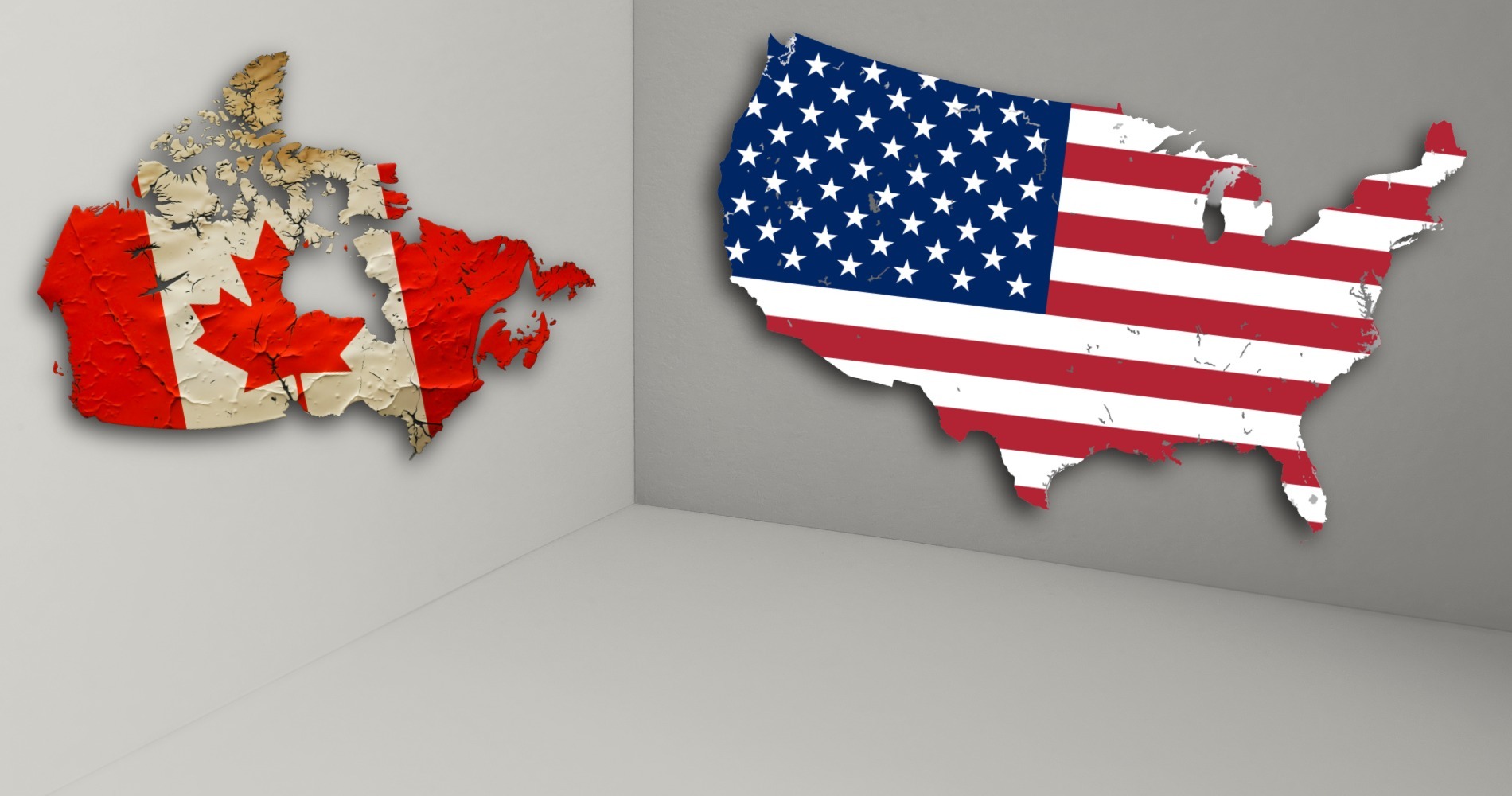
The results of the midterm elections could certainly mark a marginal improvement in Canada-US relations, but we should not anticipate a major shift in the relationship. Relations with Canada featured in a more prominent way in this year’s election cycle than in any previous elections in the United States. Trump was recycling his rhetoric about Canada becoming the 51st state. He and his ambassador were even warning Canadians against meddling in the election results, a preposterous idea.
The Democrats, on the other hand, were pointing to the tariffs on Canada and Mexico as a major source of the cost-of-living problems facing Americans. Critics of Trump, notably former president Barack Obama, claimed hostility toward Canada was a sign of how unhinged MAGA policies were in general. It’s hard to say how much this influenced the outcome of specific races, but it’s notable that some of the most surprising and important wins by Democrats occurred in border states like Michigan and Texas that are most affected by Trump’s tariffs.
Many Canadians are cautiously hopeful that the U.S. will back down somewhat on its trade and other policies that have undermined the Canada-U.S. relationship. The premier of Ontario, Doug Ford, said that he was “doing cartwheels down the street” after the election. The premier of Quebec said that the election would make it much easier to find allies across the border. Representatives of the federal government have been much more circumspect in commenting on the election results.
Even if Trump’s personal popularity has declined, it’s important to recognize that his skepticism about free trade policies is widely shared in the United States across partisan lines. And while Trump remains in office, he is so unpredictable that he may return to his anti-Canada rhetoric and policies.
The forever (trade) wars
Even if the Democrats win the presidency in 2028, they are not likely to shift much on trade policy overall and a fixation on Chinese technological competition in particular. It’s important, then, for Canada to continue to develop stronger ties with other economies, including the European Union and Mexico, but also growing African nations which the federal government has virtually ignored up to now.
Where does that leave Canada with the trade war with the U.S.? The U.S. Congress has broad powers, especially in the area of trade policy, but the president retains the power to veto any legislation Congress passes, which makes any significant change in administration policies difficult. Trump has mostly been using his executive powers to achieve his goals, which sidelines Congress altogether.
A Democrat-controlled Congress does have some powers that will make it more difficult for the Trump administration to govern how it wants. Most significantly, the Democrats have the power to restrict funding for Trump priorities, for example, for his government’s capacity to continue the war in Iran, which has been extremely expensive. The Democrats will control the appointment of chairs and membership in congressional committees, and will also be able to carry out investigations, for example into the corruption of Trump and his family as well as his close associates.
The latter two powers might give them some influence over government policies. It’s also not unthinkable that enough Republicans will want to distance themselves from Trump policy that the Democrats could achieve two-thirds majorities in the House and the Senate on certain issues, which is necessary to overcome Trump’s veto.
The government’s trade policies, particularly the tariffs on Canada and Mexico are so unpopular that eliminating those might be an area of bipartisan cooperation. It’s conceivable that Trump might unilaterally eliminate some of the tariffs on Canada because they are so politically unpopular, harmful to the U.S. economy and because he won’t want to see Republicans voting with the Democrats.
The rupture continues
Just before the election, Trump changed his tone and started saying that Canada and the United States were close to a deal on reducing or eliminating U.S. tariffs. This was partly a strategy to hold on to border-state voters in close elections. A few days ago, Prime Minister Carney claimed the Americans had removed some of the objectionable requirements that were introduced into Canada-U.S. trade talks by Howard Lutnick, which led to the breakdown of the talks in September.
If the news is true and we are days or weeks away from another decision point on a U.S. deal, the prime minister will be faced with the same difficult choices. The U.S. 50 per cent tariffs on Canadian autos, steel and aluminum remain in place. Achieving a substantial reduction or elimination of those tariffs will be hard to achieve but should be the Canadian government’s top priority, since they directly challenge the ability of key sectors of our economy to survive.
Given Mexico’s similar predicament, officials at this month’s Canada-Mexico strategic partnership summit in Ottawa should find ways to intensify bilateral economic relations and find synergies between their respective industrial and export objectives.
And so, “blue wave” or not, Canada is currently, and for the foreseeable, in the same boat vis-à-vis Trump. We can’t accept a deal that incentivizes industrial producers to relocate to the United States (as Trump hopes). But we also can’t try to wait out this president without a better plan for sustaining jobs and production at critical Canadian metals, forestry and manufacturing facilities.
About the authors
Laura Macdonald
Stuart Trew
Stuart serves as director of the CCPA’s Trade and Investment Research Project (TIRP), which pools the expertise of academic, labour and non-governmental organization researchers to understand the impacts of trade and investment treaties and policy on the Canadian economy, public services, human rights and international relations.