

- Home
- Topics
- Regions
- Magazines
-
-
-
The Monitor
Read the latest issue about why it’s time to change the rules of the game for extreme wealth in Canada
-
-
-
-
Our Schools/Our Selves
Read the latest issue, a guide to standing up to book bans and beyond, and how to protect and strengthen public education in Canada
-
-
-
-
- Media Inquiries
- Subscribe
- Legacy Gifts
- About
- Contact
- Donate Now
- Donate Now

Search results for “"http:/www.shutterstock.com/editorial”
-

Submission to the Special Committee to Review the British Columbia Freedom of Information and Protection of Privacy Act
Download 424.74 KB23 pages British Columbia’s Freedom of Information and Protection of Privacy system is in trouble. Through changes made by judicial decisions and by governments, as well as growing delays in the time it takes for freedom of information requests to be processed, the system has eroded and requires…
-

Digital equity and community solidarity during and after COVID-19
As many have noted, COVID-19 is an efficient illuminator of our society’s strengths and weaknesses; its progress accelerates in spaces of inequality and injustice. There is a race among public health agencies at all levels to provide timely, accurate information about COVID-19 that is essential to support physical distancing policies…
-

The State of the Inner City Report 2021: Placing Community at the Heart of the Recovery from COVID
Download 8.11 MB108 pages Since the 2020 State of the Inner City report, which looked at the impact of the first wave of the COVID-19 pandemic on the inner city, we’ve had second, third and fourth waves. Both the sense of government urgency and the emergency funding available after the…
-

Yep, it’s gouging: What we learned from the BCUC gas prices inquiry and what’s next
The BC Utilities Commission (BCUC) inquiry into gas prices delivered its bombshell final report on August 30. Among its key findings: at least 13 cents per litre of the higher gas prices at the pump over the past couple years is “unexplained” relative to what one would expect from a…
-
Why wheelchair fees are not ‘fair’ and what they say about the state of seniors care in BC
The recent announcement of a $25/month user fee for wheelchairs used by people in long-term care facilities in the Fraser and Vancouver Coastal health regions has been unpopular – particularly given the simultaneous announcement of pay raises for top government political staff. Premier Clark has since withdrawn the promise of…
-
Our Schools/Our Selves: Winter 2012
Every Tool Shapes the Task “In thinking about this issue of Our Schools/Our Selves, I took an inspiration from Battleground Schools. It is an encyclopaedia of conflict in education, a project of two University of British Columbia education professors, Sandra Matheson and Wayne Ross. The idea was to have short…
-
The future of university divestment campaigns: Reflections from inside the movement
To an outsider, university divestment campaigns might look like a hopeful but impractical social movement led by naive cadres of sign-waving students. The truth, however, is that divestment is more successful and has more transformative potential than what first appears. Largely hidden but tightly woven connections between universities, finance and…
-
Province of BC / Flickr” style=”border-radius:0px;–objectFit:cover;–imagePosX:50%;–imagePosY:50%” decoding=”async” srcset=”https://www.policyalternatives.ca/wp-content/uploads/2025/04/pn_jun2022_opening-the-floodgates-300×133.jpg 300w, https://www.policyalternatives.ca/wp-content/uploads/2025/04/pn_jun2022_opening-the-floodgates-768×341.jpg 768w, https://www.policyalternatives.ca/wp-content/uploads/2025/04/pn_jun2022_opening-the-floodgates.jpg 900w” sizes=”(max-width: 300px) 100vw, 300px” />
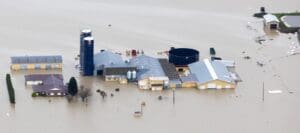
Opening the floodgates
More than climate crisis behind last November’s rising waters, death and destruction; experts urge province to make course correction First of Two Parts When Premier John Horgan declared a provincial state of emergency in the wake of last November’s horrific floods, landslides and deaths, he was quick to name the…
-
What happened to the National Housing Strategy?
Launched in 2017, the National Housing Strategy (NHS) was billed as a major re-engagement by the federal government on affordable housing after more than two decades on the sidelines. Starting with a headline commitment of $40 billion when first announced and supplemented in subsequent budgets, the NHS is now ostensibly…
-
Fast Facts: Imagine a Winnipeg…
Winnipeg cannot control broader macro pressures such as climate change or a stagnant global economy, but it can prepare for the changes that are coming. It can meet climate change with policy to mitigate damage, slow the rate of change, and build resilience. It can stimulate and grow the local…
-
Manitoba By the Numbers
Income Inequality $262,000 – average market income of the top 10% of Manitoba households with children (2014). $4,500 – average market income of bottom 10% of Manitobans (2014). $6,600 – average market income of bottom 10% of Canadians (2014). $104,000 average family market income in Canada, which is $12,000 higher…
-
The KPMG Report
No solution for the low-income housing problem Consulting firm KPMG’s recommendations that Manitoba Housing units be sold and that the private sector play a greater role in providing housing for low-income people are profoundly mistaken. Far from being the solution to the problem of low-income housing, the private sector has…





 Province of BC