

- Home
- Topics
- Regions
- Magazines
-
-
-
The Monitor
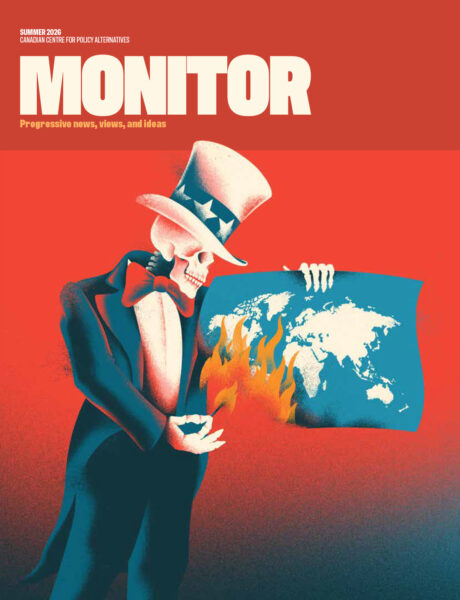
While world leaders are increasingly saying out loud that the postwar liberal world order is dead, the ruling classes in the Global North have an answer for what will come to replace it: fascism. Will they be able to implement their vision?
-
-
-
-
Our Schools/Our Selves
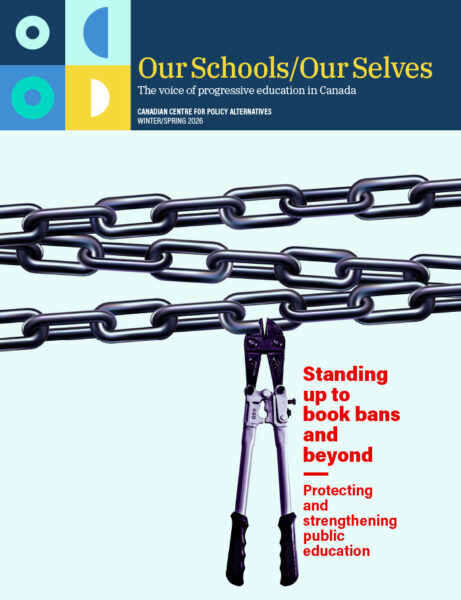
A guide to standing up to book bans and beyond, and how to protect and strengthen public education in Canada
-
-
-
-
- Media Inquiries
- Subscribe
- Legacy Gifts
- About
- Contact
- Donate Now
- Donate Now
Search results for “site/human rights”
-

New survey data shines light on the extent and impacts of precarious employment in BC
The rise of the “gig economy” and on-demand work through online platforms like Uber and Skip the Dishes has ignited public debate about precarious work and what makes a “good job.” We all know that precarious work existed long before Uber and is not limited to the gig economy. But…
-
What BC’s energy industry has to do with violence against Indigenous women
The following post was adapted from the executive summary of Out of sight, out of mind: Gender, indigenous rights, and energy development in British Columbia, Canada. “It’s not a pity story. We’re not looking for sympathy. But the public has to recognize that this is a disaster in the making.” —Norma…
-
11 steps toward a more just society for Budgets ‘22 and beyond
As a fourth wave of COVID-19 ramps up, the impact of the pandemic on the economy, policymaking and budgets has not gone away. More broadly, government responses to the pandemic at both the national and provincial levels have generally been seen as a success. Much like in WWII, this appears…
-

The Monitor, January/February 2019
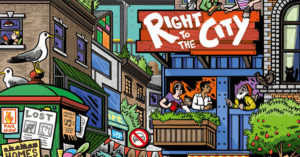
The Right to the City Download 7.27 MB Ten years ago the political geographer David Harvey wrote, “The freedom to make and remake our cities and ourselves is…one of the most precious yet most neglected of our human rights.” With roots in 1960s civil rights struggles, Henri Levebvre’s concept of…
-
 Province of BC/ Flickr” style=”border-radius:0px;–objectFit:cover;–imagePosX:50%;–imagePosY:50%” decoding=”async” srcset=”https://www.policyalternatives.ca/wp-content/uploads/2025/04/site-cs-biggest-beneficiary-policynote-feb16-300×141.jpg 300w, https://www.policyalternatives.ca/wp-content/uploads/2025/04/site-cs-biggest-beneficiary-policynote-feb16-1024×480.jpg 1024w, https://www.policyalternatives.ca/wp-content/uploads/2025/04/site-cs-biggest-beneficiary-policynote-feb16-768×360.jpg 768w, https://www.policyalternatives.ca/wp-content/uploads/2025/04/site-cs-biggest-beneficiary-policynote-feb16.jpg 1280w” sizes=”(max-width: 300px) 100vw, 300px” />
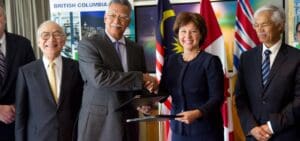
Site C’s biggest beneficiary? Natural gas companies, not us.
This post originally appeared on DeSmog Canada. On January 20, BC Hydro issued a press release singing the praises of a new hydro transmission line not far from where preliminary work has begun to build the $9-billion Site C dam. The release, headlined “New transmission line to power development in…
-

Beyond Neoliberalism: Toward a Trade Agenda for People and the Planet
The “Beyond Neoliberalism” workshop in Ottawa on October 30, 2019 was co-organized by the Canadian Centre for Policy Alternatives, Trade Justice Network and Institute for Policy Studies, with support from Rosa Luxemburg Stiftung-New York. As a follow-up to the publication of the report Beyond NAFTA 2.0, the goal of the…
-
Burning issues for Metro Vancouver
The front page story of today’s Vancouver Sun takes on Metro Vancouver’s waste incineration facility in Burnaby. The Fraser Valley Regional District has been strongly opposed to a new proposed incinerator planned by Metro, and likewise has expressed its concerns about air quality in regards to the Burnaby facility. Its…
-
Indigenous resurgence in a province like no other
After 30 years of treaty talks, the Truth and Reconciliation Commission findings, and the adoption of the United Nations Declaration of the Rights of Indigenous Peoples, First Nations still face racism on a systemic basis. Can Indigenous People ever find justice in this province? John Price and Nicholas XEMŦOLTW̱ Claxton,…
-
Model Sites for Rural Midwifery in Nova Scotia: Built to Fail?
On Monday morning, there is a rally planned to try and save the South Shore Community Midwives, one of Nova Scotia’s rural midwifery programs. The program has been suspended for three weeks and its long term survival is in question. The current crisis presents an opportunity to rethink the program’s…
-
Site C: Too risky to rely on one river system for BC’s hydro needs
In the face of a prolonged drought, water levels at Lake Mead, the giant hydroelectric reservoir that straddles the Nevada and Arizona borders, are lower than at any point since the iconic Hoover Dam was built in the 1930s. For residents in California, Nevada, Arizona and northern Mexico a crisis…
-
BC must provide education to foster discrimination-free workplaces and services
Today, the Canadian Centre for Policy Alternatives and the Poverty and Human Rights Centre released a report on the need for a human rights commission in British Columbia. Yes. You read that right. British Columbia has no human rights commission. It is the only province in Canada without a publicly-funded…



 Province of BC