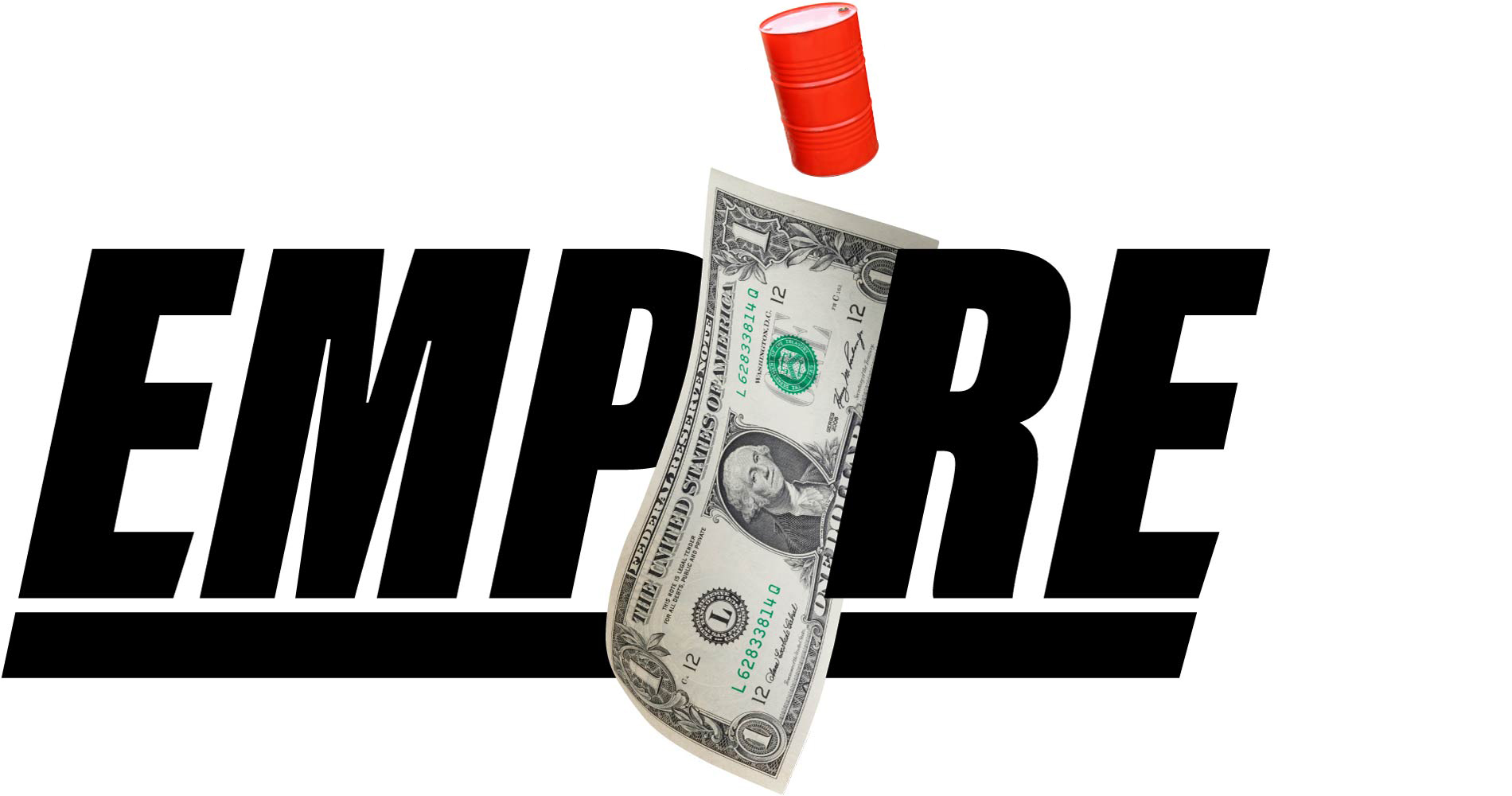

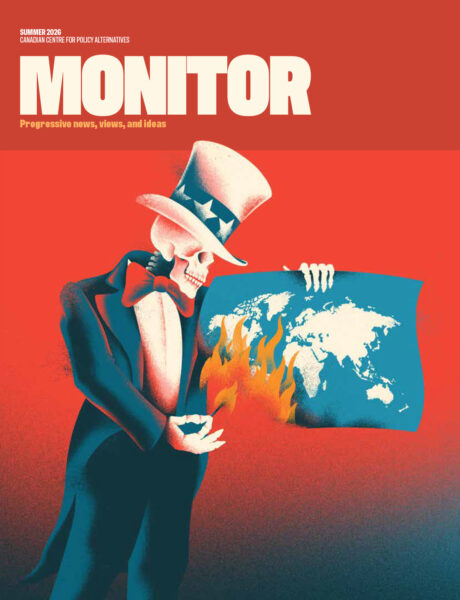

A year and a half into his grotesque second presidency, Donald Trump’s uncontrolled demolition of international economic and foreign relations continues apace. To Make America Great Again (MAGA), Trump and crew have sown widespread chaos. Everyone is a potential enemy, including, and perhaps especially, the American people.
Trump’s actions can seem bafflingly contradictory. Blockade the Strait of Hormuz after demanding Iran open it. Saddle American automakers with a 25 per cent tariff on cars and parts crossing the Canadian and Mexican border but let South Korean, Japanese and European vehicles into the country at 15 per cent. Demand free-market policies in low-income countries receiving foreign aid while taxing those countries’ exports to the United States.
These policies are nonsensical and harm U.S. and foreign interests. But they do follow a twisted logic: America wins when other countries lose. Secretary of War Pete Hegseth flaunts his military adventurism as an act of raw U.S. power even as it fails in Iran. The president seems to relish the use of tariffs as a weapon for coercing decisions out of allies and adversaries alike even as it alienates growing parts of his MAGA base.
The political scientist Stephen Walt, writing in Foreign Affairs in March, coined the term “predatory hegemon” to describe this zero-sum, take-what-you-want approach to trade and foreign relations. American exceptionalism without the benevolent mask. Walt predicts this will trigger a blowback against the United States at some point. We probably can’t wait that long.
Do what I say, not what I do
Trump’s MAGA trade water carriers are doing their best to surround the new U.S. exceptionalism in a fog of theoretical rationality. The system is broken, and they are going to fix it. Also writing in Foreign Affairs this year, Trump’s former United States Trade Representative (USTR) Robert Lighthizer describes America as the victim of an abuse of global trade rules that has drained US$27 trillion from the United States through persistent trade deficits.
Everyone was breaking the rules except the United States, Lighthizer argues, ignoring the long-standing controversy over America’s vast agricultural subsidy and export dumping regime that depresses farm prices around the world. He bemoans the flexibility in the World Trade Organization agreements for developing and least-developed countries to not fully apply some of the rules, to protect themselves from subsidized U.S. commodities, for example.
Trump’s NAFTA renegotiator-in-chief proposes a new trading order, built and led by the United States, in which the priority is balanced trade. Stray into surplus and face tariffs in participating countries. China, Russia, Iran and North Korea are not invited to the club. “This system would stop the flow of wealth to Washington’s rivals and would put pressure on the beggar-thy-neighbor industrial policies of its allies,” Lighthizer writes. “Balanced trade would allow governments to adopt practices designed to create high-paying jobs without forcing other countries to pay for them.”
We should distinguish between industrial policies that intentionally or indirectly destroy jobs in other countries and measures nations deem important for their economic development. Lighthizer is right to want effective ways for countries to respond to surges in imports that replace, rather than fairly compete with, domestic products and services. The problem for Lighthizer and his protégé, current USTR Jamieson Greer, who similarly spoke about the rigged rules-based trading order at the World Economic Forum this year, is that Trumpian trade policy is beggar-thy-neighbour to the core.
For Trump, American workers win when Canadian or Mexican or European workers lose their jobs. The president and his underlings are not sending hidden messages or playing the tough dealmaker when they say Canada should not be making automobiles, steel, kitchen cabinets or other wood products. The Trump administration isn’t angling for concessions from Canada in exchange for normal, tariff-free trade. They are out for our jobs.
This hypocrisy in U.S. rationalizations for Trump’s trade disruptions will interfere with American plans to create a parallel, non-China-focused supply chain for “critical minerals.” The term refers to trace metals and sometimes even abundant stuff like aluminum that the U.S. needs to blow people up (missiles), produce renewable energy products like wind turbines (which Trump doesn’t want), and compete with China on emerging technologies, including artificial intelligence.
Mining for anything is dirty work and companies only do it if they know they can make a profit. That is easier said than done. China cornered the market on rare earths and other “critical” mineral production, including refining and upgrading into high-value goods like magnets, because it understood these things would never be available in significant and cheap enough quantities unless it stepped in with political guidance, subsidies, and a high tolerance for environmental sacrifice zones and dangerous working conditions.
It will not be easy to recreate these conditions outside of China, nor should we be eager to try when the end goal is more war. Planned price floors and buyer’s clubs for key minerals could drive up prices, making North American manufacturing even less competitive and “allied” nations even more beholden to U.S. interests.
Canada has not joined Trump’s fledgling Pax Silica club for harmonizing investment screening and supply chain security measures in the semiconductor and critical mineral industries. The government is reportedly bundling that move with the expected July 2026 CUSMA renewal decision and negotiations.
We cannot, with any dignity, move in this direction following Canadian mining and energy firm Sherritt’s exit from Cuba. Sherritt was an important source of jobs and investment in Cuba, and supplied Canada with nickel and cobalt that is refined in Alberta into critical elements of our aerospace industry. The federal government could, and should, have done far more to support Canadian interests in Cuba and, critically, the Cuban people as Trump and Secretary of State Marco Rubio intensified sanctions.
In late April, Prime Minister Mark Carney told CBC News many of the countries that have signed “reciprocal” trade deals with the Trump administration have buyer’s remorse. It’s not hard to see why. The United Kingdom, for example, agreed to double (as a share of GDP) the amount its public health institutions spend on brand-name medication over the next decade—billions of public sector dollars spent to subsidize Big Pharma profits in the misplaced (or disingenuous) hope this will lower drug prices in the United States.
Trump calls this “most favoured nation” (MFN) drug pricing, a term normally used for a foundational principle of the world trading order. MFN means that any benefit (like a lower tariff) applied to one country’s goods must be applied to all others. Before the WTO’s last ministerial conference in Cameroon this year, the U.S. cabled its intention to kill that version of MFN in favour of an unabashedly coercive vision of global trade rules. Do what we want, and we may lower, but not remove, barriers to your exports to the United States.
Canadian dependence
This U.S. orientation may change under a future Democratic government, if we get to that point, but it might not change much. The Democratic Congress saved Canada from driving up conventional and biologic drug prices through the NAFTA renegotiation, as Democrats objected to intellectual property rights changes the Trudeau government had foolishly agreed to in those talks. But Biden also maintained Trump’s high tariffs on Chinese imports as leverage and his trade representative, Katherine Tai, had every intention of using the CUSMA review to extract concessions out of Canada and Mexico.
This bilateral orientation presents a number of obvious challenges for Canada, and less-than-obvious pathways out of the mire.
For decades, by design, Canada has been an appendage of U.S. power in the world. Militarily and security-wise, the two nations are technologically and strategically aligned through institutions such as NORAD, NATO and the Five Eyes network of white, Anglo-Saxon former British colonies. Our manufacturers of industrial components and consumer products depend on U.S. consumers, and most of our energy, mineral and agricultural output heads south, often to be imported back into Canada as value-added goods.
This dependency on the U.S creates significant vulnerabilities, as the Canadian left warned in debates over economic policy in the 1960s and ’70s, and especially during the free trade debates of the 1980s. At a trade policy roundtable at the University of Ottawa shortly after the U.S. announced 25 per cent fentanyl- and border security-related tariffs on all Canadian and Mexican imports, the head of a liberal U.S. think-tank confidently told the room it was a power play. Trump believed Canada and Mexico would fold quickly, setting an example for the rest of the world.
That is not how things played out. The Canadian government initially responded relatively strongly, with dollar-for-dollar retaliation against Trump’s tariffs. Former prime minister Justin Trudeau condemned the illegal tariffs and attempted to rally other world governments into a united opposition. China retaliated as well. Europe, Japan, South Korea and several smaller economies buckled out of fear and under pressure from export industries, weakening Canada’s modest pushback.
Trudeau’s replacement, Mark Carney, rebranded, removed many retaliatory measures and tried to play nice with Washington, eventually ditching a carefully developed digital services tax covering untaxed business-to-business online services. Mexico took a similar tack. By sitting back and waiting for a positive conversation to happen, both countries learned the hard way what zero-sum trade policy looks like: low investment, closed factories, unemployed workers.
If the U.S. threat is existential, diversification promises hollow, and global rule-making at a standstill, where does that leave us? Is Canada doomed?
Of course not. Threats to manufacturing, including lumber and automotive production, need to be addressed beyond the support of important low- and zero-interest loans. Higher tariffs may be needed on some goods.
Apart from that, we need more federal-provincial coordination, more public-private conversations (including with unions), and more public sector workers acting like this is the emergency it really is. Prime Minister Carney’s 15 per cent cuts across all departments, regulatory holidays for mining megaprojects, and plans to sell off critical public infrastructure like airports to the highest foreign bidder are dead-ends from a hubristic but fading neoliberal heyday.
Rather than driving domestic restructuring, as it has since the original Canada-U.S. Free Trade Agreement, Canadian trade policy should be made supportive of building resilient domestic economies at home and abroad. That means being tolerant of foreign economic development strategies that sometimes favour local jobs and supportive of democratic choices that may indirectly harm Canadian investors. Labour protections should be more strictly upheld and investor-state dispute settlement—corporate courts for foreign investors—abandoned completely.
About the author

Stuart Trew
Stuart serves as director of the CCPA’s Trade and Investment Research Project (TIRP), which pools the expertise of academic, labour and non-governmental organization researchers to understand the impacts of trade and investment treaties and policy on the Canadian economy, public services, human rights and international relations.