


Share
Soccer (or football) fever continues to grip North America despite the exit of Canada, Mexico and the United States from World Cup contention this week. Officials in those countries now have no excuse for stalling that other continental battle: the six-year review of the Canada-U.S.-Mexico Agreement (CUSMA).
The two contests are in most ways poles apart. One is a transparent test of skill and wits, based on rules known in advance and arbitrated by a fair-minded referee, at least in principle. The other will take place behind closed doors, twisting and turning imperceptibly on demands from the Trump administration and concessions from Canada and Mexico.
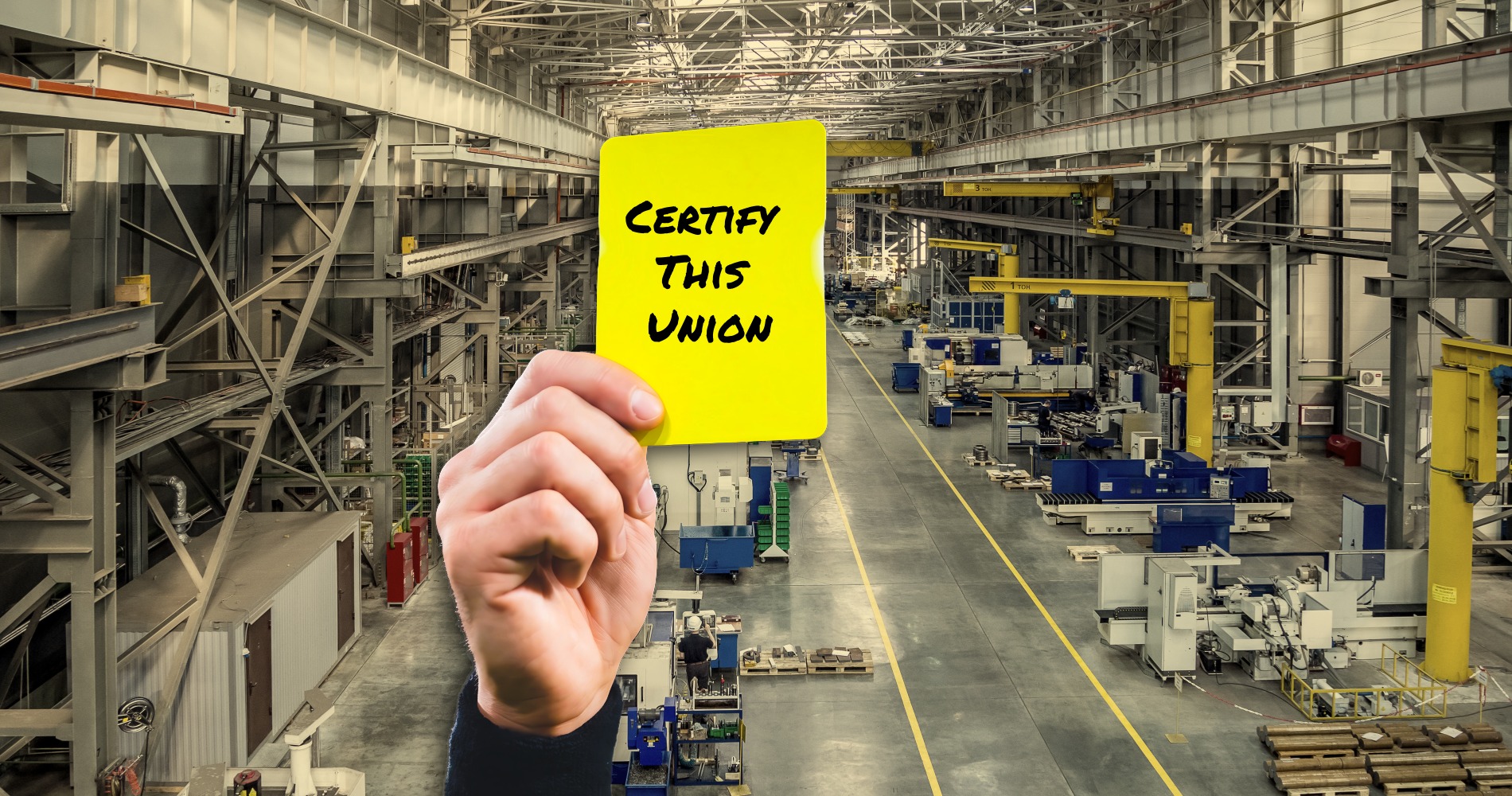
However, the “beautiful game” and North American trade share a fundamental similarity our leaders often paper over. They are both competitive, not cooperative, activities that put participants—players or workers—at risk from unfair and often illegal practices. In trade, like at the World Cup, a good yellow card system can help curb wrongdoing.
Yellow and red cards
Soccer is a battle of opposing sides where one team’s victory comes at the other’s defeat. The competition is so fierce that players may be tempted to cheat or play rough to gain an edge. The referee plays an important role in moderating these impulses by issuing yellow and red cards.
Yellow cards are for first or minor infractions, like a kick to the shin. They are less a punishment for one particular player than a warning to all. A yellow card tells both teams to cool it and play fair. If that’s not possible, or a player makes an especially grievous foul, out comes the red card to remove them from the game entirely.
Capitalism is also a battle of opposing sides: company against company, company against workers, sometimes company against government. The cutthroat competition for profits can drive firms to do bad things like ignore or suppress worker rights, steal a competitor’s technology, smuggle controlled goods into their supply chains, or fudge the results of environmental testing, to list only a few examples.
Worker protections in trade deals
About 10 per cent of a contemporary trade deal like CUSMA is about lowering tariffs on imports. The other 90 per cent sets rules for how governments are expected to treat companies, foreign investors and private property. Free trade deals strongly protect intellectual property rights and the free movement of capital, for example, and strongly curtail economic development policies favouring domestic jobs or priorities.
CUSMA and other Canadian deals also contain baseline protections for workers that can be upheld, at least on paper, through state-to-state dispute settlement. These protections include a requirement on governments to respect internationally guaranteed rights to freedom of association and collective bargaining, eliminate forced and child labour, and end discrimination in the workplace. CUSMA obligates governments to extend to migrant workers the same rights in law as everyone else.
To keep our soccer metaphor going, workers should be able to rely on their governments to referee bad corporate behaviour such as union busting, which can range from disinformation campaigns to companies dragging their heels on signing a collective agreement to firing employees for their efforts to organize new workplaces. They should expect governments to investigate worker violations at home and abroad, though trade-based dispute settlement if needed.
Unfortunately, governments almost never raise labour disputes with their trading partner countries. Indeed, most trade agreements bog down labour complaints in endless consultations that frequently do not include the workers or companies involved in the dispute.
Governments, including the current one in Ottawa, also frequently take the side of companies in their competition with workers for the profits resulting from their labour. They do so by implementing right-to-work legislation (e.g., in the southern United States) or banning strikes in so-called strategic sectors (as Canada is considering for federally regulated rail workers) or relaxing workplace health and safety measures, and so on.
CUSMA sets a new standard
As a result of this imbalance in Canadian trade deals—and the tendency of governments to side with companies over workers—there was nothing like a fair yellow-card system for protecting worker interests in the cross-border capitalism governed by the rules of free trade. Companies could violate basic labour rights like the right to organize with no repercussions to how their goods will be treated or where they could sell them.
Until recently, that is.
At the insistence of U.S. Democrats, with backing from labour unions in all three countries, CUSMA introduced a rapid response labour mechanism (RRM) that for the first time gives some workers direct access to an effective system for remedying labour rights violations. It’s not perfect and applies only to a limited number of industries in Mexico, but it’s the closest we have come to a yellow and red card system for policing foul behaviour by corporations in North America.
Under the RRM, workers in covered Mexican facilities (e.g., auto parts plants and other factories, mines) can request an investigation of alleged labour rights violations at their workplace. They must present evidence to labour officials in either the United States or Canada, who are obligated to investigate within 45 days and move complaints forward where a labour violation seems clear.
The RRM was designed to help Mexican workers uphold their stronger rights in labour reforms introduced by the Mexican government in 2017 and 2019. Of the several dozen complaints so far, only two (at an auto parts plant and Canadian-owned mine) were filed through the Canadian government’s RRM process with help from Unifor and United Steelworkers. The rest were launched via the United States.
If an investigation finds in favour of the complaining worker(s), the covered facility gets a yellow card warning and must address the grievance. Many of the dozens of complaints filed to date have resulted in workers being reinstated and receiving back pay, or undemocratic collective agreements being overturned. If the company fails to redress the situation, they can receive a red card suspending trade benefits or face other penalties on the goods and services offered by the facility.
Moving the goalposts on worker-friendly trade
Worker interests barely feature in news and political statements about the CUSMA review. The conversation begins and ends with fears about investment certainty and the competitiveness of North American business. Canadians are told again and again that losing the deal would be catastrophic, and therefore the best possible outcome of the review would be a rapid agreement with as few concessions to the United States as possible.
While that outcome may provide some psychic relief, it would be a missed opportunity to move the trade goalposts in support of workers in North America. Workers everywhere deserve a yellow and red card system for challenging labour violations. Until that happens, deals like CUSMA and Canada’s other free trade deals will continue to skew the game in favour of corporations.
About the author

Stuart Trew
Stuart serves as director of the CCPA’s Trade and Investment Research Project (TIRP), which pools the expertise of academic, labour and non-governmental organization researchers to understand the impacts of trade and investment treaties and policy on the Canadian economy, public services, human rights and international relations.

