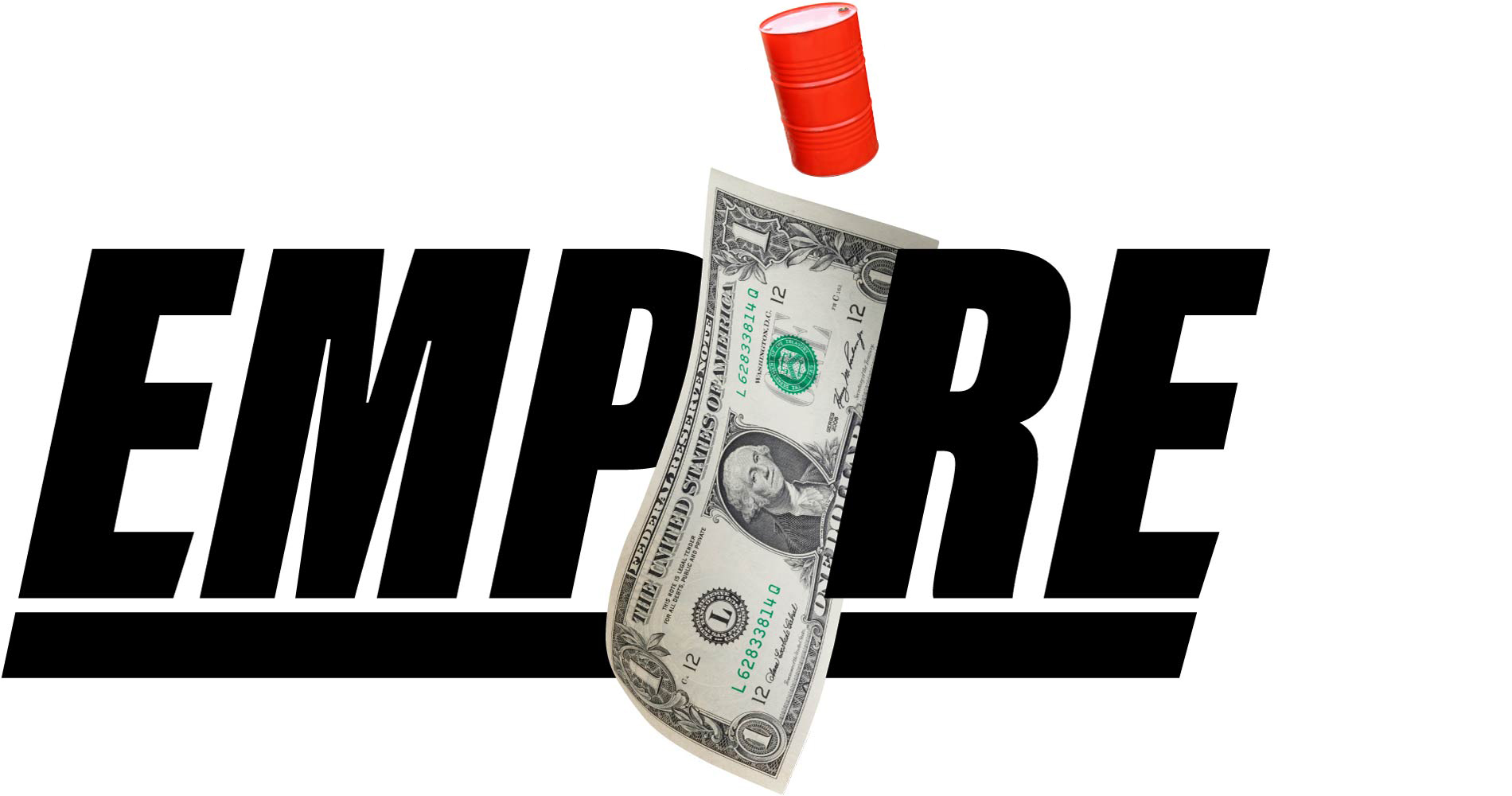



In November 2019, time was up for Evo Morales. After election results started coming in, the Organization of American States questioned the validity of the results, casting his lead into doubt. Those questions enabled the Bolivian military to force him from power, even though later analysis—including from major U.S. media—confirmed the OAS analysis had been “flawed.”
Bolivia’s left-wing president was overthrown based on a lie and the political right kicked off a massive wave of repression. After the coup, questions swirled about why Morales had been forced from office. One answer in particular caught a lot of people’s attention: that the United States wanted access to the country’s vast lithium reserves, which would be necessary to power the electric vehicles (EVs) and battery storage that were key to the energy transition.
Eventually, a Twitter user put that charge to Tesla CEO Elon Musk. If anyone was to benefit from such a move, it would be him. His response didn’t help quell the questions. “We will coup whoever we want!” Musk replied in July 2020. “Deal with it.”
It was nothing new for Musk to make brash statements, but his response today looks like an early indication of where the industry was going. This was before his acquisition of Twitter, his open championing of Donald Trump, and unapologetic embrace of extreme right-wing politics. But his response also signalled something else.
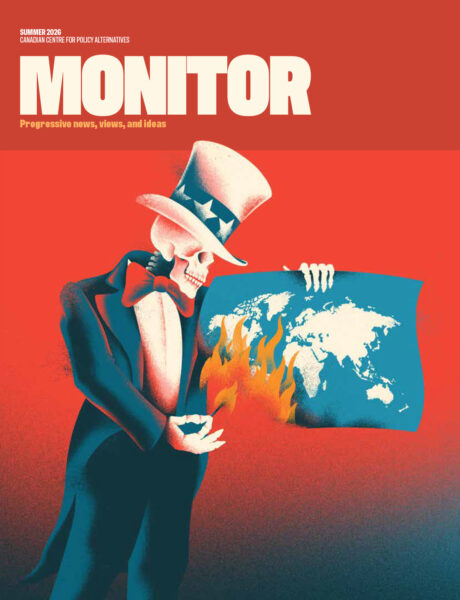
For years, Silicon Valley had framed itself as the home of a progressive libertarianism. It was not like the old guard companies, it claimed, and wouldn’t replicate the social harms that accompanied their business models in pursuit of maximizing profits at any cost. That narrative helped buy tech companies goodwill as they grew in size and expanded globally, but it also masked the expansionist—even imperial—project they were undertaking, one which Musk’s tweet cast a new light on just as the mask was starting to come off.
The imperial project of U.S. tech
As far as the public was concerned, the internet was framed around a series of libertarian notions. John Perry Barlow, one of the co-founders of Electronic Frontier Foundation, said as much in a 1996 manifesto that shaped internet politics for decades to follow. “Governments of the Industrial World, you weary giants of flesh and steel, I come from Cyberspace, the new home of Mind,” he wrote. “You are not welcome among us. You have no sovereignty where we gather.”
Barlow wanted the internet to be akin to a virtual hippie commune, and he felt that meant governments had to be kept far away. But by casting government as the enemy, he left the door open to another powerful societal force to shape the course of the internet’s development: corporations. Barlow’s framing, which came to define much digital rights activism, conflicted with the way many in government saw the potential the internet offered to maintain the power of the United States.
In 1989, several years before the effort to privatize the internet would kick into high gear, then Senator Al Gore was pushing a bill that would direct more money into funding high-performance computing technologies. He was interested in the field, but he saw another benefit to spurring innovation in the sector. “The nation which most completely assimilates high-performance computing into its economy will very likely emerge as the dominant intellectual, economic, and technological force in the next century,” he told his fellow senators when introducing his bill.
As far as Gore was concerned, the advancement and adoption of those technologies would not just be a form of modernization or serve to boost the economy, it would also assure the continuation of U.S. power. He may have been a champion for the “internet superhighway,” but he also saw how a global expansion of the network that would facilitate the entry of U.S. companies into countries around the world would be in the interest of the U.S. government.
As countries became dependent on the products and services of U.S. tech companies, it wasn’t just the companies themselves that prospered. Their profits flowed back to the United States and the U.S. government gained leverage over those countries; leverage it began to openly flaunt once Donald Trump returned to office. The imperial nature of the project Washington and Silicon Valley had been collaborating on for decades was revealed for all to see, and the tech billionaires behind it shifted their rhetoric to reflect it.
Silicon Valley’s right-wing turn
There was a day when at least some Silicon Valley executives believed in the “don’t be evil” slogans they championed, but their commitment to any notion of social good eroded with every additional billion added to their net worths. Today, Elon Musk openly promotes white supremacy as tech companies fall over themselves to sign massive contracts with the Pentagon. If you listen to Palantir CEO Alex Karp, that’s all in service of defending Western civilization and, more specifically, the dominant role of the United States.
In a 22-point manifesto posted to the company’s X account on April 18, Karp argued that Silicon Valley “owes a moral debt” to the United States and needs to defend not just its power, but to build weapons to help its military. Western pluralism, in his view, was a fatal mistake, as some cultures had simply “proven middling, and worse, regressive and harmful.” There was no point in trying to put them on the same level as the West.
Rather than trying to push the government away, Karp and his new alliance of openly right-wing billionaires were explicitly championing the essential nature of the alliance between Silicon Valley and the Trump administration. It’s a political bet as much as it is a statement of how the politics of the tech industry have shifted.
Under the Biden administration, Silicon Valley felt its first sustained threat of domestic regulation as branches of the government brought lawsuits against the tech companies for anti-competitive actions and broader social harms that have arisen from their products. That was one reason they openly embraced the political right, but it was far from the only one.
The reality is that right-wing politics has long had a foothold in Silicon Valley; its adherents were simply operating out of the public spotlight during the era the industry was trying to present itself as a more progressive force. But there’s also the question of power—now that tech companies are some of the most influential companies in the world, they want to defend their power and market share. They rightfully see aligning with right-wing political movements as the best way to achieve it.
As the global power of the United States is threatened, so, too, is their global market share. If the U.S. government can’t push other countries around, it’s easier for those countries to crack down on U.S. tech companies or even get rid of them. More still, as Chinese tech companies become more globally competitive, U.S. tech executives need the United States to contain China to protect their bottom line.
The new political orientation of Silicon Valley is a far cry from Barlow’s declaration three decades ago, but it’s a more honest description of the relationship that has long existed between the tech industry and the U.S. government. It may have taken different faces in different moments, but the global expansion of the tech industry has always been part of the U.S. imperial project.
The need for digital sovereignty
The U.S. empire has long depended not simply on military might, but also economic coercion to maintain its global dominance. Unlike the European colonial powers that preceded it, the United States has engaged in less direct colonization of overseas territories; instead, it mastered the use of economic dependence to keep countries in line.
For a long time, that power was used primarily against the Global South; its Western peers in places like Europe or Canada were able to prosper from the system it built and even become exploiters of their own. But Trump’s return to office in 2025 corresponded with a shift in how the United States deployed that power. Seeing its geopolitical advantage in jeopardy, it became much more willing to deploy economic coercion against its supposed friends as much as its foes, and technological dependence has emerged as a key aspect of its leverage.
Countries like Canada are waking up to that new reality. In recent months, Prime Minister Mark Carney has begun regularly speaking out against the changing U.S. role in the world. But his action is not living up to his rhetoric—certainly not on the digital front. Work on a sovereign cloud hasn’t moved beyond the talking stage, the government hasn’t joined European allies in considering how to wean public functions off Microsoft and other U.S. services, all while it pushes companies to become more dependent on U.S.-based generative AI tools that offer dubious promise.
Concern about the influence of the United States is nothing new in Canadian politics. Left-wing activists have long criticized the country as little more than a vassal of the United States, especially since the original North American Free Trade Agreement. But defending Canada’s sovereignty in the 21st century will require much more than increased military spending and trade diversification. It requires the government to get serious about digital sovereignty.
Until Canada gets off U.S. tech platforms and services, the government, major companies, and even much of the modern military hardware the government is procuring from the United States is in jeopardy. The U.S. government can request Canadian data stored in the servers of U.S. cloud companies, it has weaponized our use of those services to expand its surveillance apparatus, and it can even suspend access to any of those services at a moment’s notice.
The libertarian framing of the internet as a place of freedom and expression was a potent mask for a project U.S. lawmakers always understood was imperial in nature: to defend its government’s power and geopolitical position. Now it has countries around the world exactly where it wants them. They have to choose: will they act quickly to take back that power, or accept the subservient position the United States has designed for them?
About the author
Paris Marx
Paris Marx is a tech critic, author, podcaster, and international speaker. He hosts Tech Won’t Save Us and System Crash, writes Disconnect, and is the author of Road to Nowhere.