



Share
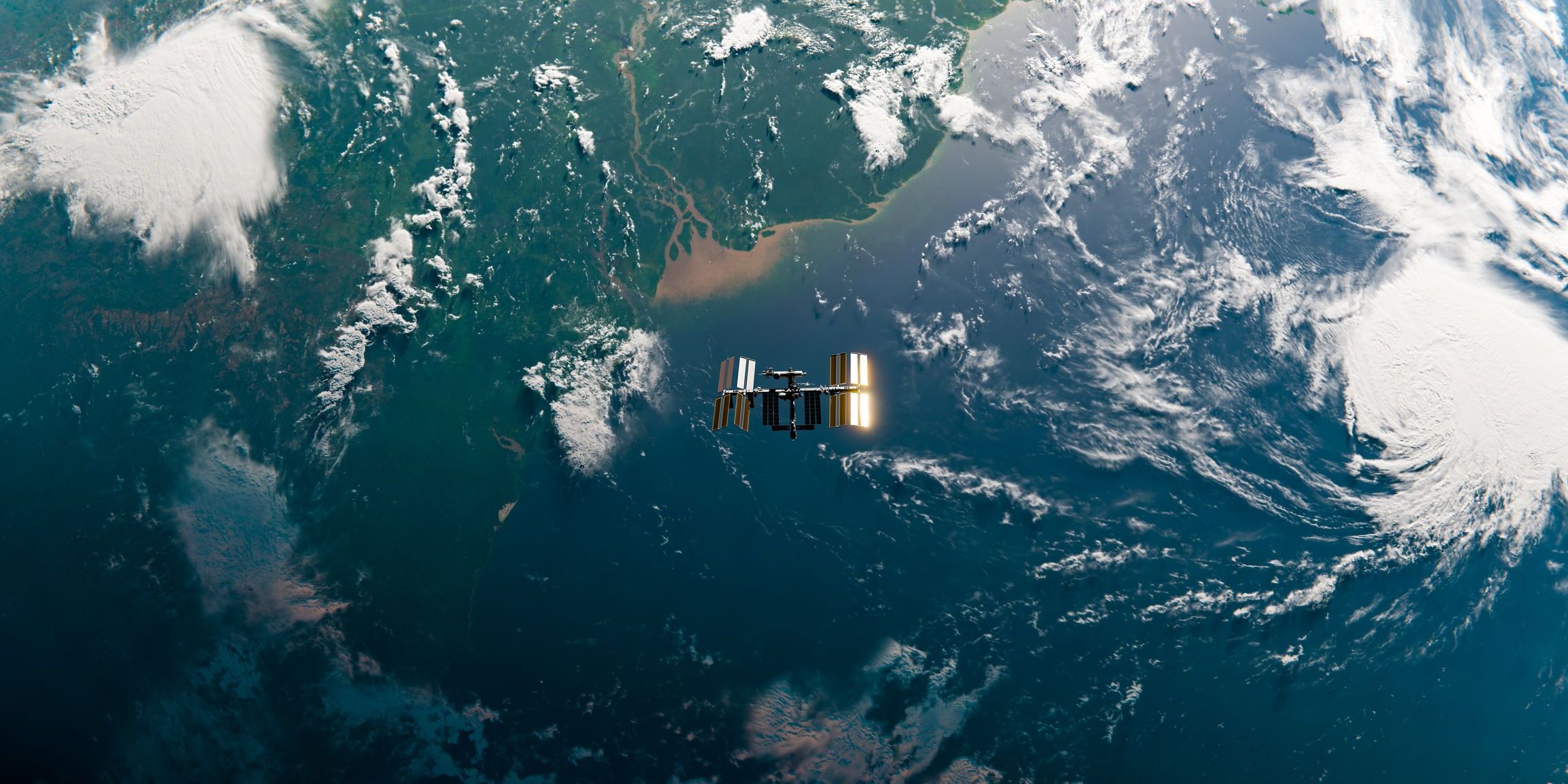
The planned retirement of the International Space Station (ISS) marks the end of one of humanity’s greatest scientific and diplomatic achievements.
Since the first modules were launched in 1998, the ISS has served as a permanently inhabited orbital laboratory, advancing scientific knowledge while demonstrating unprecedented international cooperation in space.
After nearly three decades of operation, however, structural aging, material degradation, escalating maintenance costs, and operational limitations have prompted the international partner agencies, including Canada, to plan its controlled deorbit during the early 2030s.
Current plans call for a controlled atmospheric re-entry that will direct the station’s remaining debris into the South Pacific Ocean near Point Nemo, the world’s largest designated spacecraft disposal area.
From an engineering perspective, this approach is understandable. It minimizes the risk of an uncontrolled re-entry over populated regions and is widely regarded as the safest available method for protecting human life and infrastructure. Consequently, discussions surrounding the ISS’s retirement have largely focused on orbital mechanics, engineering feasibility, and operational safety.
Yet this technical framing conceals a broader ethical question. Controlled deorbiting does not eliminate environmental risks; it redistributes them. Rather than removing the environmental consequences of disposing of a 400-tonne orbital structure, it transfers those consequences to one of Earth’s most remote marine environments.
Although Point Nemo is geographically isolated, it remains part of the global ocean—a shared ecological commons whose capacity to absorb repeated spacecraft disposal remains poorly understood. The ethical significance of the ISS deorbit therefore lies not simply in how the station is retired, but in what this decision reveals about humanity’s approach to managing technological waste across interconnected planetary environments.
This issue extends well beyond the fate of a single space station. The ISS is unlikely to be the last large orbital structure requiring retirement. Governments and private companies are already developing commercial space stations, orbital manufacturing facilities, data centres, and other long-term infrastructures in Earth orbit.
Decisions made today are likely to establish precedents for how future generations manage the end-of-life of increasingly large technological systems in space. What appears to be a single engineering decision may ultimately become the default model for disposing of orbital megastructures throughout the 21st century.
The proposed disposal strategy exemplifies a process of moral distancing—the tendency to regard environmental harms as more acceptable when they occur in geographically remote locations that receive little political attention or public scrutiny.
Point Nemo has become the world’s spacecraft cemetery not because it lacks ecological value, but because its remoteness creates the perception that environmental consequences occurring there are ethically insignificant. Such reasoning reflects a broader pattern in environmental governance, whereby environmental burdens become politically acceptable once they are displaced beyond the immediate visibility of those who benefit from the activities producing them.
Viewed in this way, the retirement of the ISS is not merely an engineering challenge but a test of planetary governance. Geographic isolation should not be mistaken for ethical neutrality. The absence of nearby human populations neither diminishes the ecological significance of remote marine ecosystems nor relieves humanity of its responsibility to protect them.
Existing space governance frameworks emphasize operational safety and legal compliance but provide relatively little guidance regarding the environmentally responsible retirement of large orbital infrastructures. As a result, engineering efficiency and cost-effectiveness have often taken precedence over broader considerations of environmental stewardship, ecological justice, and intergenerational responsibility.
Rather than asking only whether controlled deorbiting complies with existing legal obligations or minimizes immediate risks, virtue ethics asks what this decision reveals about the character of a spacefaring civilization.
The virtue of prudence supports preventing an uncontrolled re-entry that could threaten human life. However, genuine prudence requires consideration of long-term ecological consequences, not merely the management of immediate operational hazards.
Likewise, the virtue of justice requires that environmental burdens be distributed fairly rather than shifted to remote ecosystems simply because they lack political visibility. A civilization committed to responsible stewardship should not equate remoteness with moral permissibility.
The ISS illustrates this expanding technological presence. Its final trajectory will link low Earth orbit, atmospheric re-entry, and the Pacific Ocean in a single technological process, demonstrating that modern environmental impacts increasingly transcend conventional ecological and political boundaries.
This interconnectedness exposes an important weakness in existing governance systems. International law generally regulates outer space, the atmosphere, and the oceans through separate legal regimes and institutions. Yet the retirement of the ISS shows that these domains are inseparable. A spacecraft constructed in orbit ultimately becomes an atmospheric and marine environmental issue. As technological systems become increasingly interconnected, governance must also evolve toward integrated models of planetary stewardship capable of evaluating cumulative impacts across multiple environmental domains.
Recognizing this ethical gap does not require rejecting controlled deorbiting outright. Rather, it requires acknowledging that alternatives deserve more serious consideration before ocean disposal becomes the default solution for future space infrastructure.
One possibility is on-orbit disassembly, in which astronauts or robotic systems dismantle large structures module by module. Individual components could then be safely deorbited, repurposed, or incorporated into future missions. Such an approach would reduce the concentration of debris entering the atmosphere while developing technologies that will be essential for servicing future commercial stations and deep-space habitats.
A second alternative is orbital recycling and manufacturing. Instead of treating the ISS as waste, its structural materials could become valuable feedstock for in-space construction, supporting an emerging circular space economy and reducing dependence on launches from Earth.
Other proposals include repurposing portions of the station for commercial research or education, preserving elements of the ISS as an orbital heritage site, or delaying deorbit until autonomous robotic servicing technologies become sufficiently advanced to enable safer dismantling and reuse. Although each option presents technical and economic challenges, collectively they demonstrate that ocean disposal is not the only conceivable end-of-life strategy.
Equally important are institutional alternatives. Before disposing of globally significant orbital infrastructure, the international community could require comprehensive environmental impact assessments, independent ethical review, transparent public consultation, and evaluation of multiple disposal scenarios.
The planned retirement of the ISS represents far more than the end of a remarkable engineering project. It is a defining moment in humanity’s evolving relationship with the environments it increasingly inhabits, transforms, and ultimately leaves behind.
The debate over Point Nemo is not simply about where the ISS should fall. It is about the kind of planetary governance humanity wishes to cultivate. If remote environments continue to serve as repositories for technological waste because they are politically invisible, moral distancing risks becoming institutionalized as a principle of environmental management. By contrast, adopting governance grounded in prudence, justice, stewardship, and intergenerational responsibility would establish a more sustainable ethical foundation for future space exploration. The retirement of the ISS should therefore be understood not as the conclusion of one historic mission, but as the beginning of a broader conversation about how a spacefaring civilization ought to manage its technological legacy across the shared environments of Earth and beyond.
About the author
Benjamin Segobaetso
Benjamin Segobaetso is a recent Ph.D. graduate in the Ethics and Public Affairs program at Carleton University. Benjamin’s current research dissertation examines the unfolding ethical implications of outer space developments in relation to the moon and various planets’ industrialization as well as related strategic security issues.